

Turning My Blue Corn Into Supper
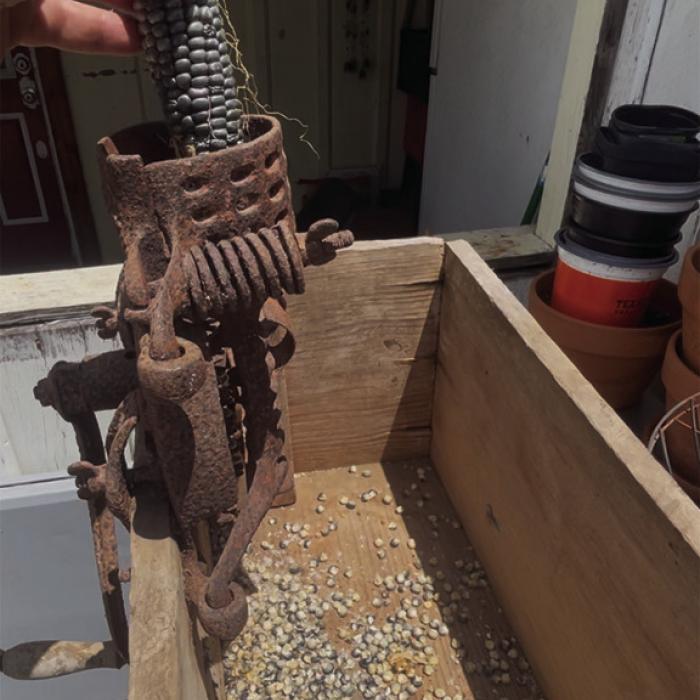
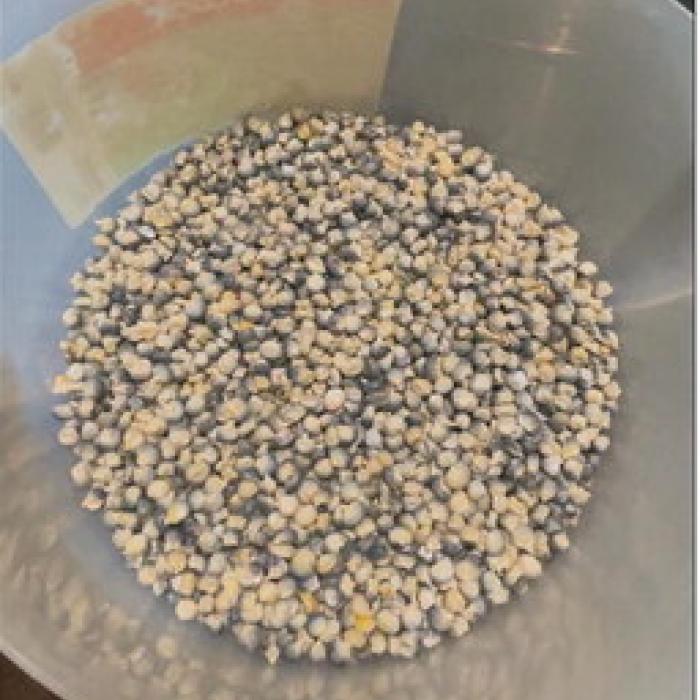
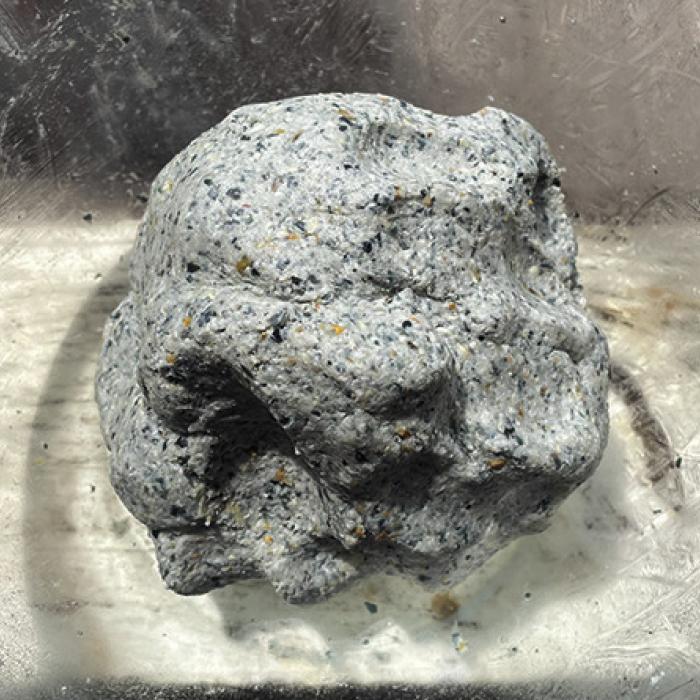
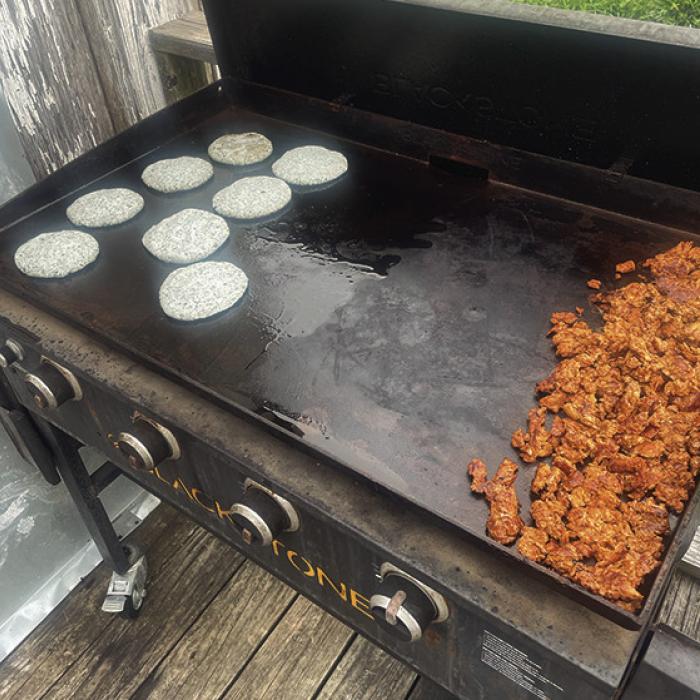

This past weekend I tried my hand at turning the Hopi blue field corn I grew into fresh, homemade masa. It was a fun experiment, but I need some more practice.
It took the ancient Mesoamericans thousands of years of trial and error to master this process, called “nixtamalization.” Without the benefit of YouTube or cookbooks, they figured out that if you add wood ashes to dry corn kernels, heat it in water, and then grind it, the corn turns into a dough that can be made into tamales, tortillas, gorditas, sopas and all sorts of other foods familiar in Mexican cuisine today. But the process does something even more important – it unlocks vital nutrients in the corn that would otherwise be unavailable to the human body, especially niacin.
The word “nixtamal” literally means something like “corn cooked in ashes” in the ancientAztec language. Today we know that the alkali pH of ashes is what transforms the corn. Slaked lime, or calcium hydroxide, is commonly used in the process nowadays. And that’s what I used.
Admittedly, the process takes a lot of work. First you have to grow the corn, harvest it and shell it. Then you add calcium hydroxide and water, boil it for 30-45 minutes and let it cool overnight. The next day, you rinse and scrub the corn together, loosening some of the “skin” from the kernels. Finally, you grind the corn and form it into a dough, called masa, that can be used in a variety of Mexican and Native American dishes.
Why go through all this trouble? The grocery store sells “fresh” masa (I’m not so sure how fresh it actually is). You can also buy “masa harina,” or masa flour. They basically dry the nixtamalized kernels and mill it into a flour. You simply add water (and a little fat) to masa harina to make fresh masa.
But I’ve been growing an heirloom field corn variety for several years – Hopi blue corn. So this year I thought I’d try to make some tortillas with it. But that didn’t really work, so I settled for thicker gorditas.
I think I didn’t scrub the kernels enough after their overnight soak. Maybe I didn’t boil it long enough. Or maybe I didn’t use enough slaked lime. The recipe I used called for one percent of lime for the weight of the dry corn.
After the overnight soak, I noticed that the “skin” or hulls did not easily separate from the kernels. I added a little water and hog lard, according to the recipe I used, and formed it into a dough. It did have the beautiful blue color I was looking for. But it didn’t really “stick” together. The dough seemed a little crumbly.
I used wax paper and a press to make tortillas, but they stuck to the wax paper and fell apart when I tried peeling them from the paper.
I’m sure my masa would have worked fine for tamales. I made them into gorditas - little cakes that can be split and stuffed like a sandwich.
They were quite delicious. We stuffed them with marinated grilled pork, cabbage, avocado, Mexican crème and fresh green salsa I made with Serrano chiles from the garden.
I have no complaints, but I really want to try it again to make tortillas with my blue corn. If anyone has any tips, please email them to me at andy@fayettecountyrecord. com.
In other garden news, I still have a lot of cushaw squash available for trade. So far, I bartered some for a quart of beef tallow from one person and a sack of pears from another, and someone else may be bringing me honey and mesquite bean jelly this week.
If you’re interested in trading for some cushaw squash, let me know.