


Remember to Feed the Bees In 2025

A reader called me this week and asked me to spread the word: please feed the honey bees.
If you’re a gardener, you should care about the bees. Without them, we couldn’t grow so many of the vegetable crops we enjoy. A few crops like corn rely on the wind to pollinate and reproduce. But most plants that set fruit rely on insects for pollination.
Bees visit flowering plants to collect their food - nectar and pollen. A healthy bee should be able to collect and store enough nectar and pollen throughout the warmer months to survive the winter. But during years of drought, they might not have enough stored away. And there are very few plants that flower during the winter.
Nectar is the main food source for bees. Nectar is just a sugary liquid secreted by flowering plants. Bees suck it out of flowers. Enzymes in their stomachs break down the nectar into simple and complex sugars. They then deposit it into the cells of their honeycomb. Airflow in the honeycomb evaporates water from the processed nectar, turning it into honey – the primary food for adult bees.
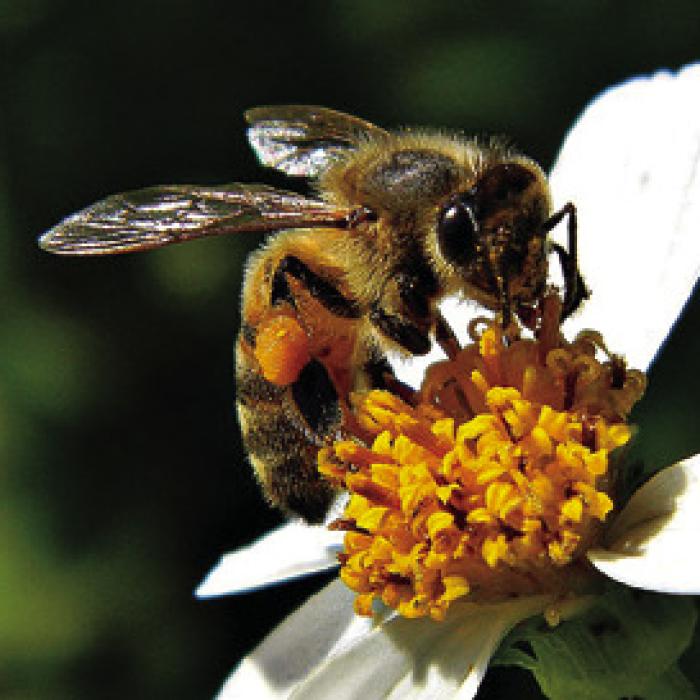
Flowering plants seem to have evolved alongside pollinating insects, especially bees. Honey bees collect pollen from their fuzzy bodies as they burrow around inside a flower. They mix the pollen with a little bit of nectar to make a pellet that they attach to the “saddlebags” of the legs. During times of the year when a lot of flowers are blooming, you can sometimes spot bees carrying these bright yellow or orange pollen pellets.
The bees, as they move from flower to flower, deposit some of the pollen they collected from other flowers. Flowers produce much more pollen than they actually need for reproduction. This symbiotic relationship fulfills the bee’s need for food and the flower’s need for reproduction. When they get back to the hive, the bees mix honey with pollen to make a sort of bread known as “ambrosia” that they feed to the young larvae.
If the adult bees die, so will the larvae, because no one will be there to feed them. So it’s vital for most of the adults to survive the winter.
I used to keep bees, but I don’t have any active hives at the moment, so I don’t know how they fared last year. I’m guessing they had a pretty good spring, given all the rain we received early in the year. But it got pretty dry during the summer and fall. The reader who called me said he’s worried about the bees this winter.
Thankfully, it’s pretty easy to help them out. You can mix sugar and water and pour it into a shallow dish or plate. Set it on a fence post or someplace dogs can’t get to it. If there’s a hive anywhere close, the bees will soon find it. On sunny days, they’ll come out of the hive and drink up.
It doesn’t have to be sugar water. Bees will consume just about any sweet liquid. During the summer time, you’ll often see bees buzzing around the trash cans at gas stations. They’re after soda water that gets thrown in the trash. The reader who called me said he sometimes feeds Dr. Pepper to his bees.