


Rain, Herbicides and Comparing Tomatoes

Last week a reader from West Point called me with some unfortunate news. One morning, while checking on her garden, she noticed most of her plants were wilting and dying. The day before, they were lush and green. She thinks a neighbor may have sprayed their pasture with herbicide, and strong winds carried it to her property.
This reader has been gardening here in Fayette County for decades, and she said this has happened to her a few times before.
It’s no secret I’m not a fan of herbicides. I prefer using a shredder and rotational grazing to keep weeds at bay in my pastures. But I’m not going to chastise anyone for spraying weeds. My dad did it for years at my parent’s farm (before I talked him out of it).
Most herbicides sprayed on pastures target broadleaf weeds. Nearly all vegetables are cultivated varieties of what we would otherwise consider broadleaf weeds.
So please, if you’re going to spray your pasture, don’t do it on a windy day.
“It’s unfortunate, but I’ll just have to replant,” she said.
The news from my garden is a lot better. Almost three inches of rain fell at my place Wednesday morning. I would have preferred a softer rain – I noticed a little compost and mulch erosion. But with as dry as it’s been, I’ll take whatever rain I can get.
It comes at a great time, too, because I’ve had to water my garden nearly every day for the past month – especially the potato and onion patch. The potatoes are getting close to harvest – perhaps only a couple weeks away. But judging from past experience, I know they need a lot of water at this stage so that the tubers keep growing. Lack of water late in the season can lead to smaller tubers, and thus a small harvest.
My onions are also getting close to harvest. They started bulbing a couple weeks ago. A few of them are baseballsized. At this stage, they need all the water they can get to plump up to their potential.
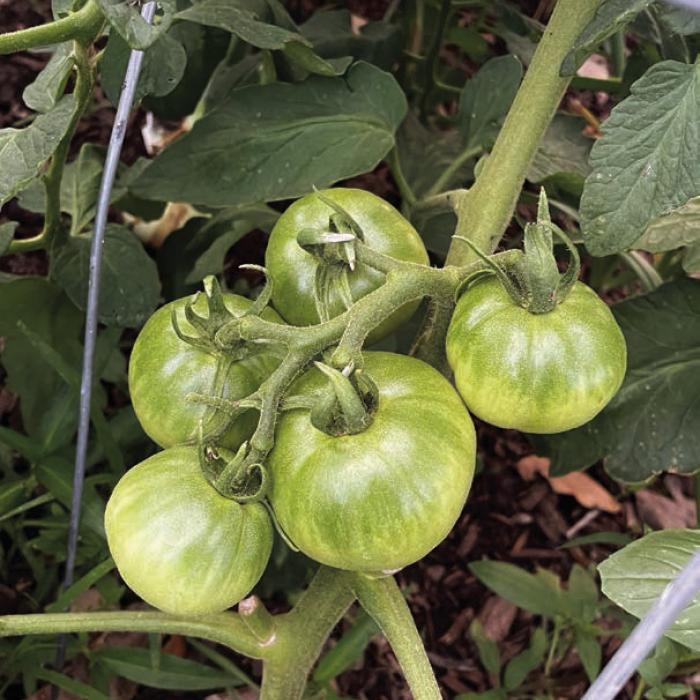
This year I’m growing three varieties of tomatoes – “Better Girl” (which is an improved variety of my favorite hybrid, “Early Girl”), some beefsteak-type heirloom with a name that escapes me, and “Paul Robeson.” I love the flavor and unique characteristics of heirlooms, but they can’t compete in production with hybrids. Right now, my Better Girl plants are loaded with clusters of four to six green fruits. The beefsteak plants look healthy and they’re loaded with flowers, but I’ve only seen a few fruits develop so far.
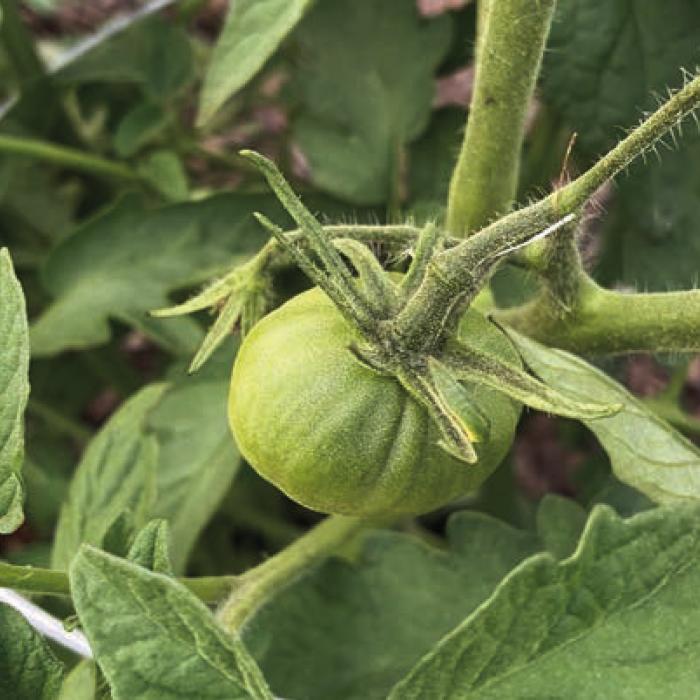
My Paul Robeson plants are faring a little better. But I kind of have a love-hate relationship with this variety. It’s my first year to grow them, and I’m quite impressed, considering that they’re a Russian heirloom. This plant produces large, black-shouldered fruits very popular in areas of the former Soviet Union. They’re named after the African-American singer Paul Robeson, who famously supported the Communist cause in the 1930s.
In my eyes, he’s a sad, disappointing figure. Robeson went to Russia in the 1930s where the Soviets, of course, treated him great. But he witnessed the communist disaster first-hand: famine, corruption, economic mismanagement, political imprisonment and worse. Yet he remained silent about it because communism was the hip new thing.
Janessa picked these plants out at an Austin garden market a few months ago based solely on looks. She knew nothing of the name. I kept my mouth shut when she placed them in our basket, thinking to myself, “Austin – of course they have Marxist tomatoes for sale at a business that relies on the free market.”
But they’ve grown quite well. So the other night, while listening to some music over a few cold drinks, I decided to rename them. In my garden, this variety shall henceforth be known as “Charlie Robison” tomatoes. Charlie was a much more likeable guy. He played football at Southwest Texas State. Seeing his brother Bruce’s success as a songwriter, Charlie decided, “I can do that.” He picked up a guitar and went on to write timeless classics like “Indianola” and “Loving County.”
What a king. We lost Charlie almost two years ago. I think he’d appreciate having a tomato named after him.