


No Vacation From Gardening: The Galangal Root Adventure
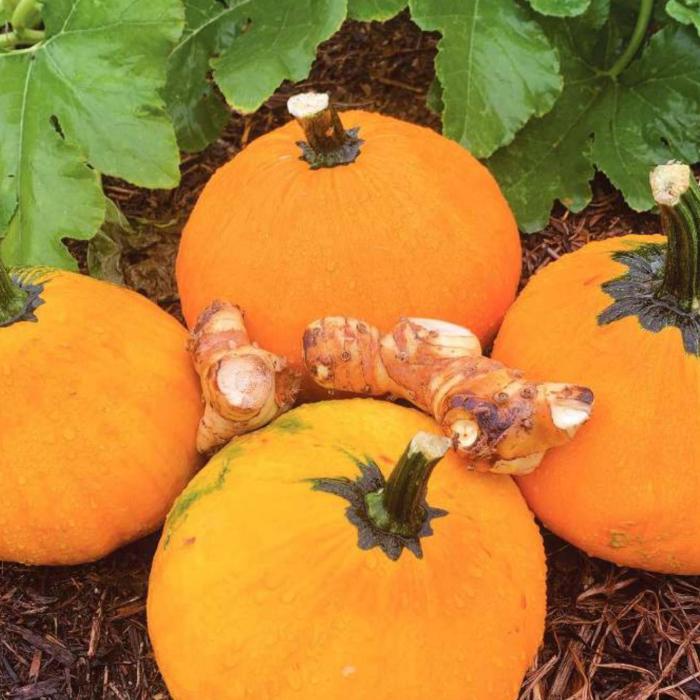

I’m on vacation this week, so on Tuesday, my son John and I drove to Austin to buy a galangal root from an Asian market.
If you’ve read my column for a while, you know I’m a huge fan of Thai cuisine. Thankfully, so are my wife and kids. One of the main reasons I garden is to grow the ingredients for Thai dishes that I cannot find locally - Thai basil, Thai eggplants, lemongrass, my beloved kaffir lime tree. Next on the list: galangal.
There are at least four plant species known commonly as galangal. From what I’ve read, the galangal roots you find at Asian markets are probably the ones technically known as “greater galangal,” or Alpinia galanga. This tuber, a relative of ginger, finds its way into many Thai dishes, especially curries.
Most of the time, I resort to using ginger in my Thai dishes because that’s what I can get at the local supermarkets. But galangal imparts a different flavor, similar to ginger, but with a licorice note.
I recently heard a report from someone in San Antonio who said now is a good time to start ginger, galangal and turmeric roots indoors in Texas. According to this report, these species can be planted from the roots sold at grocery stores. Most grocery stores sell ginger root. You will probably have to visit an Asian market to find whole roots of galangal or turmeric.
The report said these roots should be planted in pots and placed under a window, preferably west-facing. If the roots are fresh enough, they should sprout over the winter. They can be planted out in the garden in spring under partial shade. I’ve never grown any of these before, but judging from the pictures I’ve seen, they can be a beautiful tropical addition to the landscape.
Galangal should be the most hardy of the three. Most people in Texas have to treat ginger and turmeric as annuals. Galangal, according to many reports, can grow as a perennial in Central Texas with a little care. I have until spring to find its permanent home. I’m looking for a partially shaded area with some protection from the north wind.
But first, I had to find some galangal root. My son John is attending college from home this semester due to COVID. He wasn’t doing anything on Tuesday, so I asked if he wanted to ride along. On the way there, we talked about the differences between galangal and ginger, and how galangal is used in many southeast Asian cuisines while ginger is used more in northern Asia. We went to North Lamar, where there are many businesses that cater to Austin’s Asian-American community. We stopped at the first supermarket I saw with syllabic writing on the sign. I didn’t see any galangal in the produce section, so I asked the store attendant. He kindly instructed me in somewhat mutually-intelligible English to find a different market. I was a little confused when we walked out until my geographically astute son pointed out that we were in a Korean market.
“Didn’t you say they use galangal in southeast Asian?” He asked. “Korea is in north Asia.”
We drove farther up North Lamar across I-35 to the big MT Supermarket. It’s located in the Chinatown Shopping Center. The place was bustling with activity that afternoon. We donned our masks as soon as we got out of the pickup. It seems they’re a little more strict in Austin about that sort of thing. I noticed a poor fellow trying to smoke a cigarette outside. He was stuck in a COVID pickle play, frantically pacing around the parking lot in a desperate attempt to maintain distance from others, for he was committing two cardinal sins at once - smoking outside in Austin while not wearing a mask.
I love the smell when you walk inside MT Supermarket - from the aroma of the fish aquarium in the back where eels and other strange fish squirm before meeting the butcher block, to the exotic spices and fermented foods that fill the aisles. We headed to the produce section and finally found some galangal. I picked out the biggest, freshest looking root, about the size of a hand. I also grabbed a package of whole turmeric, about two dozen finger-sized roots. We perused the aisles where I picked up some different types of Thai curry paste and a big bottle of fish sauce.
When we got in line, I suddenly remembered that stores in Austin don’t give you bags to carry your groceries out, bless their hearts. The checker, realizing our predicament, looked over her shoulder as if to see if her boss was looking. She pulled a single plastic bag from her black market stash under the counter and hurriedly sacked our groceries to the scowl of a hardened Austinite behind us. I slipped her the money, $22. We dashed to the truck and started heading back to Fayette County before finding ourselves in any more trouble.
Back home, I cut the galangal root into three pieces - two to plant and the other for cooking. I’ve read it’s best to plant large chunks of galangal. Some people say to plant the whole root. If you cut it into pieces like I did, let the cuts scab over for a day or two before planting. Ginger should be treated the same way, but ginger can grow from smaller pieces. The finger-sized turmeric roots can be planted whole.
The best Thai dishes I’ve tasted at restaurants always include a slice of galangal. Like bay leaf, it’s used to flavor the dish, not for eating. Some people like to grate it into dishes. I like to slice off a piece, bruise it with a mallet and fry it with onion, garlic, lemongrass, curry paste, and kaffir lime leaf to make the base of a dish.
Tuesday night, I cooked a Thai curry with some weird volunteer pumpkins that popped up in my garden this fall. Pumpkins are actually quite common in Thailand, despite the fact that you’ll rarely find pumpkin curries in American Thai restaurants. I simply cut the pumpkin into one inch cubes. I used a panang curry paste I found at the market - similar to red curry but with more of an orange-yellow color. I also added some Thai yard-long beans from the garden that I chopped up. These beans taste like green beans but they are red and grow to about a yard in length while remaining tender. For meat, I added some ground turkey. Later, I wished I would have made the turkey into meatballs instead of leaving it ground. But it was still a good dish - a Thai take on some classic fall vegetables from the garden.