


My Garden Surprise Perennials
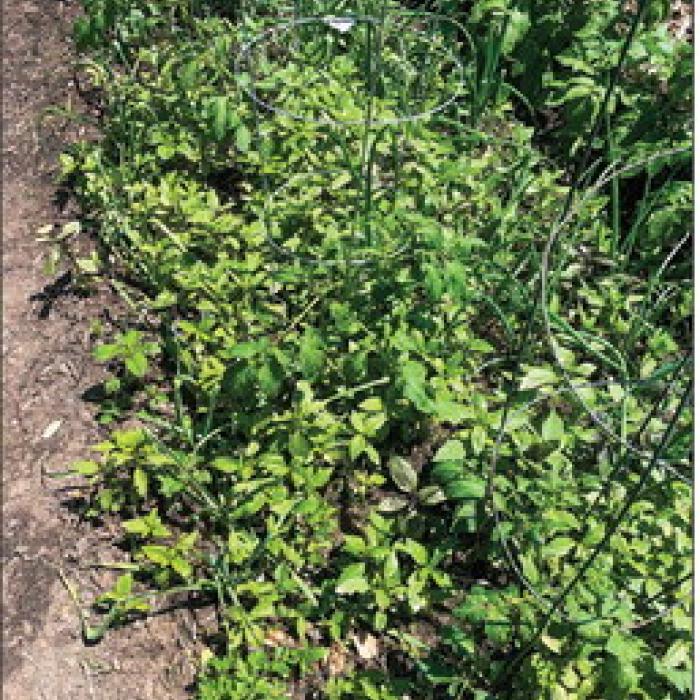

A few weeks ago I cleaned up a spot in the garden to plant some green beans. Last year, I grew some peppers and eggplants in this space.
I often leave the dead roots in the ground to decompose rather than pull them up. But one of the old eggplants was in the way. So I yanked it. Then I noticed some fresh white growth coming from the root I just pulled.
“Interesting,” I thought to myself. These eggplants had died back from the winter freeze. We even got some temperatures in the teens this winter. But this eggplant was clinging to life.
There were two more of these eggplants still in the ground. So I left them and planted green beans around them.
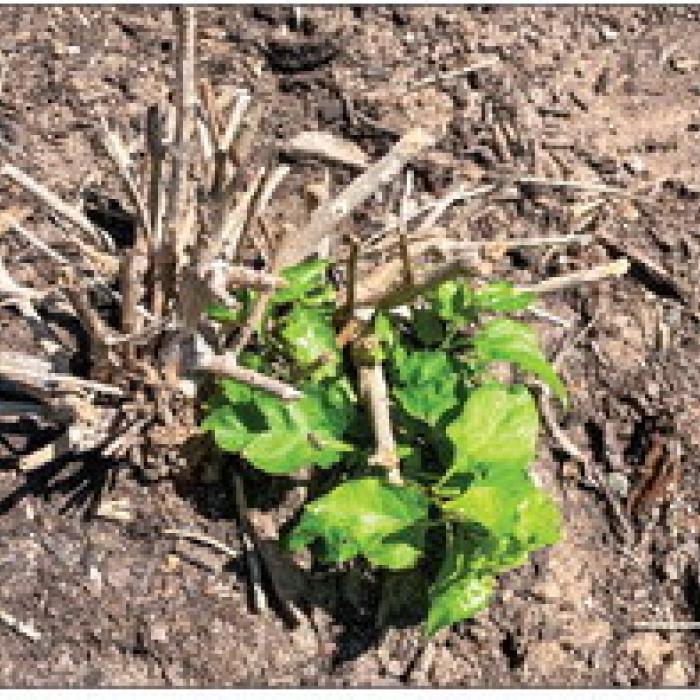
This week, some bright green growth popped from the soil around the roots of these two eggplants. I think they’re going to come back. The variety, as I recall, was called “Thai Frog.” These were little green fingerling eggplants, great for stir fries and Asian dishes. Perhaps they are more cold hardy than other eggplants.
Chili petin peppers often regrow from the roots year after year. Three or four years ago I dug up a chili petin pepper plant that was growing wild at my great-grandparent’s homestead in Henkhaus, between Moulton and Shiner. I took it home and planted it in a pot. It survived several years on our porch. Last year, I planted it in the garden and it thrived. Some new green growth appeared at the base of the plant several weeks ago. It looks like my Great-Grandma Wagner’s pepper plant will live another year.
Chilis and eggplants are both in the nightshade family. While chilis are native to the Americas, mostly from Mexico and farther south, eggplants originate in south and southeast Asia. Both plants, in their native range, are perennial. Gardeners must grow them as annuals in cooler climates.
Here in Central Texas, I think, our conditions are close enough to those areas that some of these plants can come back year after year. The late Darrell Berger of Swiss Alp, who was the father of one of my good friends, used to grow jalapeños in large molasses tubs. He’d set them out in the sun during the spring through the fall. Before the first frost, he would drag them into a barn for protection. He would bring them out on warm days during the winter for a little sun. They grew for many years. Some of them resembled a small tree. He never ran out of jalapenos.
Basil is another plant that never leaves my garden. The winter freeze, of course, kills it every year. But basil is such a prolific seed-producer that it readily volunteers all over my garden. I almost have to treat it as a weed. I love watching the genetic variation from year to year. Last year I had a few Italian-type basils planted in the garden, along with Persian basil and Thai basil. This year, some of the volunteers appear to be hybrids of these varieties. The Persian basil, a purple-leafed variety, came up true-to-type in some places. But in others, it appears to have crossed with the Thai basil to create a sort of redtinged basil. The Italian basil was planted farther away, and it appears to be more true-totype.