


A Look at Carbon Capture Technology
The Second Part of Our Series on the Texas Railroad Commission
Oil and gas companies are investing big into carbon capture technology, thanks to lucrative green energy incentives offered by the federal government. But a few critics warn the technology may cause more harm than good.
Oil and gas attorney Sarah Stogner has raised an alarm about Occidental Petroleum’s “Brown Pelican” carbon sequestration project in Ector County. In part one of this series, we profiled Stogner’s remarks at the Texas Railroad Commission (RRC) meeting earlier this month, in which Commissioner Wayne Christian expressed his boredom over her concerns. But many landowners might find the topic quite interesting.
Occidental says the Brown Pelican project is “designed to demonstrate utility-scale integration of transport and permanent storage of captured CO2 into a deep geologic formation.”
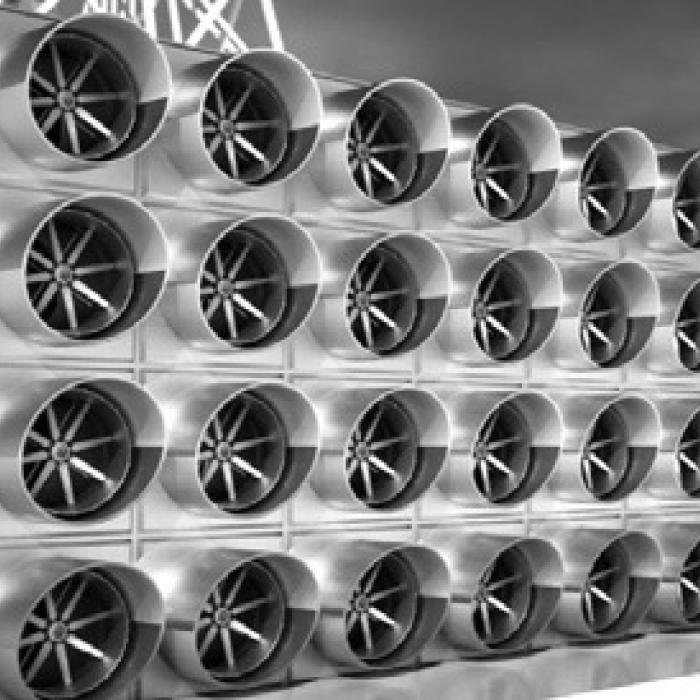
“They’re doing direct-air capture,” Stogner said in an interview with the Record. “They basically set up huge fans that are supposed to pull CO2 out of the atmosphere, condense it into a critical phase liquid, then they inject it into these CO2 sequestration wells.”
Oil companies have been injecting CO2 into old oil wells for many years in a process called “enhanced oil recovery.” CO2 injected into the wells under high pressure forces out oil that could not be pumped out of the ground. CO2 injection for carbon sequestration, on the other hand, is a relatively new technology.
The federal Environmental Protection Agency (EPA) regulates these types of carbon sequestration wells, at least for now. The RRC is in the process of taking over regulatory authority for carbon sequestration wells.
“They admit that there are three old dry holes in the area of plume and pressure meaning those three old well bores are admittedly going to sustain additional pressure because of the injection,” Stogner said.
Stogner said those old wells near the Brown Pelican site will be in contact with the CO2 that Occidental (Oxy) plans to pump under tremendous pressure into the ground. When CO2 mixes with underground brine water, it forms carbonic acid, which corrodes steel and cement.
Stogner said her biggest concern is the effects of this project on those three old wells.
“Everyone is just assuming they’ll be able to go in there and replug them,” Stogner said. “But Oxy has not submitted any paperwork to the Railroad Commission to replug those wells. What I’m hearing from insiders is that Oxy and the Railroad Commission are in closed-door meetings, and the Railroad Commission is going to hire the contractors to replug these wells so that Oxy does not have to file (the paperwork) and they don’t have to be the official operator of record on those old three wells.
The State of Texas mandates the RRC to cleanup and plug abandoned wells.
“Basically, the government is going to hire the contractors and get reimbursed by Oxy to replug those wells,” she added.
Stogner said she believes Occidental wants the state to replug the wells so they aren’t liable for any damages if something goes wrong. At the RRC meeting last Tuesday, Stogner warned the Commissioners about the potential for these old wells to fail.
“My purpose in being here today is so that I can come back in five, 10, 15 years from now when we have subsurface trespass of that CO2 onto my clients property, to say there was absolutely no excuse for this,” Stogner said.
CO2 injection poses several risks. Critics worry about the potential for earthquakes caused by the tremendous pressure pumped underground, or the potential for the wells to leak, contaminating groundwater resources.
A catastrophic failure could leak massive amounts of CO2 at the surface, asphyxiating any animal life in the area. Such a scenario happened in Satartia, Mississippi, in 2020. A CO2 pipeline feeding wells in that area ruptured. No one died. But according to a report by the American Institute of Chemical Engineers, emergency officials had to evacuate 200 residents and 45 people were hospitalized.
Carbon sequestration has become incredibly lucrative for oil and gas companies thanks to tax credits offered by the U.S. government. The 45Q tax credit for carbon sequestration, first introduced by Congress in 2008, provides up to $85 per metric ton for carbon capture and storage in saline geologic formation. Direct air capture (DAC) systems, such as the Brown Pelican project in Ector County, can earn tax credits up to $180 for every metric ton of CO2 sequestered in the ground.
In its filings with the EPA, Occidental said it expects to inject 8.5 million metric tons of CO2 into the San Andreas rock formation over 12 years. At that rate, the company stands to bring in $1.5 billion in tax credits. A 2022 article from Politico’s Energywire said the Brown Pelican project was estimated to cost the company $800 million - $1 billion to build.
Could carbon sequestration ever come to this area?
A 2021 study out of the University of Texas at Austin identified the Texas’ coastal plain as one of the best locations for carbon sequestration for a couple of reasons. First, the coastal plain, stretching from the Balcones Escarpment to the Gulf Coast, offers some of the best geological formations for storing carbon. Second, the area is home to some of the highest CO2 emissions in the nation.
Direct air capture (DAC) systems like the Brown Pelican project can operate anywhere since they take CO2 out of the atmosphere. Other carbon capture technologies involve capturing CO2 directly from the emission source. It’s then purified and transported in pipelines to a storage site.
One of the biggest CO2 emitters in this area is the Fayette Power Project (FPP). According to the EPA, the power plant outside La Grange is the fifth-highest emitter of CO2 in the State, producing 8.3 million metric tons last year alone. That could amount to a lot in tax credits if someone found a way to capture and store it.
The Lower Colorado River Authority (LCRA) operates FPP and co-owns the plant along with Austin Energy, the City of Austin’s electric utility.
LCRA spokesperson Clara Tuma said LCRA is not eligible for the carbon tax credits.
“(T)he primary reason LCRA is not pursuing carbon capture is because the technology remains unproven,” Tuma said.
We also reached out to Austin Energy for comment about carbon capture at FPP.
“With a focus on clean energy innovation, Austin Energy is interested in and is researching carbon capture technology,” said Matt Mitchell, a spokesperson for Austin Energy.
“While this technology holds great promise, we do not have plans to implement carbon capture at our power plants at this time,” he said.