


Gardening: Keep Potato Beetles Away With Cilantro
family.
Potatoes are typically propagated from their tubers. But they produce seed-filled berries as well. Native to the highland areas of South America, potatoes thrive best when conditions remain somewhat moist and below the mid-80s in temperature. They’re more likely to bloom and set fruit under these conditions. It’s been a little dry lately, but I’ve watered my potatoes enough to keep the soil from completely drying out.
The cooler days, I think, have encouraged bloom development. Potato breeders raise plants under the perfect conditions for them to flower and fruit. This way, they can cross-breed them and create new varieties. Supposedly, true potato seed rarely grows into an identical plant to its parents. If mine actually set fruit, I’ll try to harvest some of the seed and grow them in a greenhouse this fall and winter. Who knows what I might come up with?
But the days are getting hotter. Those blooms may not turn into fruit afterall. But it could be a fun experiment.
Blooming potatoes indicates that the tubers are indeed growing under ground. That’s a good sign. As soon as the blooms appear, you can dig up a few plants for “new” potatoes while waiting for the rest to grow larger underground. I’m not all that interested in new potatoes right now. So I’m waiting for the big harvest.
From what I’ve read, Adirondack Blue is considered a mid-season crop that takes about 80-90 days for full maturity. Red Norlan is considered an early season crop, with harvest coming as soon as 5060 days.
But I’m not counting the days. Rather, I look for the foliage to start turning yellow. When that happens, I know it’s time to harvest. But don’t wait too long, or the tubers could rot in the ground.
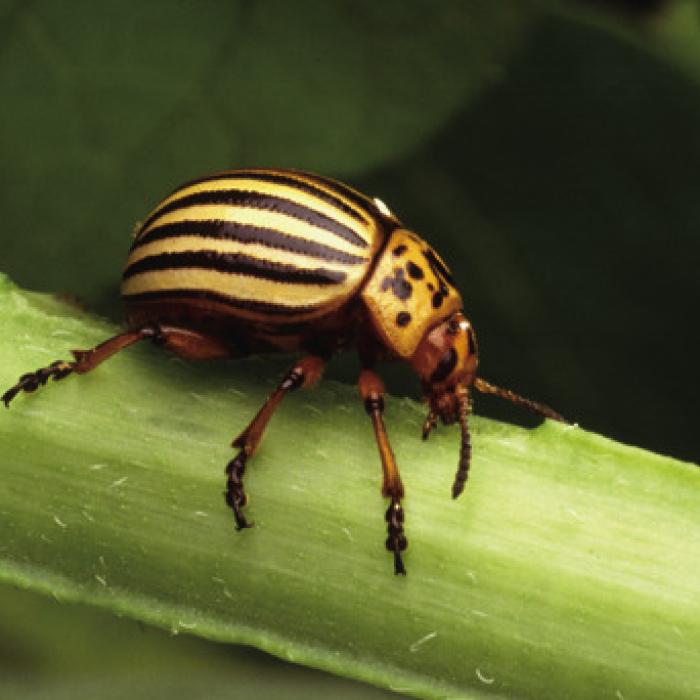
In past years, the biggest pest in my potato patch has been the Colorado potato beetle. I saw one the other day and squished it. But I haven’t noticed an infestation, at least not yet. Last year I completely avoided this pest, perhaps due to the cilantro I planted around the potato patch. I read that cilantro repels potato beetles. Apparently they don’t like the smell. I did the same thing this year – planting a few cilantro plants among the potato patch. I think it’s working.
If you’re seeing some beetles around your potato patch, consider planting some cilantro. Just buy a few plugs from any garden center.