


Fayette County May Be a Mixed Bag For Wildflower Viewing This Spring
Spring began on March 20, and the bluebonnets must have gotten the message. Dots of blue started popping up all over the landscape of Fayette County last week.
Dry weather over the past few months may have set back what could have been a spectacular wildflower season. The University of Texas’ Lady Bird Johnson Wildflower Center predicts a subpar season in areas of the state west of here, where the weather has been extremely dry. On the other hand, the Wildflower Center expects lots of blooms in the eastern part of the state, where rainfall has been abundant.
Fayette County lies at the boundary of those recent weather patterns. So the season here could be mixed.
“If predicting the weather is a challenge, then predicting the wildflower bloom for a big state like Texas is even more of a challenge,” said Wildflower Center horticulture director Andrea DeLong-Amaya in a recent forecast. “With fluctuations in weather and micro-climate scenarios (where one small geographical area may have received different weather than others), it’s sometimes hard to make a big sweeping prediction. This is one of those years.”
The Wildflower Center predicted that if early spring bloomers like bluebonnets and Indian paitbrushes are a little more sparse this year, later spring and summer flowers might have a better chance to flourish.
“Later-in-the-season wildflowers like firewheel ( Gaillardia pulchella) or purple horsemint ( Monarda citriodora) could show up stronger this year, if spring brings wetter weather,” the Wildflower Center said in their recent forecast.
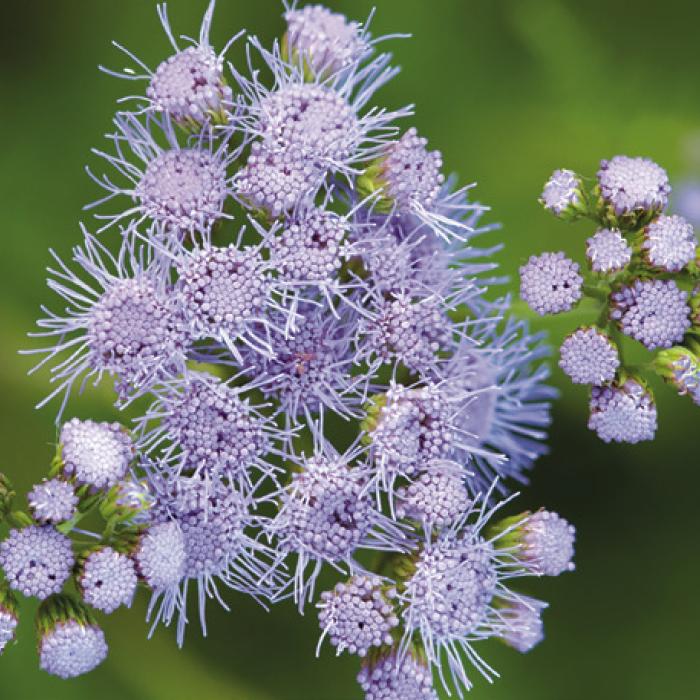
Every year the Wildflower Center designates a Wildflower of the Year, and this year’s honoree is the Gregg’s mistflower ( Conoclinium greggii) – a member of the Aster family. The Wildflower Center describes it as reaching up to two-feet tall with “small purplish-blue flowers clustering together to form puffy, cushion-like flower heads.”
Be on the lookout for this striking beauty.