


My Roller-Coaster Experience With Beekeeping
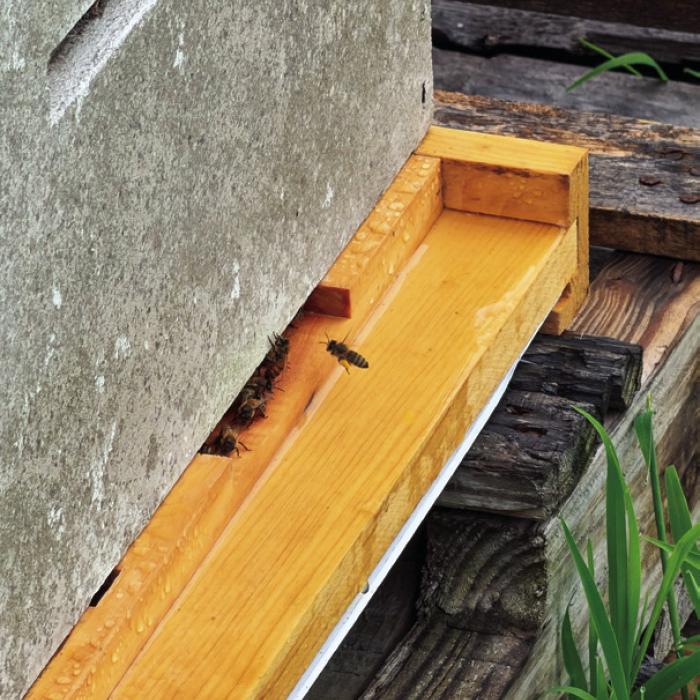

The late, great Sanford Schmid introduced me to beekeeping about 15 years ago.
I grew up in Schulenburg and never really knew the man, except that he was a successful businessman and a generous philanthropist, and his name graced the Amphitheater at the Texas Czech Heritage and Cultural Center in La Grange. Little did I know, however, he was probably the most knowledgeable beekeeper in Fayette County.
I was working for the Schulenburg Sticker at the time. As I recall, I met Mr. Schmid at a reception when a local business in Schulenburg moved into a new office. There was a keg of beer and a couple of old timers playing accordions. For whatever reason, Mr. Schmid and I struck up a conversation about bees.
As an avid gardener, I was interested in keeping bees to improve pollination. Mr. Schmid offered to show me the ropes. A few days later I met him at his house in La Grange. He showed me some hives he kept in his backyard. And then he drove me to a place in the country where he kept about a dozen hives. He gave me a short primer on the lifecycle of bees, how to handle them, and the equipment needed. It was during the middle of the summer, and he advised me not to start a beehive until the next spring. He sent me on my way with some contact information for a place in Navasota that sold bees and beekeeping equipment.
The next spring, I bought a nuclear colony and thus began my beekeeping journey.
All went well for the first few years. I didn’t steal any honey from them for the first year. The colony grew and they stored away plenty of food (honey) to make it through the winter. The next spring the hive burst into action. The colony grew so much I was able to “split” the hive, which involves dividing the hive into two and tricking one of them into making a new queen. Then I had two hives.
I added a couple of honey “supers” to my hives. These are smaller boxes that you can keep the queen out of. The worker bees use them exclusively to store honey. And then I made my first harvest. Janessa and I were flush with honey – way more than we could consume. I sold enough jars to recoup all my expenses and then some.
I went on with these two hives for another season. The next year I worked up the courage to capture a wild bee colony I found in an old abandoned barn. Now I had three hives. I was blown away by how fast the colony of wild bees grew. And they made a lot more honey. But the wild ones were a bit aggressive.
Then one summer I lost them. Maybe I made the mistake of stealing too much honey that season. You can feed bees with sugar water when there aren’t enough flowers growing to provide nectar. Or maybe my hive of feral bees stole honey from the tame ones and then moved on. I’m not sure what happened. I tried feeding them when I noticed the numbers dwindling. But it was too late.
That was about seven or eight years ago, and I haven’t had bees since.
A few months ago one of my sons discovered a wild bee hive at his place in an underground handhole box that houses a water valve. I hate killing bees, so I told him I’d help him relocate it. My old bee suit had some holes in it and was too ratty to patch. So I began looking for a new one online. Then I decided that if I was going to buy a new bee suit, I might as well get back into beekeeping.
I went through my old beekeeping equipment and bought a few pieces that needed replacement, along with a new suit. Then a couple of weeks ago, I hooked up with Johnny McCoy of Johnny’s Bee Haven in West Point. He sold me a nuclear colony, and the bees went to work right away.
A couple of months ago, I planted some cucumbers from seed. Well, they’re not actually cucumbers; they’re called Xylangouro melons. These melons are native to Greece and they’re really similar to Armenian cucumbers, which are also not a true cucumber but rather a melon-type fruit. They taste like cucumbers, and look sort of like them, too. But these Xylangouro melons and their Armenian cousins thrive in the heat.
Before the bees arrived, these plants were loaded with flowers. But they hadn’t set any fruit. I suspected they weren’t being pollinated. The day after the bees arrived, these plants were buzzing with activity. The next day, I noticed a bunch of small fruits forming. And a week later, I started picking cucumbers – all thanks to the bees.