


When A Gal Named Carla Paid a Visit
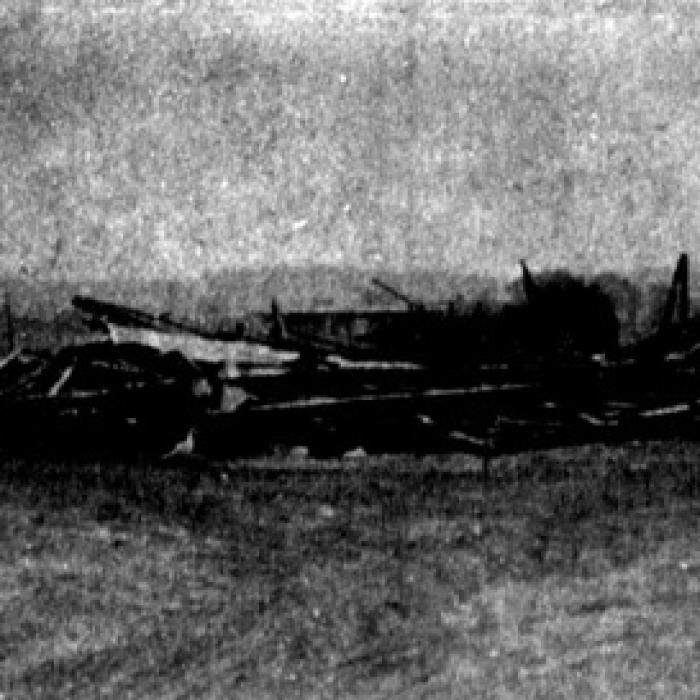
Lady Carla, described as “vicious and evil… left unforgettable memories of destruction in her short-lived existence… By midnight Monday, September 11, its gales of gusty winds were unofficially recorded as reaching past the 100 mile per hour mark.” Such were the words printed in the September 14, 1961, issue of the Schulenburg Sticker. This Footprints of Fayette article will deal with a storm that visited 65 years ago and left lasting memories in the minds of a majority of the older citizens in Fayette County. First, a brief history of Hurricane Carla. According to Wikipedia, the hurricane was noted as the second most intense hurricane in what we would refer to as “recorded” history to strike the state of Texas -- second only to the 1886 Indianola hurricane. With maximum sustained winds of 145 miles per hour, the storm made landfall on September 11 near Port O’Conner, Texas. The Fayette County Record reported that “if the hurricane goes inland as predicted and then perhaps swings more to the north, it could mean that Fayette County might be directly in its path…” Apparently, Lady Carla did have her eyes on Fayette County, as well as virtually the whole state. So, let’s examine how she affected our area.
Coastal Refugees: The September 12, 1961 Fayette County Record reported that “Highway 71 carried bumper-to-bumper traffic” and that an “estimated… 1800 people were accommodated here [in La Grange].” The La Grange Journal, dated September 14, reported that people arrived in La Grange from Freeport, Brazoria, Ganado, Lake Jackson, Angleton, West Columbia, Palacious, Galveston, as well as many other coastal cities. Around 700 to 800 persons had been housed in private homes, 200 to 300 at the La Grange High School Gymnasium, 60 at Roitsch’s Camp, 150 at the Fair Grounds and VFW building, 225 at Camp Lone Star, 50 at Luther Hill, and many more in churches, and other buildings around town. The Schulenburg Sticker reported that “approximately one-half million Texans left their homes with their families, a limited amount of clothing, what few items of necessity they could pack into their cars and began their search for protection against the winds, high tides, [and] rain...” (Note that at that time period, Highway 71 was only a narrow two lane highway through the county, with no shoulder on the roadway.)
Hurricane Damage in the County: Obviously, all of the local newspapers and radio station KVLG reported extensive damage in the area. The Fayette County Record reported that “trees of all sorts took a terrific beating in the hurricane winds. Practically all (the) pecans were stripped from the trees.” Roofs were damaged on commercial businesses and residential homes, store fronts were damaged, as well as many barns and countless windmills were twisted and destroyed. The paper also reported that the “largest single item of property damage was the destruction of the Sky-Hi Drive-in theater screen in the Riverside addition in La Grange.” (This site is currently occupied by the Fayette County Veterinary Clinic.) Unharvested crops, especially cotton, were badly hit. The loss of electrical service affected all, especially the local dairies. The loss of power caused the failure of the milking equipment as well as the cooling equipment. There were many dairies in the county at that time period. Luckily, area cattlemen were forewarned to remove their cattle from the Colorado River area and other creek lowlands before the storm. The Journal reported that the river was expected to rise to 30 feet in the La Grange area.
Despite the anxiety of the storm affecting the citizens of the area that Monday night, the Schulenburg Sticker reported that a man from San Antonio arrived in the Schulenburg area and attempted to rob a liquor store in town. He also carried out some robberies in the rural areas near Schulenburg. Apparently, the criminal element never rests.
Lasting Effects of the Storm: According to the news sources, “throughout Texas, Carla destroyed or caused damage to over 60,000 homes and other buildings.” A total of 34 people were killed, with some sources reporting 38. Austin TV station KVUE, in a special report on the storm years later would report that thousands of poisonous snakes would make their presence known as a result of the storm. The path of the storm would make its way into the Midwest and eventually into Canada. Wikipedia states: “Owing to the hurricane’s intensity and destruction, the name Carla was retired after the season, and will never again be used for an Atlantic hurricane.” The author of this article, as well as having clear and lasting memories of the destruction caused by the storm, remembers having to attend school in La Grange ISD on a Saturday to make up for the missed days caused by the storm. In addition, any older citizen in the local area, as well across the state would easily have stories to tell about this Lady Carla and her “vicious and evil” legacy.
Sources: The Fayette County Record, September 12, 1961 and September 15, 1961 The La Grange Journal, September 14, 1961 The Schulenburg Sticker, September 14, 1961 Wikipedia, Hurricane Carla KVUE, Hurricane Carla September 13,
Footprints Of Fayette
Fayette County is one of the most historic counties in Texas. In this weekly feature from the County Historical Commission, a rotating group of writers looks back at local history.