


A Warda Childhood Wrapped in Heartwarming Memories

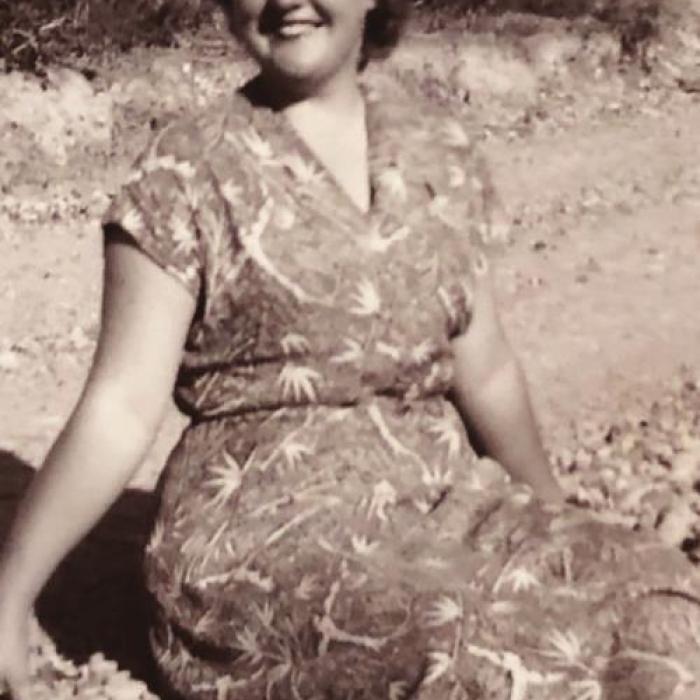
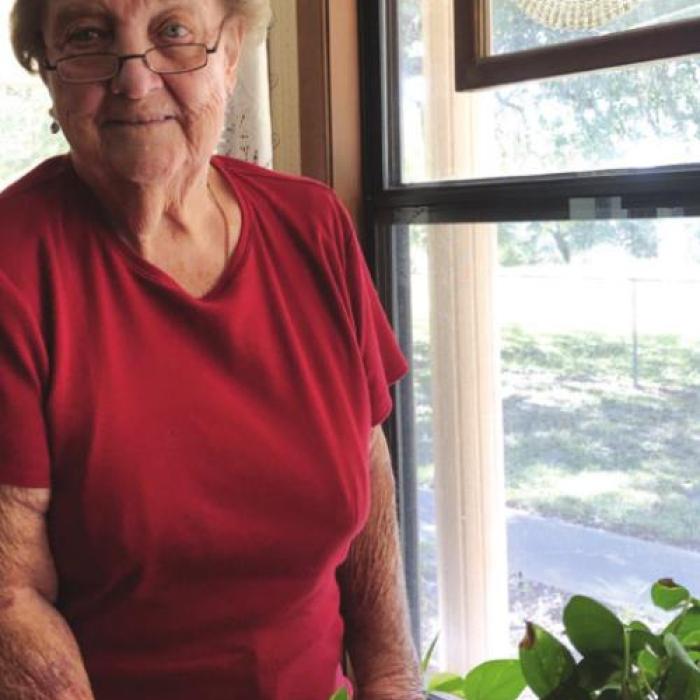
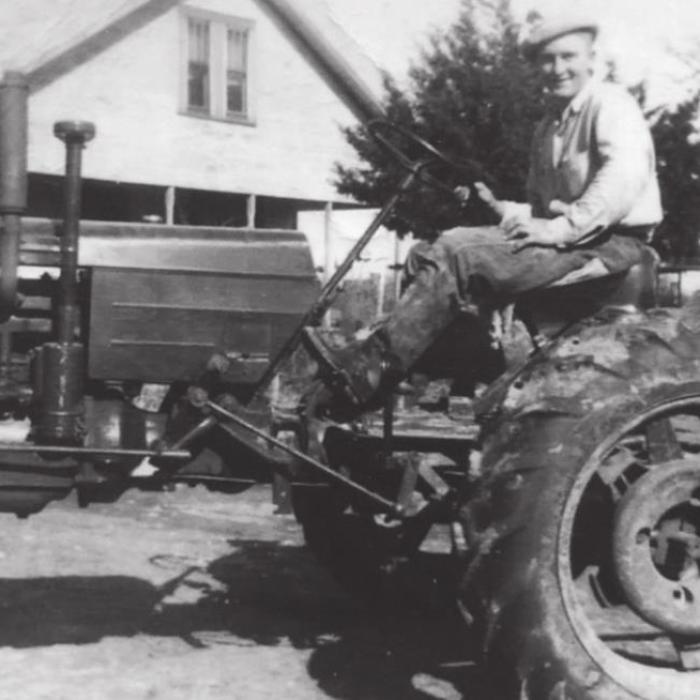
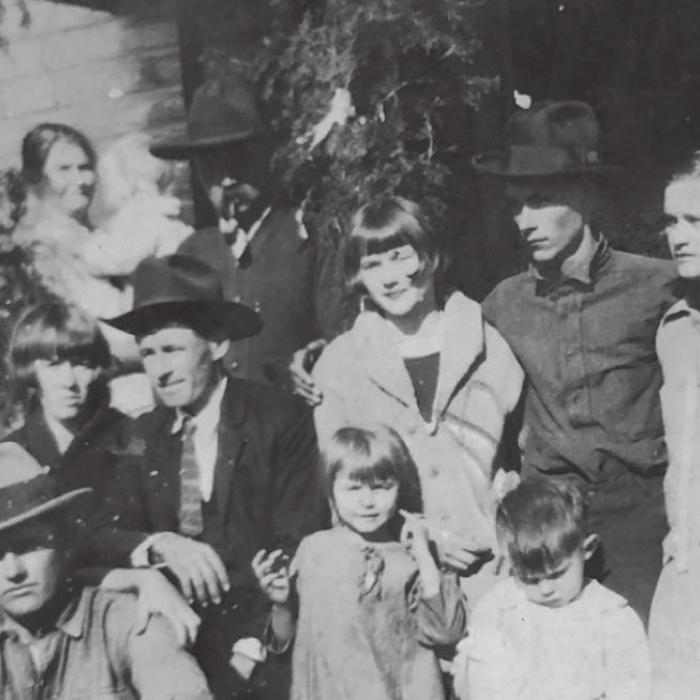
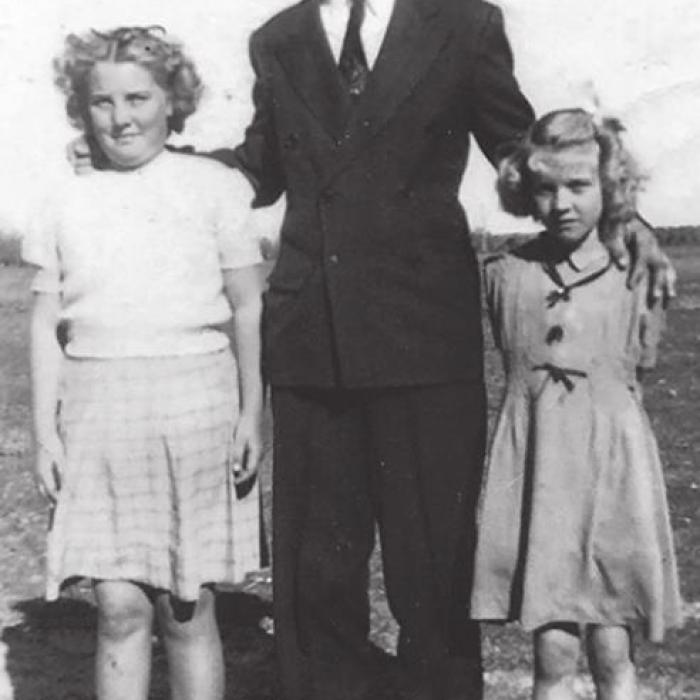
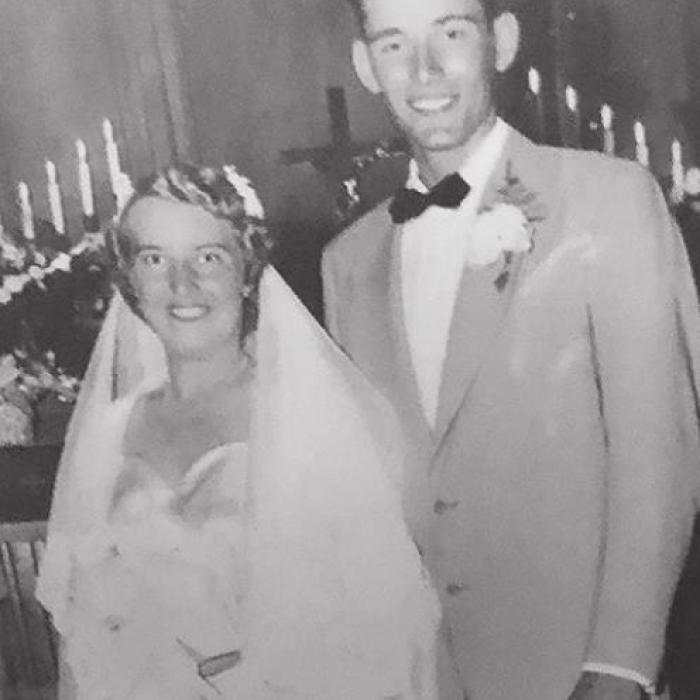
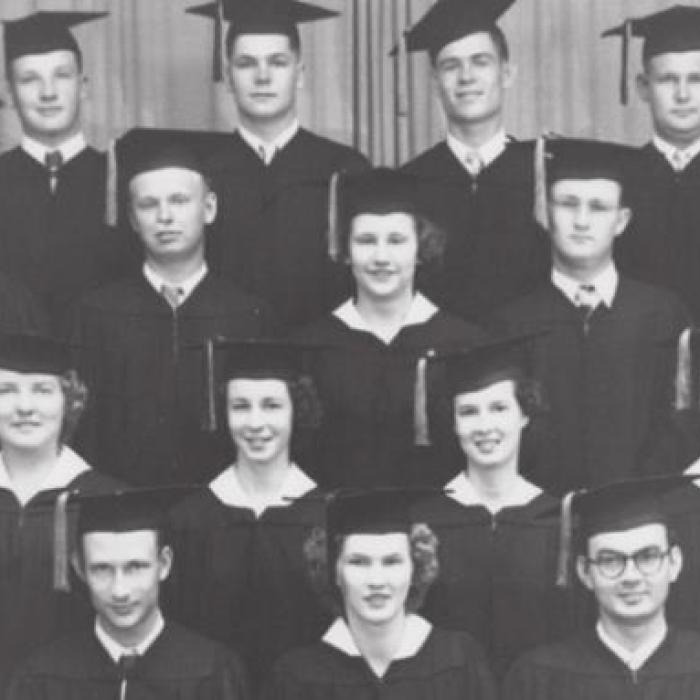
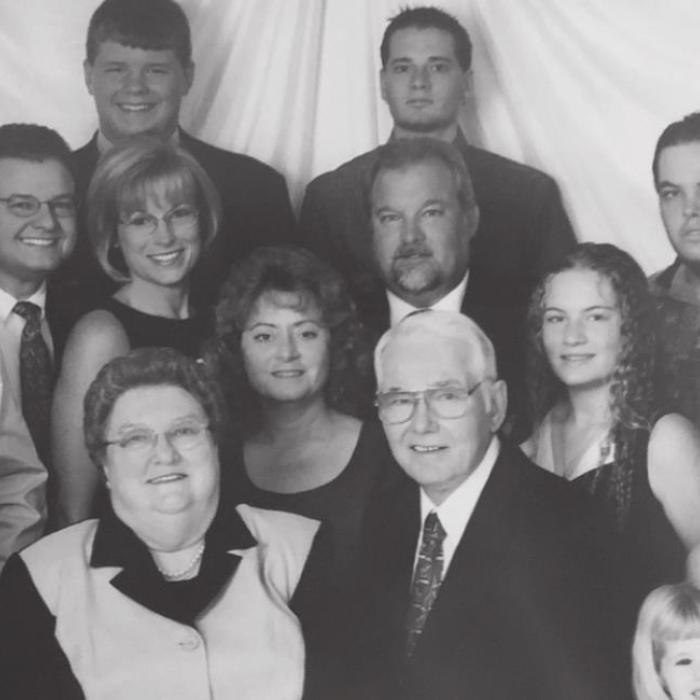

Admitting she was a tomboy growing up, Frances says her mother’s innate skills didn’t come naturally to her. Mrs. Pietsch could study a garment in a Sears, Roebuck & Co. Catalog, design her own pattern and sew a very close replica like the dress Frances is wearing as she poses for the camera. Frances Marie Pietsch Schumann was born at the old hospital in La Grange in 1933. While the way of life she knew growing up on a farm between Warda and Nechanitz is very different from rural life today, Frances says she wouldn’t trade the memories she made. Photo by Elaine Thomas Frances Schumann’s father, Alfred Pietsch, was very proud of his first tractor, a Case. It replaced the team of mules Mr. Pietsch had used all his life for farm work. Here Frances’ brother, Elmo, is driving the Case. The Pietsch home is in the background. Several members of Frances’ maternal family gathered for this photo in the early 1920s. (Front row, left to right) Frances’ mother and dad. (Second row, left to right): Uncle Martin and Aunt Heddy Hobratschk; Uncle Johnny and Aunt Hulda Wolf; and Uncle Martin and Aunt Elsie Walther. (The couple in the back row and the children are unidentified.) The Pietsch siblings circa 1939 (left to right): Frances, Elmo and Junell. According to Frances, her late husband, Walter Schumann, was not only good looking but a very fine man. They were married in 1953 at Holy Cross Lutheran Church at Warda. Students in the 1951 graduating class of Round Top-Carmine High School were (front row, left to right) Lloyd Giese, Leda Mae Keilers, Elwood Hackemack, Elva Lou Leutge, Morris Wunderlich, Margie Ann Bartels and Myron Jean Bruening. (Second row, left to right) Willie Lou Eichler, Marceil Meiners, Frances Pietsch, Charleen Gest, Billie Jean Killough, Vernice Dippel, Sophronia Meinardus and Joyce Ullrich. (Third row, left to right) Delmuth Brau, W. T. Marth, James Schlabach, Otto Mueller, Josie Lyn Mueller, Delvin Reuter, Leslie Hackemack, J. D. Mueller and Vernon Fuchs. (Back row, left to right) Elroy Ullrich, Lloyd Doerr, Emmett Stork, Glenroy Ebner, Bobby Beckham, Harold Mueller and Don Golleher. According to a story in The Fayette County Record on June 1, 1951, Frances Pietsch, Elvia Lou Leutge and Marceil Meiners led the commencement song. Photo courtesy of Fayette Heritage Museum and Archives. Pietsch family members gathered on Sept. 12, 2003, to celebrate Frances and Walter’s 50th wedding anniversary were: (front row, left to right) Danna Davidson, Frances, Walter, Kelsey Brown and Donna Brown; (second row, left to right) Belinda Schumann and Michaela Schumann; (third row, left to right) Jon Davidson, David Davidson, Gayla Davidson, Belinda Schumann, Michael Schumann, Spencer Schumann and Eric Brown; (back row, left to right) Dustin Davidson and Jacob Schumann. On Sunday afternoons when it was customary for families to gather, cousins regularly played baseball. Left to right are: Collin Pietsch, Audrey Hobratschk, Junell Pietsch, pitcher Frances Pietsch holding the ball and Venettrice Pietsch.
Frances Pietsch Schumann grew up in a secure, stable home surrounded by a loving family with numerous kin living nearby.
On nippy winter mornings back in the mid to late-1930s, Frances Pietsch Schumann remembers waking up to the sounds of her dad moving around downstairs. The family’s farmhouse between Nechanitz and Warda in northern Fayette County had no electricity, indoor plumbing, running water, furnace or telephone. That’s why Alfred Pietsch first lit a glass kerosene lamp in the kitchen to start his day.
Next, Mr. Pietsch would build a toasty fire in the silver stove in the dining room before the green and beige porcelain wood-burning cook stove in the kitchen was lit. Delicious warmth soon dispelled the chill in the kitchen and sent a little heat upstairs where Frances and her siblings slept. Her brother, Elmo, was seven years older than Frances, and her younger sister, Junell, was two and a half years younger.
Before Frances’ mother, Minna Walther Pietsch, got busy in the kitchen, she placed the children’s clothing near the silver stove to warm before it was time for them to dress. That included the heavy, long cotton stockings that Frances and Junell wore under their dresses.
After a hearty breakfast, the Pietsch kids were ready for school on weekdays, chores on Saturdays and holidays, or church on Sunday, plus special occasions such as Christmas Eve and Christmas Day.
Christmas was special
In late December, the door to the sitting room in the Pietsch house remained firmly closed and the children knew better than to sneak a peek.
“That was Santa’s room. We were told we wouldn’t get any presents if we looked in. When my parents finally opened the door on Christmas Eve, the first thing we would see was Santa sitting there in a rocking chair beside a cedar Christmas tree that had been cut down in the pasture. I don’t know when my parents had set it up,” Frances says.
Short wax candles sitting on small round silver holders clipped on the tree’s branches enthralled Frances. When lit, the candles flickered and glowed in the darkened room, an awe-inspiring sight as the family stood around it and sang Silent Night.
Yet even as a child, Frances recognized the tiny open flames represented a safety hazard.
“We’d stand there ready with our wet rags just in case a candle fell over and started a fire. At our church, Holy Cross Lutheran at Warda, we had a big cedar tree and those little wax candles, too. Several of the fathers sat nearby in the first pew, again prepared with wet cloths and a bucket of water. But, as I recall, they never had to use them. In fact, I never remember hearing of anyone who lost a tree or a building from those candles.”
Before the Pietsch family left home for the December 24 evening Christmas pageant at church, the children were allowed to open a gift. It was often a new piece of clothing. Frances recalls a new dress she wore one year to deliver her recitation.
“I could feel my knees knocking when I walked up to the front of the church,” she recalls. Frances fervently prayed she would remember the words.
On Christmas morning, there might be one or two other gifts under the Pietsch family Christmas tree, such as dolls for the girls. The most treasured of all the presents that Frances and Junell received was a bicycle. For years, they took turns riding it. After the sisters outgrew it, youngsters from seven other families, most of them with the surname of Pietsch, continued to enjoy the bike.
On Christmas Day, Frances says there was always a church service and if Christmas fell during the week, the service was repeated the following Sunday. That was for the benefit of all who lived elsewhere but came home to Warda for the holidays.
However, what brings the brightest gleam to Frances’ eyes (and perhaps a little lump to her throat) is the memory of the crate of Christmas apples and oranges. Each December, Mr. Pietsch placed an order at a grocery store in La Grange for the annual treats that were stored in the sitting room and doled out over the holiday season.
“They smelled so good! They tasted good, too! I’ve never forgotten that,” Frances adds, noting that apples and oranges were, indeed, rare treats.
Another Christmas tradition that Frances recalls is her paternal grandfather, August Pietsch, getting the attention of his gang of grandchildren with the words ‘Well, let’s see if we can find something in here.’ The elderly Germany-born gentleman would go to his desk and bring out a bag of store-bought candy with coconut centers and strawberry shells. Perhaps he had a sweet tooth, too, because he offered his offspring candies occasionally during the year as well!
Frances’ paternal grandmother, Teresia Jurk Pietsch, would cook a goose she had raised for Christmas dinner. The traditional German blessing was said over the meal: Komm Herr Jesu, sei Du unser Gast, und segne was Du uns bescheret hast. Amen. (Come Lord Jesus, be our guest and let these gifts to us be blest. Amen)
After a big meal of homegrown and home-cooked dishes, the cousins went outdoors to play and the adults visited.
“There wasn’t much alcohol consumed, not even a lot of beer. The adults might have a bottle of whiskey but that was for medicinal purposes, mind you,” Frances says.
Depending on whether the weather was cool enough before or after Christmas, the individual Pietsch families prepared to butcher hogs. Close coordination of the dates was essential because they helped each other with the big chore.
At the time, Frances’ Pietsch grandparents were the only ones with a telephone, a party line shared with several neighbors. Each number had a designated distinctive ring, such as one long and two short or two longs and one short. The telephone was primarily used to share life or death news or in emergencies.
Although each Pietsch family owned a car, it was most common to deliver messages from one family to the next by cutting across the fields on foot.
“For example, my dad would say, ‘OK, we’ll butcher Monday.’ Then my uncle would say, ‘All right. We’ll butcher Tuesday.’” Frances remembers. “You can’t butcher if it’s warm, so they were good at looking at the signs in nature to predict the weather.”
The Pietsch families didn’t buy casings; they cleaned the intestines of the butchered hogs and stuffed them with sausage meat. Each family had a smokehouse where they cured their bacon, ham, sausage, etc.
“Daddy was good at that. Our meat was always delicious,” she recollects. Frances recalls a pitfall to growing up with a big extended family close by.
“You had to watch what you said and did because somebody would tattle on you!”
Helping Out
When it got very cold during the winter at night, Frances and her siblings would nestle down in their featherbeds.
“It didn’t snow often when I was a child, but once in a great while, it would get very cold. Our house was up on blocks, so the wind would blow under it, making it hard to heat. I remember my sister coming to my bedroom and saying, ‘Frances, I’m so cold. I want to crawl in bed with you.’ I told her, ‘You go back to your bed. You have a feather bed like I do, so lay still and you’ll get warm.’
“I feel kind of bad about that now, but you know how kids are.”
The family’s treasured feather beds were handmade by Frances’ mother and grandmother with help from women in the community.
“Remember me telling you we had a goose for Christmas dinner? Those feathers were sorted into piles depending on how soft they were. There would be feathers everywhere when we worked.
“That was a good gossip session for the ladies. When I was a teenager, I was finally old enough to go along and help. I still have a quilt filled with feathers,” Frances says.
Education
For grades one through four, Frances attended Nechanitz School, which had an annual enrollment ranging from about 20 to 25 students. As the crow flew, she walked a distance of about three miles to and from school. The one-room wooden building had no electricity, water or indoor plumbing and one teacher taught all eight grades.
“It was very rare for us to be taken to school,” she recalls, adding that after a rain the roads were very muddy and vehicles often got stuck. The only way to get going again was to fetch a team of mules to pull the car or truck out of a mud hole.
“So we walked through the pastures, watching out for mean bulls. At the time, very little brush had been cut down and there were a lot of stickers that stuck to our clothes and scratched our arms and legs. When the dew in the mornings was heavy, our stockings would be wringing wet when we got to school but we didn’t think anything of it. Everybody did that.”
Frances’ Grandma Pietsch was not happy that the language spoken at the public school was English. Although she had been born in Texas, German was her first language and she saw no reason why her grandchildren shouldn’t continue to speak it, too.
“Although we spoke only German at home, I knew some English when I went to school. It didn’t take me long to learn. Within a couple of weeks of hearing the teacher and other students speaking English, I could, too.”
Frances’s favorite teacher was Mrs. Robbie Lemmons, the wife of C.A. Lemmons, who later served as superintendent of the La Grange Independent School District for 41 years.
“Mrs. Lemmons was such a sweet lady,” Frances remembers.
“I loved reading. I have always loved reading. When I got tonsillitis and had to stay home, I asked my daddy to go to school, pick up my reader and bring it home. Mrs. Lemmons told him I didn’t need to worry about my reader, but I was insistent, so Daddy brought home the book.”
Frances sometimes sat in a tree to read and got so immersed in the story that she fell out several times. She also had a great imagination. Her imaginary friend was named Clara Barton.
When she entered the fifth grade, Frances went to the parochial school associated with Holy Cross Lutheran Church in Warda. When it was time for high school, Frances caught a school bus at the end of the Pietsch’s mile and a half long lane. She rode to Round Top where she transferred to another bus. It transported the older students to Round Top-Carmine High School in Carmine.
Hauling Water
“When we got home from school, that didn’t mean that we were through for the day,” Frances says.
“We would rush in and have a little snack. Then we had to do our chores. I can’t ever remember grumbling about it. It’s just something we did.”
One of Frances’ least favorite chores was hauling water for her mother’s spring garden.
“I would come walking home from school and see Mama with her hoe in the garden that was quite way from the house. I’d think to myself, ‘I know what I’m going to be doing.’ We had a pond but no hose or running water. Instead, I filled two five-gallon galvanized buckets and carried them to the garden. I made a lot of trips with those heavy buckets, but I knew the watering needed to be done when it was dry or else we weren’t going to grow any vegetables. I might have balked at the work in my head, but I never said anything.”
On Saturday mornings, Frances and Junell would help their mother clean the smoky buildup from the kerosene on the inside of the chimneys of the lamps, the family’s only source of indoor lighting. It was fortuitous that Grandpa Pietsch had a subscription to The Houston Chronicle, although the papers were several days old by the time they arrived at his Nechanitz post office box. Pages of those old newspapers are what the girls used to remove the grime. They also became proficient in putting in new wicks, long strips of thick fabric that transported the fuel to the top of the burner when they became soaked.
Frances helped her dad feed the family’s milk cows while it was Junell’s job to drive them from the pasture to the barn every evening. After hand milking the cows, the Pietsch family separated the raw milk. The skim milk was fed to the dairy calves and other farm animals, including the cats. The family either sold the cream for cash or made butter with it.
“I always liked churning, although we had to count something like 100 turns each. I’d get done real fast and my sister would say, ‘You cheated! You cheated!’ Then I’d tell her, ‘No, I just went faster than you.’ We sold our butter to stores in La Grange.”
Another demanding chore was washing clothes.
Once a week or so, depending on the weather, Mrs. Pietsch would build a big, hot wood fire under a big black kettle in the yard and fill it with water. She then would gather up the family’s dirty clothes. When the water was hot, she scrubbed each piece of clothing, rinsed it and hung it on a clothesline to dry.
“I mentioned that we didn’t have indoor plumbing, so I know all about two-holers and catalog pages used in place of toilet paper,” Frances adds.
Up, up and away
Frances graduated from high school in 1951 and, with her parents’ blessing, left for Austin where she enrolled in the Nixon-Clay Commercial College. At the business school, she took courses to learn office management skills and got a full-time job before graduating.
Admitting that she was enthralled with Austin from her first visit as a teenager, Frances says, “I knew I could always come home, though.”
On one of those visits to her family, she went with some friends to Widdy’s, also known as the Bloody Bucket. This Giddings gathering place for young people had a jukebox. There, she met a young man named Walter Schumann from Rabbs Prairie, another community in Fayette County down the road a few miles from Warda. Walter confided that he didn’t know how to dance.
“And I said, ‘Do you want to learn?’ and he said, ‘Yes!’ So we danced around the big stove in the room. He was a good student, a real smoothie on the dance floor,” Frances recalls.
And that was that.
Frances and Walter were married in September 1953 at Holy Cross Lutheran Church in Warda. The couple lived in Austin and the Metroplex until Walter, a mechanic by trade, was activated by the National Guard in Fort Polk, La. After several other stops, the Schumanns moved to Arlington where they lived with their three children, Michael, Gayla and Donna, until 1985.
By that time, Walter was ready to return home to Fayette County. Even though she enjoyed city life, Frances agreed to the relocation. She lost her husband 11 years ago.
“Walter Schumann was a good, good man,” Frances says. She’s glad that he had the pleasure of spending the later years of his life not far from where he grew up. As for Frances, “I was baptized at Holy Cross Lutheran Church in Warda. I was confirmed at Holy Cross Lutheran Church in Warda. I was married at Holy Cross Lutheran Church in Warda and I will be buried in the cemetery at Holy Cross Lutheran Church in Warda.
“I have been greatly blessed in life,” Frances concludes.
To read more stories written by Elaine, visit www.elainethomaswriter.com/blog/ and sign up to receive new posts twice a month. You can also call Elaine at 979-263-5031.