


A Veterans Day Tribute to the Young Men Who Flew Training Missions in Local Skies
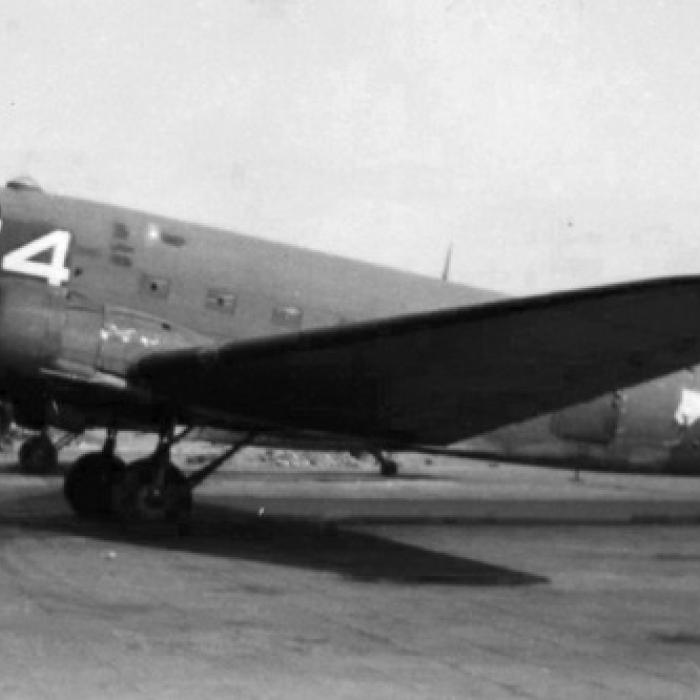
In a short period of time, November 11, the date set aside as Veterans Day will once again be heralded in Fayette County and across the nation. Since the year 2025 is also the 80th anniversary marking the end of World War II, it seems appropriate to mention a few coinciding events regarding Army Air crews on training missions that occurred in our area between December 1941 and September 1945. Some events ended well; some had a far worse ending. On December 25, 1941, just days after the horrific bombing of Pearl Harbor by the Japanese on December 7th, the La Grange Journal ran a short article about a tragic event in the Muldoon area. It stated that: “Flying Cadet E. R. Patello was instantly killed when his plane in which he was making a solo training flight crashed near Lena Switch, a few miles from Muldoon, Thursday night. (December 18, 1941) … Patello was supposed to have flown from Brooks Field in San Antonio, to Temple, Yoakum, and thence to have returned to San Antonio.” A local landowner reported hearing a plane flying overhead at 10 p.m. and a few minutes later a crash. A heavy fog in the area was considered as the cause of the crash. The pilot’s body was found in a ravine that emptied into Buckner’s Creek.
In the April 9, 1942, edition of the La Grange Journal, the horrific crash of another airplane was noted. The article stated that: “Three cadets were killed instantly Sunday morning when the airplane—probably a bomber—in which they were riding, became ignited and crashed in the Meyer farm field about two miles from Ellinger.” The tragic explosion, surmised to have been caused by a fuel leak and an electrical spark, caused the deaths of Lieutenant Charles Richardson, Sgt. Lawerence Addison, and Sgt. John Caddel. The Journal reported that the crash site was a sickening sight, a mix of human body parts and airplane remnants.
In the November 19, 1942, edition of the Journal, the following story was reported. “Within a very short time at least one hundred local people [in the Ellinger area] … gathered on the Evans estate where an airplane had made a landing in the field.” (This is currently the property of the Banks Ranch, off Highway 71.) “The airplane had run out of fuel and landed in a hay meadow. The pilot made a radio call to San Antonio, and another plane brought the necessary fuel to continue the flight.” The Journal would report several similar stories throughout the Fayette County area concerning military flights forced to land due to a shortage of fuel.
In a similar situation, described as near the county line between Weimar and Dubina, a belly landing due to engine failure was made by Pilot Alvin Christensen on June 21, 1943. The airplane was listed as having substantial/major damage occurring due to the rough landing.
The most tragic event within our area occurred outside of nearby Columbus. The Colorado County Citizen would report, in its September 30, 1943 edition, that “one of the most tragic disasters in Colorado County for decades occurred Saturday morning [Sept. 25th] when a Flying Fortress [B-17] bomber caught fire and crashed into a big field near the Colorado River…claiming the lives of all nine members of the crew.” The newspaper reported that the huge bomber, from Kearney, Nebraska, had smoke coming from one of the wings and then crashed on a bottomland farm. The deceased included two crew members from Texas.
On the other hand, a wonderful story of ordinary citizens working together to save a pilot occurred at Hallettsville on Wednesday, July 11, 1942, when a cadet on a night flying mission lost radio contact and all lights on his AT-6. Seeing the lights of Hallettsville below, he circled the courthouse several times and gunned the engine of his plane. A local serviceman on leave recognized the plane was in trouble, hopped in his car which had a spotlight and drove toward the square. Pointing the spotlight toward the plane, the pilot signaled with his motor that he saw the beam of light and began following it. Several cars joined the procession toward an old landing field located in a nearby pasture. Reaching the field, they spaced themselves along the runway and used their light to illuminate it. Soon more cars arrived from town and were put into position enabling the pilot to make a three-point landing without a scratch. Local citizens had saved both the pilot and an expensive aircraft.
These stories illustrate an almost forgotten way Fayette and nearby counties were affected by the war in Europe and the Pacific. During World War II there were hundreds of training accidents throughout our state that claimed the lives of young men before they ever faced the enemy.
Sources: Aviation Archaeological Investigation and Research On the Home Front in World War II, Lavaca County, Texas: The Story of the Downed Flyers from the 9th Annual Alton C. Allen Historical Conference Wikipedia
Footprints Of Fayette
Fayette County is one of the most historic counties in Texas. In this weekly feature from the County Historical Commission, a rotating group of writers looks back at local history.