


‘Tis the Season for Eating Beets

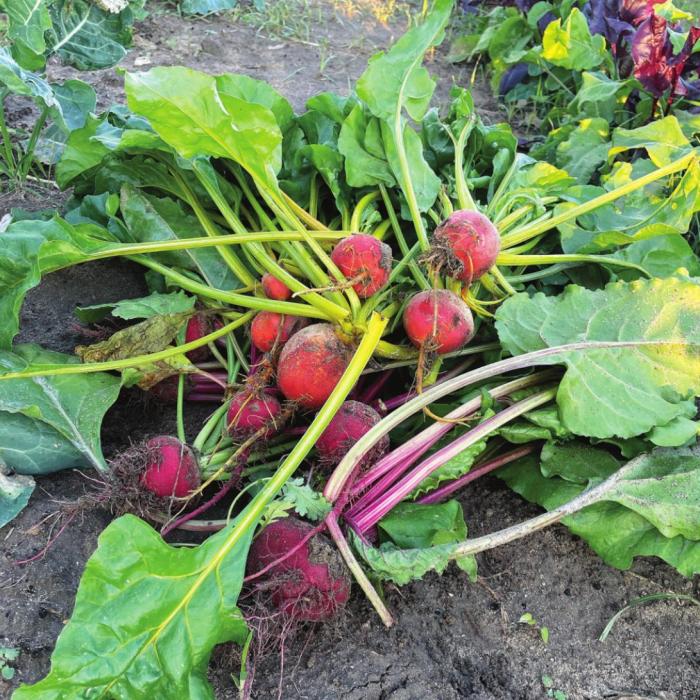
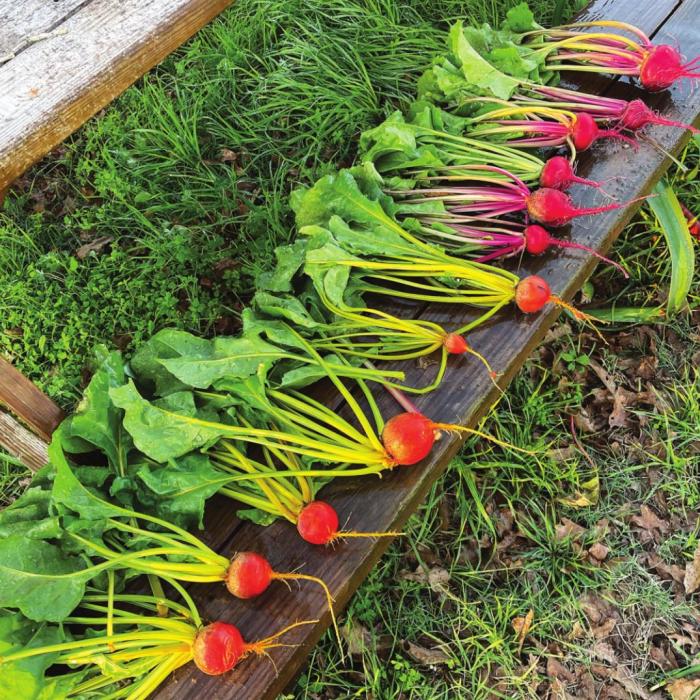
I’ve never been really successful at growing beets in the past. This year, however, I hit the jackpot in my beet patch.
When I’ve grown beets in the past, the bulbs never got much bigger than a radish. And they took forever to grow even that small. Since then, I’ve learned that beets require certain micronutrients, especially boron and magnesium.
Beets contain a high amount of boron compared to other vegetables. Boron is important for the production of human sex hormones. Perhaps this is why beets have been considered an aphrodisiac since Roman times.
Beets obtain boron from the soil through their roots. Some people suggest using the cleaning product Borax as a soil amendment. I’ve seen application rates that suggest one tablespoon per 100 sq. ft. Borax, or sodium borate, can kill plants if you use too much or if it builds up in the soil. Plus, borax has antifungal properties that could harm beneficial fungi such as mycorrhizae.
I think liquid seaweed is a better alternative. It contains trace amounts of boron. I foliar feed all of my plants with liquid seaweed about every two weeks. I think it provides enough boron for my beets.
The bigger problem with my soil, I think, is a magnesium deficiency. I learned this from growing tomatoes at my place. Tomatoes suffering from a magnesium deficency in the soil often produce tomatoes that have a small rotten spot on the “blossom end” of the fruit. These tomatoes are perfectly good to eat once you cut the rotten spot off, but they look ugly.
I learned a long time ago to sprinkle a little epsom salt, also known as magnesium sulfate, in the hole when I plant tomatoes to prevent blossom end rot.
A few months ago I read an article about how soils poor in magnesium affect the growth and vigor of beets. This year I planted a row of beets on Oct. 3. I sprinkled a little epsom salt in the row at the time of planting. I think it made a big difference. I started harvesting tennis ballsize beets about a week ago.
I planted three varieties this year: ‘Chioggia’ - an old Italian heirloom that looks like a bullseye when you slice it open, ‘Bull’s Blood’ - an old heirloom that produces deep red foliage, and ‘Golden’ - as the name implies a golden beet that doesn’t your clothes red. They were all seeds left over from last year, so I wasn’t confident about the germination rate when I planted.
I sowed them thickly down the row. The Chioggia and Golden beets germinated - probably close to 100 percent. Only about five or six Bull’s Blood beets came up, however.
It should be noted that the “seeds” you plant for beets aren’t actually a seed. These spiky little capsules are actually the dried fruits of the beet plant. The same goes for the seeds of Swiss chard and spinach, which come from the same family as beets. Each capsule contains three or four true seeds. It’s for that reason that beets often grow in clumps of three or four. Some people thin each clump to one plant in order to produce larger beets. I didn’t bother thinning my plants, and they are still producing big beets.
So what do you do with beets?
A lot of folks preserve their beets by canning. We’ve been eating so many at our house lately that I don’t think we’ll have any to preserve. My favorite way to prepare them is roasting. I cut them up into bite-size pieces and lay them out on a baking sheet. I season them with salt, pepper, olive oil and a drizzle of balsamic vinegar. Place them in a 350 degree oven and bake for about 30-45 minutes, or until they are carmelized a little on the outside.
Don’t throw away the tops, though. They make delicious cooked greens. Beet greens taste very similar to Swiss Chard but with a light, earthy beet flavor. My wife Janessa made a pot of beet greens the other night by sauteing them with some olive oil, onion, garlic and a half a can of Ro-Tel tomatoes. You can also grill the stems as a side dish. Just season them with olive oil, salt and pepper and grill them like asparagus.
Beets germinate ideally at 65-85 degrees, but they can germinate as in temperatures as low as 40. Germination may take two weeks or more at low temperatures. It looks like we’ll get a week or more of somewhat warm weather. You may be able to plant seeds now and still get a decent crop. Beets can be germinated in a greenhouse and transplanted. If you have a greenhouse and we get some cold weather, you could try starting the seeds inside and transplant a few weeks later.