

There’s Still Twice as Many Cattle as People in Fayette County
A County Changes, Agriculture Remains Important ...
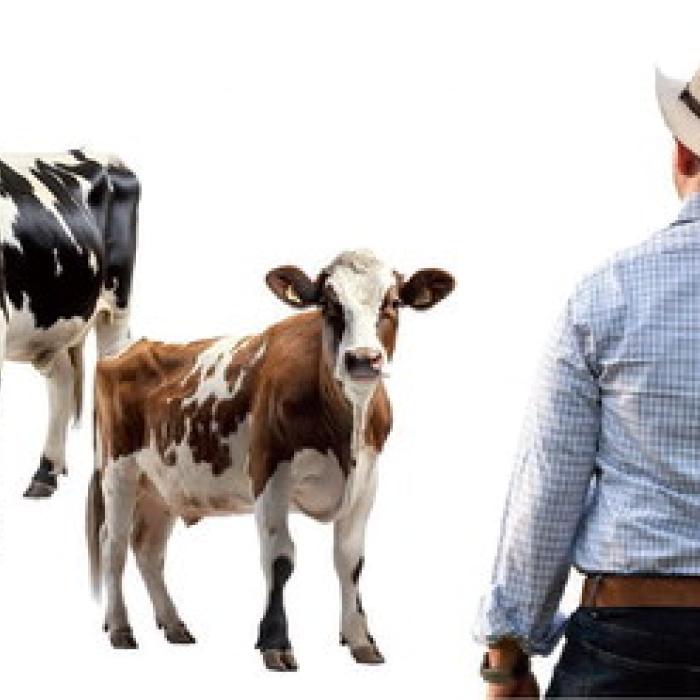
More than twice as many cattle live in Fayette County as people, according to Fayette County AgriLife Extension Agent Scott Willey.
Willey, along with fellow agents Kayla Kaspar and Sally Garrett, presented the Extension Office’ annual report to the Fayette County Commissioners Court last Thursday.
During the report Willey tory estimated the County’s cattle inventory at between 50,000 and 55,000 head based on information he collects from local livestock operations. By comparison, the U.S. Census Bureau lists the County’s human population at an estimated 24,913 as of last year.
Fayette still ranks among the top cow-calf producing counties in the state, but Willey said the cattle inventory here has tapered off slightly as land becomes divided into smaller tracts.
“With the growing population, we’re losing farm and ranch land for ag production,” Willey said. “Not everyone wants to raise food because of our busy lifestyle.
“It’s an important thing to think about,” he added.
Pct. 4 Commissioner Drew Brossmann asked Willey about the impact on the local ag economy of new landowners claiming property tax exemptions for wildlife.
“When I started in 2008, everybody wanted to own cows because we’re in Texas,” Willey said. “If you own acreage, you’ve got to have a cow, right? That seems to be changing. It doesn’t seem like everyone wants a cow because of absentee landowners. They don’t want fecal pads in their pasture. They want their pasture to look like a lawn. Everybody has a different perspective of what their utopia on their property is.”
Willey said that as an AgriLife Agent, his job is to help landowners accomplish their goals. The AgriLife Office offers seminars every year for new landowners. Willey said survey responses from the participants indicate a growing interest in wildlife management among new landowners.
“When we survey them after the program and ask them what enterprises they are engaged in - livestock, wildlife - they can choose as many as they want. Livestock was always number one by a large gap,” Willey said. “In the last couple of years, it’s been slowly changing. Last year, (livestock) was off by one percent.”
The changing patterns of rural land use present a wide range of implications for County leaders and local industry. Property tax exemptions for activities like agriculture and wildlife affect revenue for local governments. County Commissioners must maintain new roads as residential subdivisions replace open fields. Farmland that reverts to native prairie and brush pose challenges to local volunteer fire departments, because livestock and crop harvesting controls vegetation, lessening the danger of wildfire. Economic opportunities also arise - new fence lines need to be cleared and built, new ponds and wells need to be dug.
Businesses are pivoting - the dealer who used to sell one big tractor to a farmer on 100 acres might now sell five small tractors and a few UTVs to new customers who split up that acreage.
The County is definitely changing, as Willey noted. But cattle remain king, at least for now.