The Story of “A Monument Erected by Little Children”
When researching another topic in some 1925-28 issues of Fayette County newspapers, I got sidetracked. Multiple references to “a monument erected by little children’ grabbed my attention. What kind of a monument was this and why were children involved?
Curiosity aroused
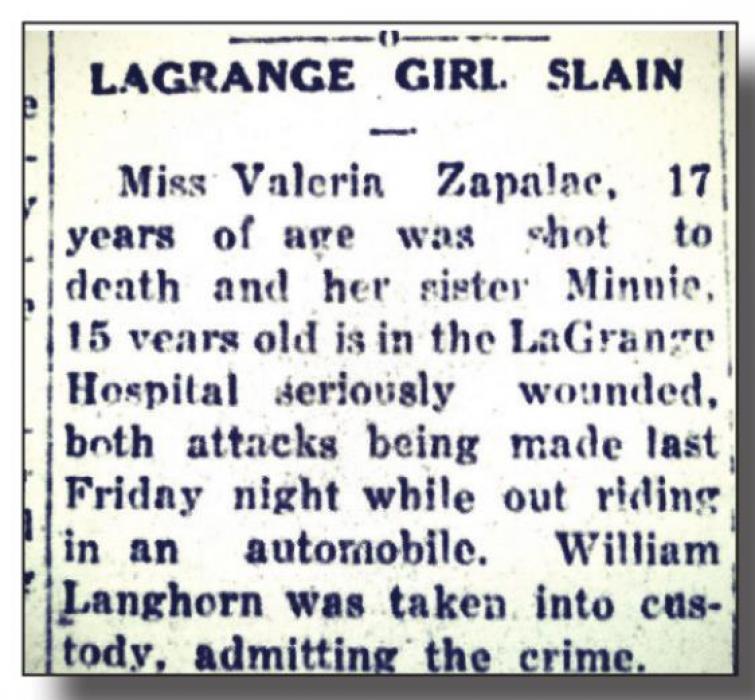
I found my answer in a series of news stories written by longtime La Grange Journal editor Benno F. (Ben) Harigel. He faithfully covered events surrounding the sensational murder of local schoolgirl 17-year-old Valeria Valasta Zapalac, on Feb. 3, 1925. The young woman lost her life while attempting to protect her younger sister, Minnie, from the 25-year-old man in whose car they were riding. The tragedy occurred in a rural area that’s now under Fayette County Lake.
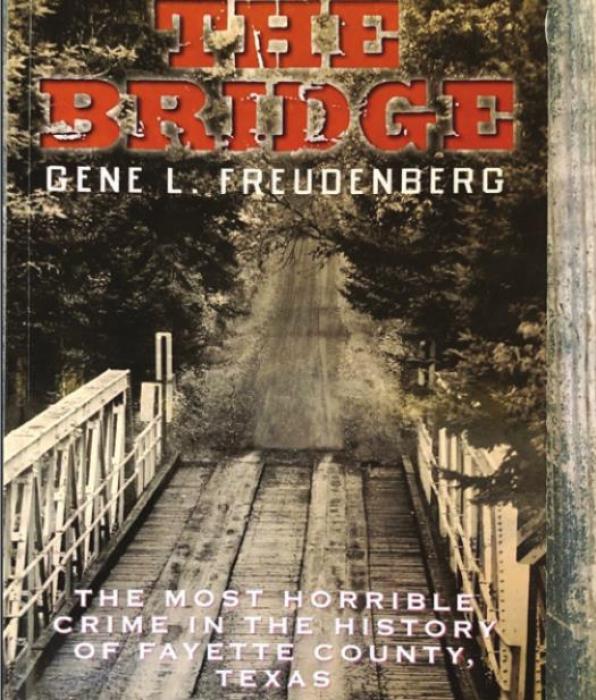
County Sheriff Will Loessin described the murder as the most horrible crime in the history of Fayette County, Texas.
“It was a traumatic event for everyone in the county,” says retired Austin, Texas, police officer Gene L. Freudenberg, whose 2012 book, The Bridge, tells the complete story. This murder was of special interest to Gene because the sheriff’s wild pursuit of the murder suspect that long ago February night ended shortly when he lost control of his car near Plum. The fence he crashed into belonged to Gene’s greatgrandfather, John Freudenburg.
“Crimes like that were not common in Fayette County, Texas, and people wanted to do something to show they cared,” Gene says.
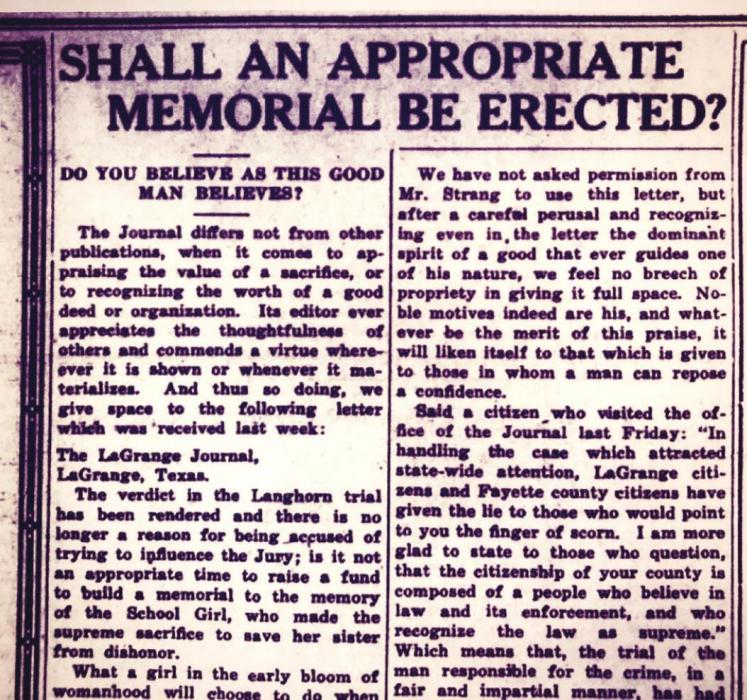
“Let’s build a monument”
Two months later after the trial verdict was rendered, Mr. Harigel agreed that The Journal would sponsor a fundraising effort “to build a suitable monument.” To kick off the campaign, Houstonian G.J. Strang donated $25, the equivalent of approximately $360 today. The Journal kicked in $10, the equivalent of $150 now.
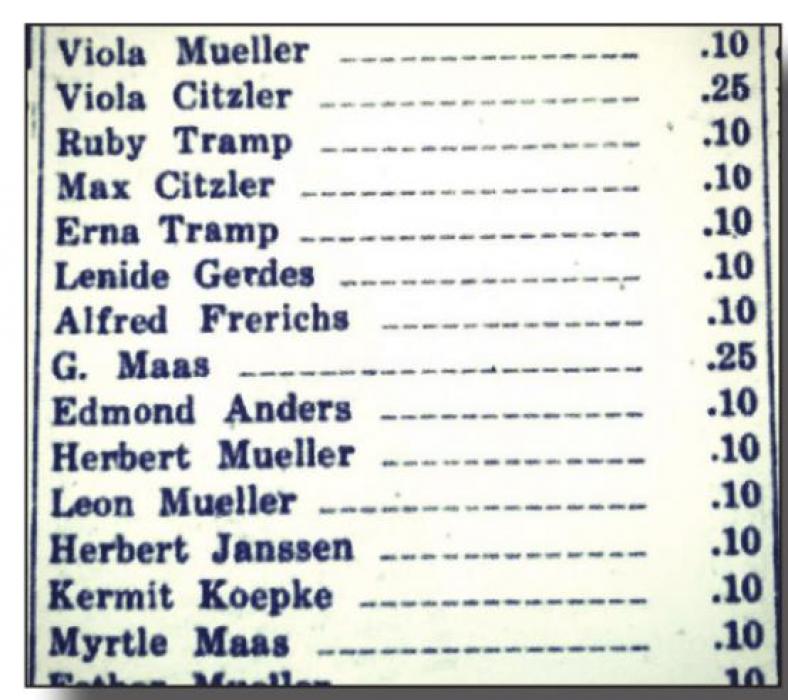
In an April 16, 1925, news story, Editor Harigel sought the support of county schoolchildren by gently suggesting that a 10¢ donation from each would make a good start in purchasing a permanent marker to honor Valeria’s memory.
Mrs. Patricia Hall, the teacher at Black Jack School in 1925 wrote, “School closed here last Friday with a very enjoyable picnic at Alligator Hole in Henry Loessin’s pasture. We received your letter about the monument to Miss Valeria Zapalac Saturday morning and we spoke about it that night at the show and dance that we had. We are very happy to be able to forward these sums of money to you to be used to help erect a suitable monument to the poor girl.”
Mr. Siebel of the Harms School dropped into The Journal’s office with the sum of $1.90 from the schoolchildren in that district.
Cash was hard to come by
Ida Rose Kelly, the teacher at String Prairie School near Flatonia, sent $1 for the memorial fund. She enclosed a note that said, “The children in my school are very much interested in this fund but at this time the farmers’ children have little money.”
Representing the Engle School, teacher Lottie Chalk mailed a money order for $4 to The Journal. “They (her students) were more than willing to contribute to the fund,” she said in her letter. Grace M. Brewton, the teacher at Winchester rural school, included a message with the $2.25 given by her students saying, “I am pleased to see my fellow teachers responding so loyally to this fund and to the memory of a schoolgirl that dared to uphold the virtues of womanhood.”
Editor Harigel also welcomed contributors in person at his office. In his May 7, 1925, campaign update in the newspaper, he noted, “Mrs. O. Milburn of Route Five came in to see us on Saturday afternoon and left with us the sum of 50¢: 25¢ from each of her two children in attendance upon the Rutersville School. We appreciate this visit and the encouraging words spoken when the money was tendered.”
Contributions also trickled in from outside Fayette County. The students of Blinn Memorial College, Brenham, Texas, contributed $5. C.C. Hagmann of Wichita Falls, Texas, sent $1 for “success of the undertaking, as well as the old hometown and crowd.”
It took time
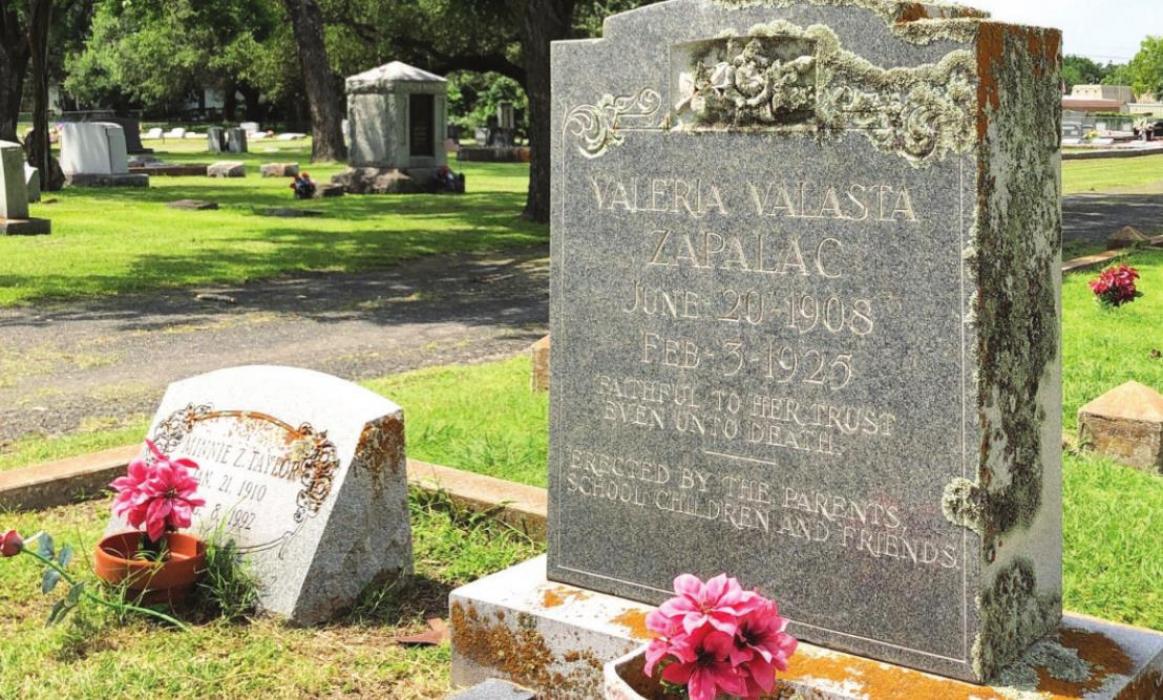
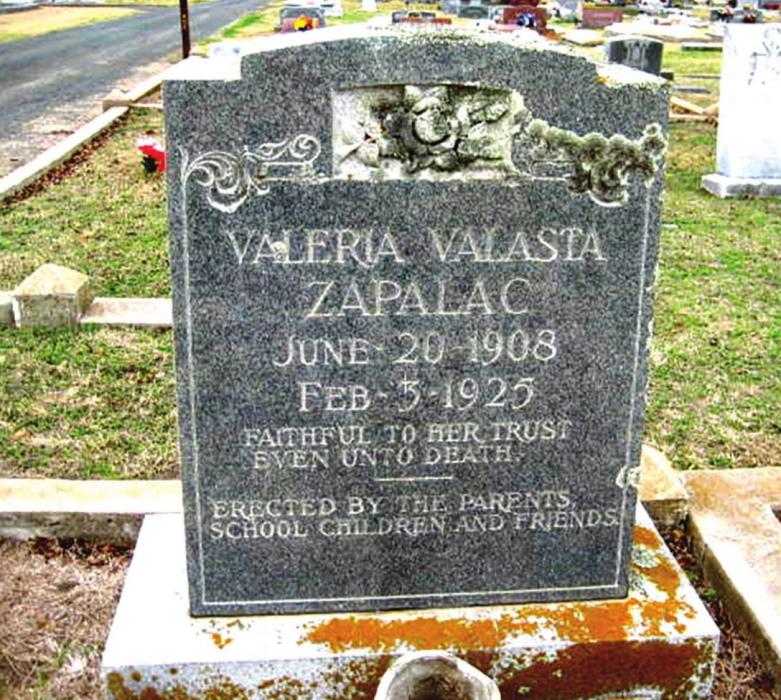
In the Jan. 19, 1928, issue of The Journal, Editor Harigel reported that an order had been filed with O.E. Stolz Marble Works in La Grange to create a monument. The Zapalac family, schoolchildren and friends contributed a grand total of $250. The marker was placed on Valeria’s grave on Feb. 9, 1928, almost three years to the day after the young woman lost her life.
When she died in 1992, Minnie Zapalac Taylor was buried beside her older sister who had bravely defended her life in 67 years earlier.
The trial and subsequent events surrounding Valeria’s murder took many twists and turns over the years frustrated the good people of Fayette County, Texas, according to Gene’s book.
Copies are available from the author at austincop310@ aol.com or at The Fayette County Record or Fayette Heritage Museum and Archives in La Grange.
Almost a century has elapsed since Valeria Zapalac tragically lost her life and the subsequent community effort was undertaken to place a suitable marker on her grave. It’s very unlikely that anyone who contributed to the fund is still living.
Nevertheless, Valeria’s gravestone remains a permanent remembrance of her short life. The memorial also reflects the kindness of all who came together almost a century ago to ensure that the Fayette County schoolgirl would be remembered.
“The crime, as horrific as it was, really pulled the people of Fayette County together,” Gene adds.
If you’d like to read more of Elaine’s stories, visit www.elainethomaswriter.com/blog/ and sign up to receive new posts twice a month. You can also call Elaine at 979-263-5031.
Armchair Chats
A Occasional Feature by ELAINE THOMAS