

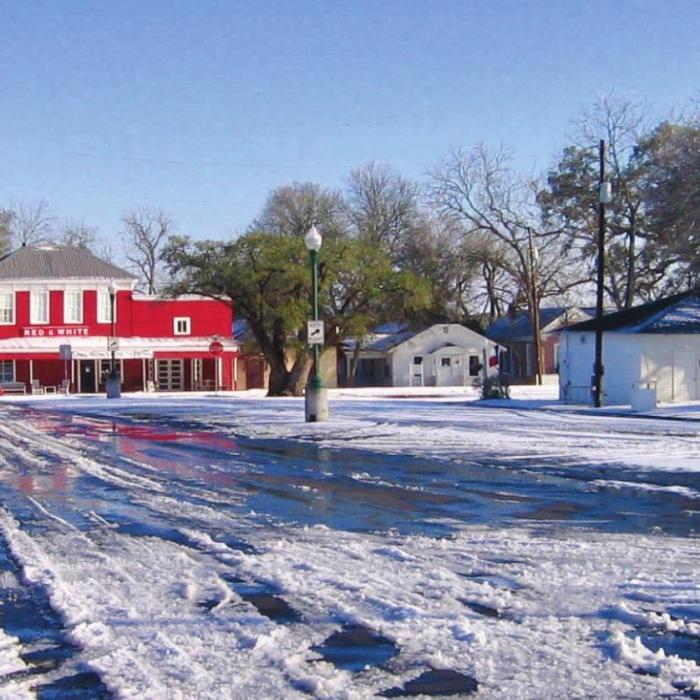
Storm Issues Slowly Melting Away
LCRA Talks About Blackouts
During the rolling blackouts caused by the winter storm two weeks ago, some areas of Fayette County never lost power while others had power for only a few hours over the course of three days. Lots of folks have been wondering who decides which lines get cut during such events.
The Lower Colorado River Authority (LCRA) provides power to all of the cities in Fayette County and the two electric cooperatives that serve rural customers. When an electrical emergency happens, the state’s grid operator ERCOT orders transmission providers to reduce the amount of load, or demand, on the power grid. LCRA Transmission Services Corporation (TSC) and other providers must respond and de-energize the assigned amount of demand. This is called “load shedding.”
LCRA General Manager Phil Wilson explained how LCRA TSC sheds load during his legislative testimony last week. Here’s part of his testimony.
“LCRA TSC is recognized by ERCOT as a transmission operator designee for 47 different cooperatives, municipalities and utilities that operate distribution systems. This means that when ERCOT orders load shed to maintain the viability of the grid, LCRA TSC must shed a percentage of the total amount required by ERCOT on behalf of our distribution customers.
“We have two criteria of distribution customers: Our Criteria One customers each have their own twenty-four-by-seven distribution operation center. These eight customers have the technical expertise to perform their own load shed, and they do so in close coordination with our mandates from ERCOT.
“There are also 39 Criteria Two customers — small-towns and cooperatives — for which LCRA TSC itself sheds the mandated load percentage. With all LCRA customers, we work to ensure that critical loads, as identified by our customers, such as hospitals do not lose power during a load shed event
“I am pleased to report that no single incident lasted longer than four hours within a city where we performed the load shedding,” Wilson said. “Additionally, all customer outages associated with our operations were restored quickly, minimizing the impact to customers.”