


Some Things Just Never Change
Part II
In the previous Footprints of Fayette article, some of the problems and complaints of the county residents from nearly a century ago were brought to light. In this follow-up, more issues of the bygone days will be explored. Since these human “problems and complaints” have been going on since the dawn of civilization, it seems appropriate to bring up this subject matter, merely to reflect and find comfort in knowing that we all deal with them from time to time. Why Don’t They Pay Their Bills: From a 1926 article in the Fayette County Record, date unknown, comes the following. “H. P. Schaefer says it’s a good idea to hang on to all old accounts. This week … he has made a record collection. The note was dated July 30, 1881, due within two months after the date. The note was 45 years past due. It bore interest at the rate of 12 ½ percent, which was the current rate of interest in those days. In order to collect his original $5.00, Mr. Schaefer agreed to waive the interest during those 45 years. The note was signed by Henry Townsend.
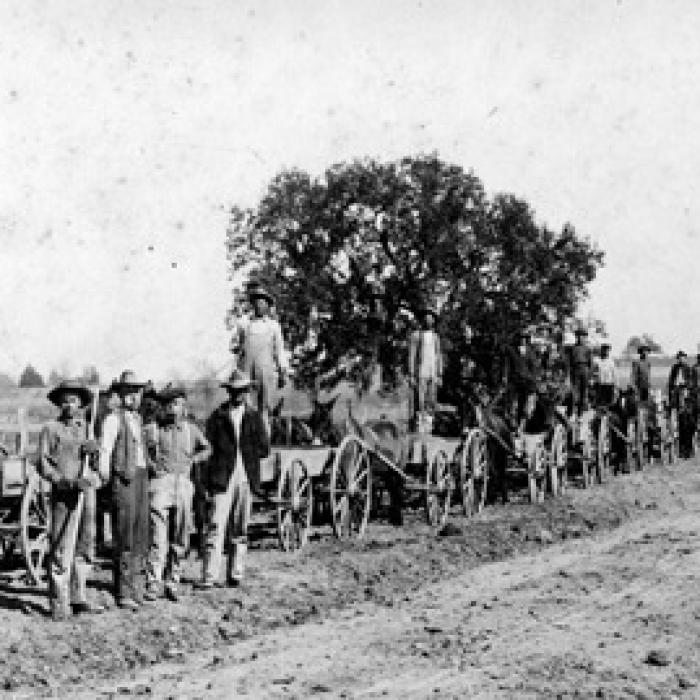
Hauling Fayette CountyAway: The September 23, 1909 issue of the La Grange Journal reported that “gravel lands have their values. A deal has been consummated whereby Harris County has agreed to purchase from H. G. Henderson a gravel bed of 115 acres located near Fayetteville … There is already a railroad track (MKT) running into the gravel bed, and loading racks ready for use. The gravel in this bed is of an excellent grade, and will be used by Harris County in doing road improvements.”
Road Building in Fayette County: In 1908, the Journal reported that “a great deal of work has been done by the … Fayette County citizens to arouse the people, and interest them in building good highways. It is universally agreed that all our failures in roadbuilding arise from two causes … trying to build without skilled engineering supervision, and the use of inferior gravel in surfacing roads.” (The term highway is derived from the Old English term heahweg, meaning the main road from one town to another.)
Not Guilty: Much discontent can arise in the public view when a violent act goes unpunished. Or, people sometimes become disillusioned with the justice system when they see that no punishment is served on a person who can afford the most expensive legal team for their defense, or they are from a high standing family. Case in point, in an article in the La Grange Journal, dated June 16, 1887, the son of a famous Fayette County resident, and Texas Revolutionary War hero was found not guilty of the murder of a railroad worker near Ellinger. The Journal reported that “after being out about five hours, [the Jury] returned a verdict of not guilty. Few, if any, were surprised at the verdict of acquittal, as it seemed to be the general opinion that would be the result …” The Journal described the individual accused of the murder as being a heavy partaker of liquor, and also the brother of a Fayette County elected official.
In another murder case, this time from 1926, the Journal reported the story of the wife of a Southern Pacific Railroad employee who had hired a man to murder her husband. The couple were residing in the eastern section on the city of La Grange at the time of the murder. The defendants were found guilty of the charges, but through the appeals process and the Governor of Texas, the wife and the triggerman were allowed to walk away from the horrific act.
So, in retrospect, the current issues that we citizens deal with on a daily basis appear to be the same issues and problems that the citizens dealt with in the decades past. Some things never seem to change. Just the names and dates change with time. Yet, we always seem to persevere and rise to meet the challenges of life.
Footprints Of Fayette
Fayette County is one of the most historic counties in Texas. In this weekly feature from the County Historical Commission, a rotating group of writers looks back at local history.