


Prickly Pear Harvest Worth the Work


One of the sweetest, tastiest fruits in the entire world grows in abundance all over this part of Texas. It used to be one of the main sources of food for Native Americans in this part of the country.
But few people today pay them any attention. That’s probably because they’re covered in tiny thorns and full of seeds, which make them difficult to process. If you haven’t figured out by now, I’m talking about prickly pear.
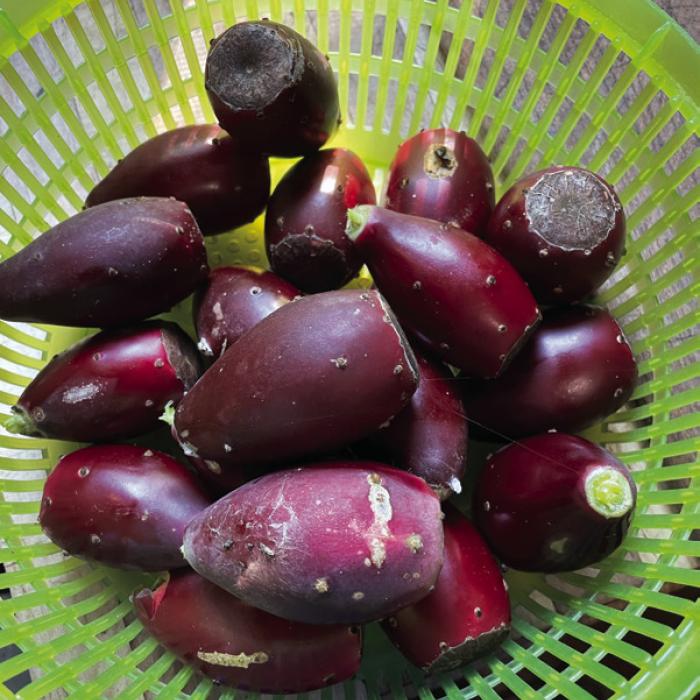
These fruits, which give the prickly pear cactus its name, start out in the spring as a beautiful yellow that resembles a rose. They grow into a green fruit that sort of looks like a thumb. Around this time of year, they ripen to a reddish-purple color.
We have a large prickly pear patch growing in a shallow depression next to our driveway. This year they are loaded with fruits. Last weekend I harvested some to extract the juice. But they’re covered in tiny, hair-like thorns that irritate your skin and mouth. Fire removes them quite easily. I use a handheld gas torch to burn them off. Then you can handle the fruits and twist them off the cactus pad. But be sure to check the bottom where the fruit attaches to the pad. There are often a few thorns down there that need to be burned off.
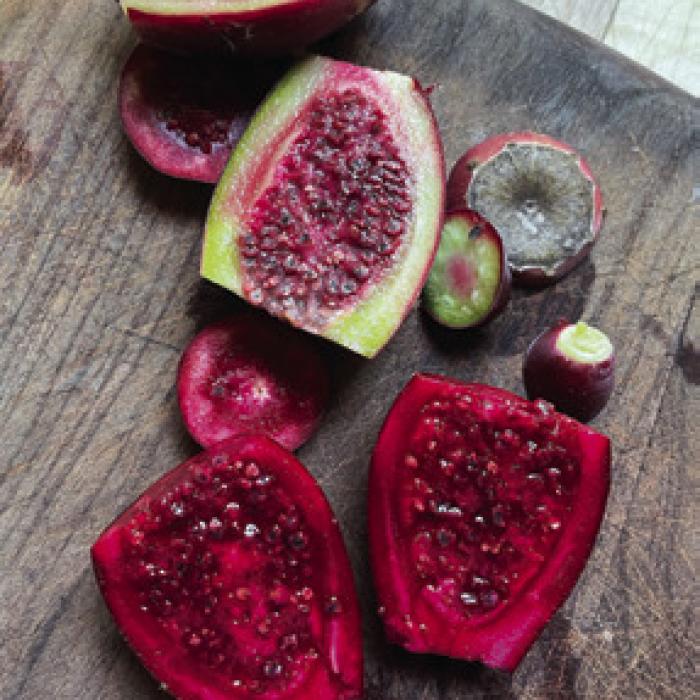
Next, I take them inside and rinse them under water. I cut off the calloused “blossom end” at the top of the fruit and the green part at the bottom where it attaches to the pad. Then I cut them in half. Ripe fruits are beet-red all the way through. If the outer flesh is still green, the fruit is unripe and not as sweet. The skin peels away easily. You can then mash up the fruit and strain out the seeds.
I used a tomato press attachment for my Kitchenaid stand mixer. It works fairly well for processing prickly pears. However, the hard seeds tend to jam up the machine, so I have to go slow and clean out the seeds from time to time.
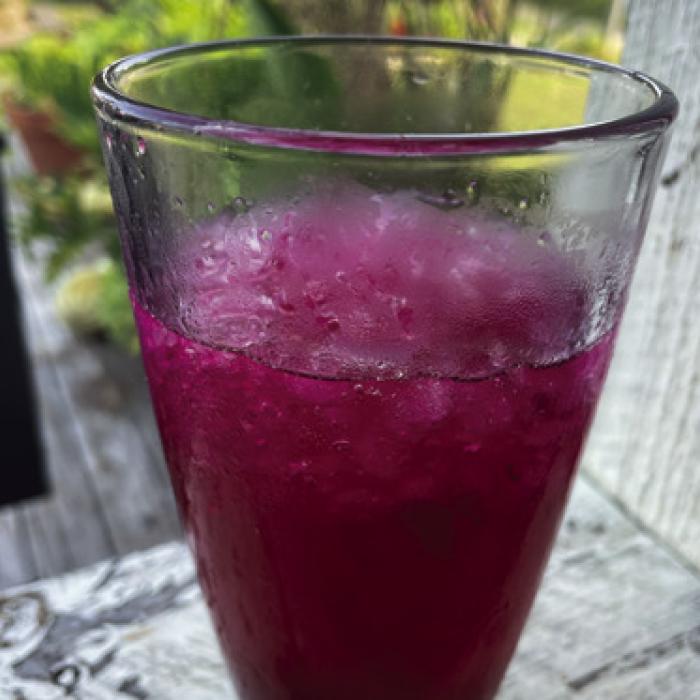
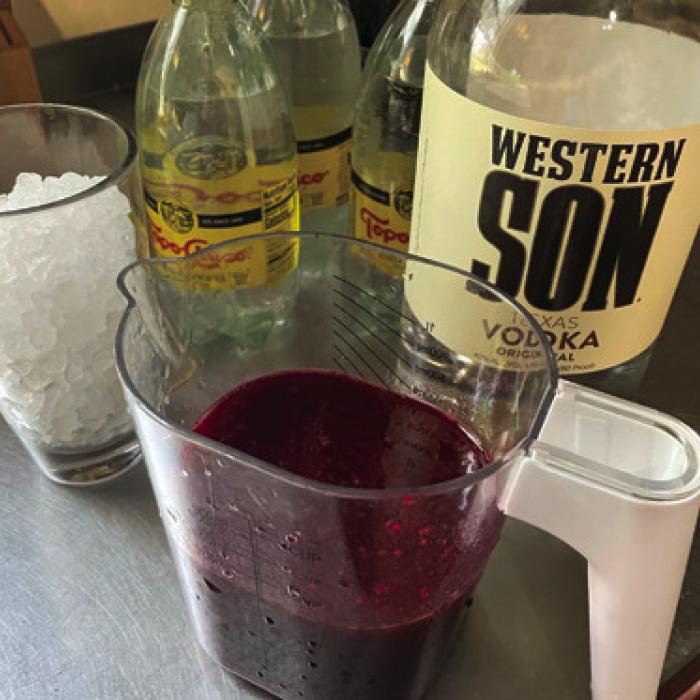
The result is a pulpy, bright purple, sweet juice. You can use it in all sorts of ways. Saturday evening, I used some to make a medicinal tincture (also known as a vodka cocktail), with a little lime juice, honey and Topo Chico mineral water. This elixir tasted so healthy and delicious that I drank four or five more that evening.
Or you can cook the mashed fruit into a syrup before straining. The syrup can be used to make jellies, jams, or even barbecue sauce.
These fruits are full of important nutrients, especially magnesium and Vitamin C. Some researchers say it can be quite effective at managing blood sugar and diabetes. For that reason, diabetics should consult their doctor before consuming as it can interfere with medication. It also has anti-oxidant and anti-inflammatory properties which can benefit the liver, skin and hair.
Do any of you harvest prickly pear fruits? If so, what do you use them for? Let me know by emailing me at andy@fayettecountyrecord. com.