


Power & Water: A Examination of How Things Went Wrong
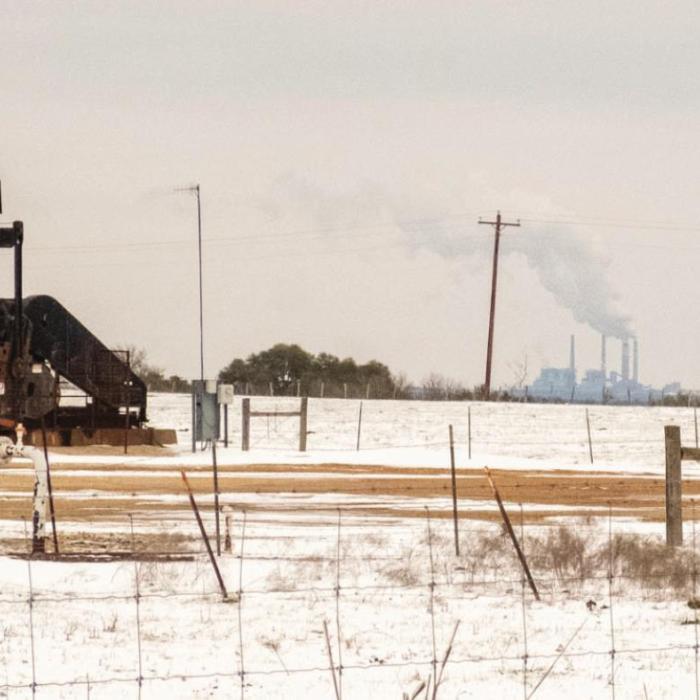
A better picture began to emerge this week of what happened to the area’s electrical systems during the recent winter storm.
Some Fayette County residents had power for only a few hours over the course of three days last week while other areas never lost power. The ice itself lay partly to blame. The weight of that ice caused power lines to fall and trees to fall into lines.
At a meeting called by County Judge Joe Weber on Monday afternoon, Catherine Poppe of Fayette Electric Cooperative (FEC) said parts of the County that received more snow and ice experienced more outages associated with power line faults.
The rolling blackouts were another story.
County Judge Joe Weber asked why there was so little communication from power companies to customers about when and where the blackouts would occur and how long they would last.
“Is it not possible for them to tell us?” Weber asked. “If you knew that, you could do some planning.”
Weber said government officials, business owners and private citizens may have been better able to withstand the storm if they knew when to expect the power to turn off and come back on.
The Day the Grid Almost Failed
During the storm, power generation facilities across the state went down for various reasons. On Monday, Feb. 15, a 1,312 megawatt unit at the South Texas Nuclear Project near Bay City went down due to cold weather-related issues in the plant’s feedwater system. Natural gas-fired power plants throughout the state shut down as icy conditions froze pipes and prevented fuel from flowing. Lines that supply water for making steam in coal plants froze. Wind turbines in west Texas and the Panhandle stopped spinning as the blades froze over with ice.
“The design of the load shed was for the power to go off for a period of time in one place and come back on, then go somewhere else to shed,” said La Grange City Manager Shawn Raborn. “But the amount they had to shed was so great that there was no other load to shed. Once they shed it, there was no generation capacity to fill the need.”
All the while, Texans huddled inside homes and turned up their heaters to stay warm.
“Demand kept going up, but supply could not,” Raborn said.
The state’s grid operators ultimately cut 10 gigawatts of electricity from the system.
“It needed to be addressed immediately,” said Bill Magness, president of ERCOT, in an interview quoted by the Texas Tribune last week. “It was seconds and minutes (from possible failure) given the amount of generation that was coming off the system.”
Magness said last Wednesday that if operators had not acted in that moment, the state could have suffered blackouts lasting months and left Texas in an “indeterminately long” crisis, according to a report in the Texas Tribune.
Who Gets Power and Who Doesn’t?
At the meeting Monday afternoon, Fayette Electric General Manager Gary Don Nietsche said the rolling blackouts in his cooperative’s service area were controlled by FEC’s wholesale power provider, the Lower Colorado River Authority. Nietsche said LCRA did not notify FEC when and where the blackouts would take place.
“When they were shedding load, we didn’t even know it,” Nietsche said.
“It’s not like they would call us and say, ‘We’re going to shed in five minutes,’” he added. “They would just do it.”
In an interview this Wednesday, Raborn said utility providers get a list of circuits each month that would be affected by load shedding in the event of rolling blackouts. That list changes each month.
“Schulenburg this month was high on the list,” Raborn told the crowd at Monday’s meeting in the courthouse. “It was a bad month to be high. Some of us don’t shed if we are tied to a critical facility.”
In the case of La Grange, Raborn said his City’s electrical system powers St. Mark Medical Center and natural gas facilities, which are both considered critical infrastructure.
“Why did La Grange not get hit?” Raborn said. “We’ve got the hospital and the gas plant. Those are critical infrastructure facilities.”
Water Can’t Run Without Power
Fayette Water Supply Corporation’s (FWSC) system of wells throughout the countryside was perhaps the most critical piece of local infrastructure affected by the rolling blackouts. When the power went off, water stopped flowing. Pipes froze and busted, cutting off water to hundreds of rural water customers throughout the area.
FWSC General Manager Jim Rebecek said four of his system’s seven water wells went down during the freeze. The two larger wells that remained operational were equipped with backup generators, but Rebecek said the power never went off to those two wells.
“It was the smaller ones that feed the more rural area,” Rebecek said.
Rebecek estimated a cost of $790,000 to install backup generators at the well sites.
“If I had to do that, my customer’s rates would be out of this world,” Rebecek said.
Pct 1 Commissioner Jason McBroom asked about adding the power lines that feed FWSC’s rural water wells to the list of critical infrastructure lines that would not be cut during a rolling blackout.
“That would be very smart, yes,” said FEC’s Nietsche.
FWSC customers remained under a boil water notice as of Wednesday. The corporation was still working on low pressure issues Wednesday.
How Close Did We Come to a Catastrophe?
The Texas grid, like the rest of the Nation, operates at a standardized frequency of 60 Hertz. All electrical equipment hooked to the grid, from home microwave ovens to the motors that operate valves at power plants and pumps for water wells, are designed to operate at that frequency. If electric demand outpaces supply by very much, the frequency can dip, causing irreparable damage to electrical equipment. Grid operators have two ways of keeping the frequency stable. They can lower the voltage in the lines, causing brownouts. They can also cut off power intermittently to different blocks of consumers on the grid, also known as rolling blackouts.
La Grange City Councilman Ken Taylor, a retired plant manager at LCRA’s Fayette Power Project, said ERCOT deserves credit for saving the state from a catastrophe during the power crisis.
“I don’t care what you hear in the media, but they saved us from a blackout that has never happened in the state,” he said at the La Grange City Council meeting Monday night, Feb. 22.
The Fallout
ERCOT caught a lot of flack last week from state leaders of all political stripes. Last week Republican Governor Greg Abbott blasted the grid operator. Abbott called on ERCOT’s leadership to resign. Five members of ERCOT’s board of directors who live out of state did just that this Tuesday. Abbott said he would make reforming the entity an emergency item for the 2021 legislative session. Last Thursday, U.S. House Speaker Nancy Pelosi, a Democrat, said the Energy and Commerce Committee would probe the causes of power outages in Texas.
“Everyone ought to be thanking ERCOT for saving our butts,” Taylor said at last Monday’s City Council meeting.
Taylor said that LCRA has a plan in place to help restart the grid in case of a total blackout. He said the plan involves restarting the system using hydroelectric power from LCRA’s Highland Lakes system. That power would be used to gradually re start other power plants until the State’s grid comes back online.
The process could take weeks or months to power up the entire grid, assuming the industry has enough spare parts to replace all the equipment that would be damaged by a total blackout.
“It’s never been done before,” Taylor said of the restart process. “We don’t even know if it could be done.”