


Plant Those Tomatoes Deep

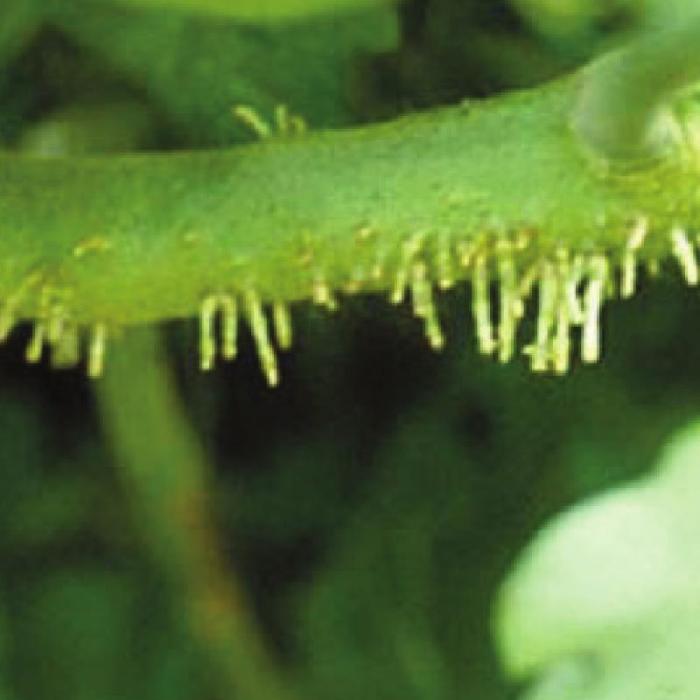
Did you know that tomato plants, especially heirloom varieties, can grow roots above ground?
These “adventitious” or “aerial” roots can turn into regular roots when they come into contact with the soil. This peculiar trait is a great benefit to gardeners. It allows us to plant our tomatoes deep into the soil, giving each plant the potential for a much bigger root system. That’s especially important when the weather turns hot and dry. A stronger root system gives the plant better access to soil moisture and nutrients.
So how do we exploit this trait? It’s pretty simple. Just plant your tomato transplants really deep. How deep? As deep as you can.
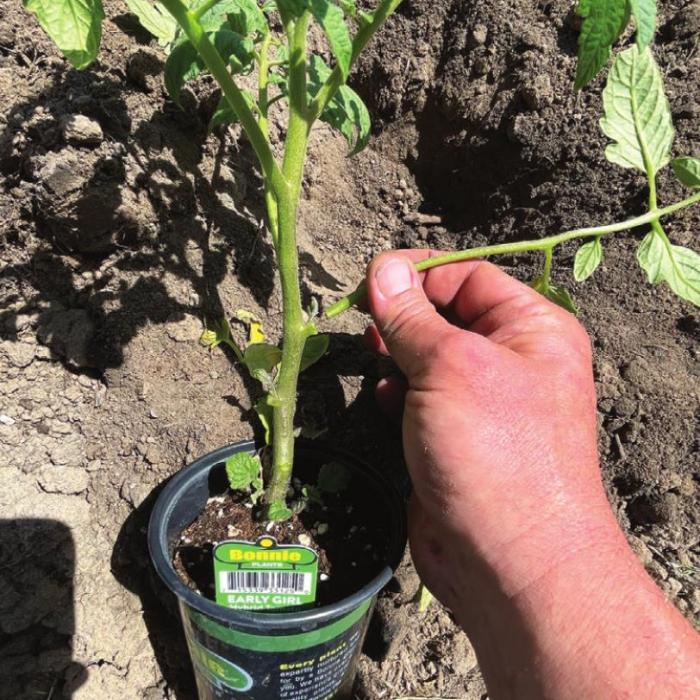
When you pick out tomato transplants at the nursery, don’t be afraid to buy the “leggy” plants with tall, top-heavy foliage. Before you plant, pinch off all the side branches and shoots except for those at the top of the plant. Make sure you leave the terminal shoot intact – that’s the youngest growth at the very top of the plant.
Next, dig a hole deep enough to bury the rootball and most of the stem. The leaves and stems that you didn’t trim should be just above the ground. Place the plant in the hole but don’t fill the hole with soil just yet.
I usually sprinkle a handful of epsom salt in the hole with each plant. Epsom salt, or magnesium sulfate, protects tomatoes from blossom end rot, which is usually caused by a magnesium deficiency in the soil.
Also before covering up the soil, I always fill the hole and soak the root ball with some liquid fertilizer and water. I’ve been using MicroLife Ocean Harvest 4-2-3. Medina Hasta Grow Plant Food is also a good liquid fertilizer for this purpose. Mix either one with water according to the package directions. Allow the liquid to soak into the surrounding soil and root ball before filling the hole.
Next, fill the hole and lightly pack the soil around the root ball and stem. Finally, soak the soil around the plant with some more of the water and liquid fertilizer mixture. This process gives your tomato transplants the best start they can possibly get.
All plants in the nightshade family such as tomatoes, peppers and eggplants have the ability to grow aerial roots to some extent. It works really well with eggplants and to a lesser extent with peppers, at least in my experience.