


The Perils and Pleasures of Winter Gardening

This year my winter garden is bigger than it has ever been. In the past, I’ve grown a few kale and cabbage plants in the winter. But I never before kept the garden full through the cold month. This year, I even added some new vegetable beds for winter crops.
It has definitely been worthwhile. And I’ve learned a few things, especially after the blanket of snow that fell Sunday.
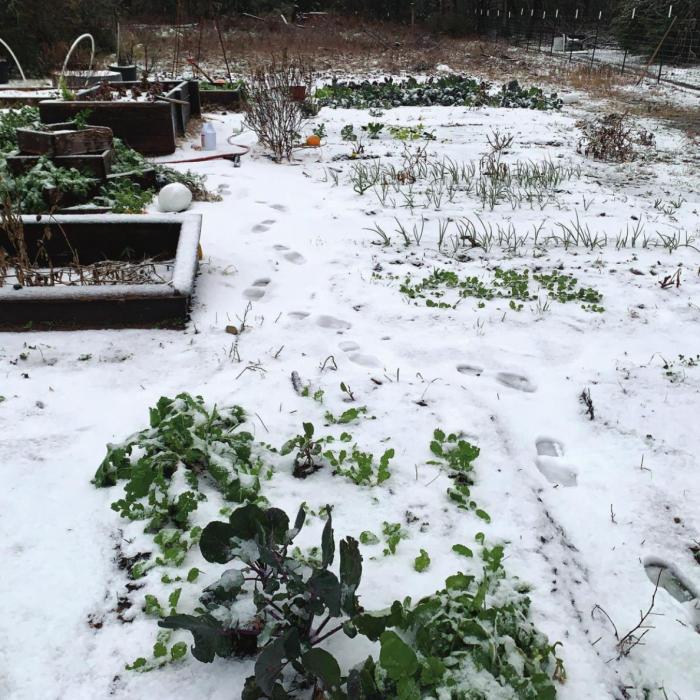
About and inch and a half to two inches of snow accumulated at our place on Sunday. I can’t recall ever seeing that much snow stick to the ground in the 10 years I have lived there. I was quite worried about my veggie beds. There was no way to cover everything in the garden. I was more worried about covering my citrus trees and tropical plants.
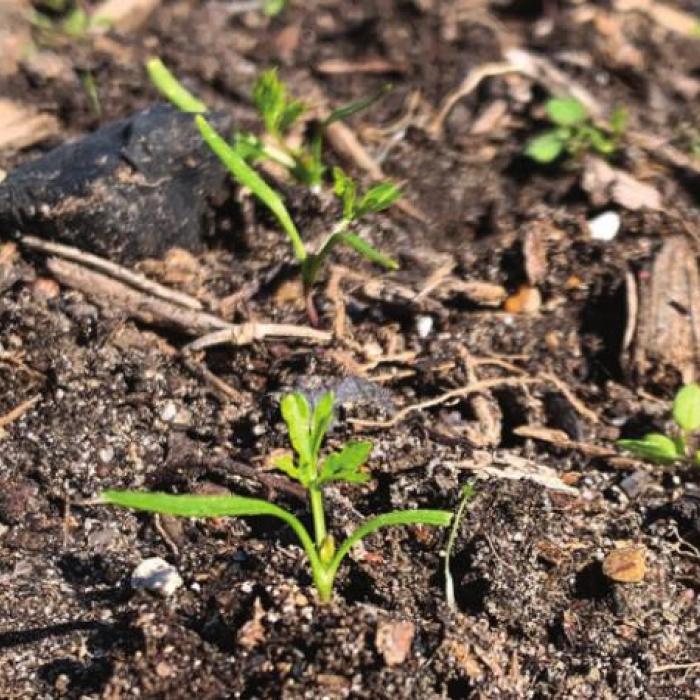
By that evening, snow completely covered a bed of carrot seedlings that just sprouted. The plants in a row of spinach I planted a few weeks ago had just grown their second pair of true leaves with the snow completely covered it. Same story for a bed of beets I just planted.
The couple hundred onion plants I started a few weeks ago were also piled up with snow. The weight of snow and ice knocked a row of red Russian kale completely to the ground. On the other hand, the snow and ice didn’t seem to bother my Italian lacinato kale – it stayed standing proudly. I noticed that the lacinato kale has a waxy coating on the leaves. They never look wet because water rolls right off the surface. This quality might also prevent snow and ice from sticking to the plant.
The rapini (also known as broccoli rabe) I planted months ago had gone to seed some time back. I left it standing because they were the only flowers in my garden for the honeybees to visit this time of year. The snow and ice knocked most of those four and five-foot tall stalks to the ground. They’ll be going in the compost pile.
The snow and ice finally melted Monday and was completely gone by Tuesday. The weather was quite nice on Wednesday, and fortunately, all of the carrot and beet seedlings seem to have survived.
In the greenhouse, I started some tomato and pepper plants last week. If you have a greenhouse or a sunny porch you can protect at night, you can also start some tomato and pepper seeds right now. They will definitely need some protection, because we will probably get a few more frosty mornings before spring arrives. Tomatoes and peppers cannot survive much frost.
It is especially important to start seeds for hot peppers as early as possible. Most hot pepper varieties take a very long time to reach fruit-bearing size. Pepper seeds need warm soil to grow, about 75 to 85 degrees F. It can be a challenge to keep the soil warm this time of year. I’m using a heating mat inside my unheated greenhouse. On the coldest nights, I cover the seed trays with plastic to conserve warmth.
You can also grow seeds inside your house under a grow light. I’ve never done this, but I’ve heard of people germinating seeds successfully under fluorescent lights hanging a few inches above the seed tray. You could do this inside a warm house, perhaps in a spare bedroom.
Celery is a plant I would love to grow in my garden, but I have never been successful with it. Everything I read says it doesn’t like our climate. So this spring I’m trying a few different plants that have a similar taste but may grow better here: Chinese celery and lovage.
Chinese celery, Apium graveolens var. secalinum, tastes like the celery we are all used to seeing in the grocery store, but grows skinnier stalks and more leaves. I already seeded some Chinese pink celery in my greenhouse. As the name implies, the stalks of this variety are supposed to be colored like bubblegum. I also ordered some seeds of a white-stalked Chinese celery variety, but they have not arrived yet.
Lovage, Levisticum officinale, is a perennial herb in the plant family Apiaceae, which also includes celery, carrots, parsley, dill and fennel. Lovage grows quite tall, up to six feet, from what I understand. You can use the stems and leaves as a celery substitute. The taste is described as a mix of celery and parsley but with a greater intensity of flavor. The seeds are sometimes used as a substitute for fennel seeds. The plant is also said to possess medicinal properties.
If anyone has grown celery, Chinese celery or lovage successfully, I would love to hear from you. Contact me at andy@ fayettecountyrecord.com.