


One of World’s Rarest Mushrooms Found in Fayette County

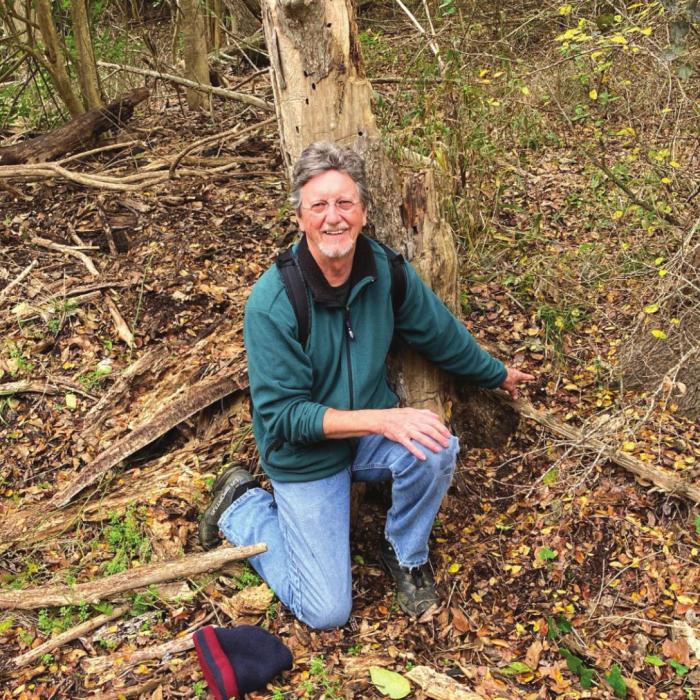
Mushroom hunter Randal Banik of Round Top has made an amazing local natural discovery.
While exploring last month on property that been in his family for generations in northern Fayette County he came across one of the rarest mushrooms in the world – and one he said “probably less than 100 people in the world have seen.”
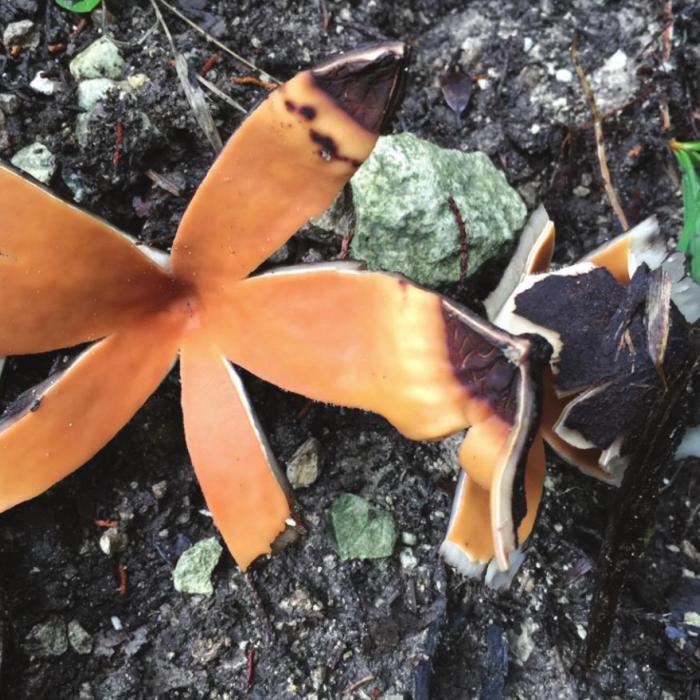
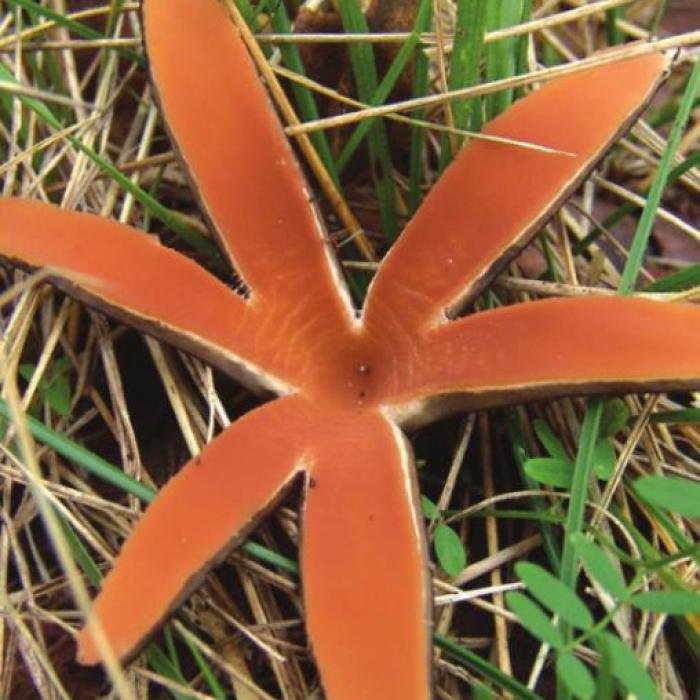
It’s called the “Texas Star Mushroom” or the “Devil’s Cigar.”
The mushroom gets its names because it resembles a black cigar before it splits open into a starlike arrangement, the color of tan leather.
It’s scientific name is Chorioactis geaster.
The mushroom is so rare because it only grows in two spots in the world, – a few counties in central and north Texas, and in isolated areas of Japan.
In Texas, the fungus has been reported in Collin, Hays, Travis, Dallas, Denton, Guadalupe, Tarrant, Hunt, and Bell Counties.
Banik’s discovery is believed to be the first known sighting of this mushroom on Fayette County.
It only grows around old dead cedar elm stumps in Texas an around dead oaks in Japan.
The spores of mushrooms can travel on the wind for hundreds or thousands of miles, and genetic analysis indicates that the Japanese and Texas populations of this mushroom have been separated for at least the last nineteen millions years – but are still virtually genetically identical.
No one can explain how it got to these two places, thousands of miles apart.
Banik is a semi-retired pharmacist who has always had a love of nature, but a few years ago got involved with a mushroom hunting group based in Austin.
“I love the thrill of the hunt,” Banik said.
When he moved some leaves around the cedar elm stump in a creek bottom in an area of his property last month and first saw the Devil’s Cigar mushrooms he described it as an “incredible moment.”
“I was in awe,” Banik said. “I just sat there a while. I was like, ‘I can’t believe this.’”
Banik is part of a group of naturalists in Texas striving to get the Texas Star designated as the State Mushroom of Texas, and they have been contacting state elected officials about the effort.
According to a Facebook page (Texas Star for TX State Mushroom) put together by the advocated for the designation, “The key takeaway is that this mushroom was found only in one state in the United States - and that’s Texas, not to mention that the Texas Star was first found in the state’s capital, Austin, in 1893.
“And since then, its reputation remains as one of the rarest of mushrooms in the world - as it has only been seen by a handful of people and only grows along a narrow corridor through central Texas and in three remote areas of Japan.
“Only two other states (Oregon and Minnesota) have named state mushrooms, so far, but other states are starting to step up to bat.
“Texas should be next, and the 87th Legislative Session can get it done,” the site states.
According to a 2011 article in Texas Parks and Wildlife magazine, “in 1997 fans of the species lobbied the state Legislature to designate the Texas star fungus as the official state fungus of Texas. However, the proposed legislation, which got stalled in a House committee, was never signed into law.”
Banik said he would love to document more local instances of the Texas Star Mushroom. If anyone owns property which has old growth Cedar Elm trees, especially along streams and would allow members of his mushroom group to hunt for the Texas Star Mushroom you can contact him via email at: madhunad@gmail.com or by phone at 512-517-8868.
For more information about the effort to make the Texas Star Mushroom the state mushroom of Texas visit:
https://www.facebook. com/TexasStateMushroom