


The Myth of County Population Growth

Is Fayette County a growing community? There has certainly been a lot of development in the County over the past few years. But in terms of population, the answer isn’t so clear.
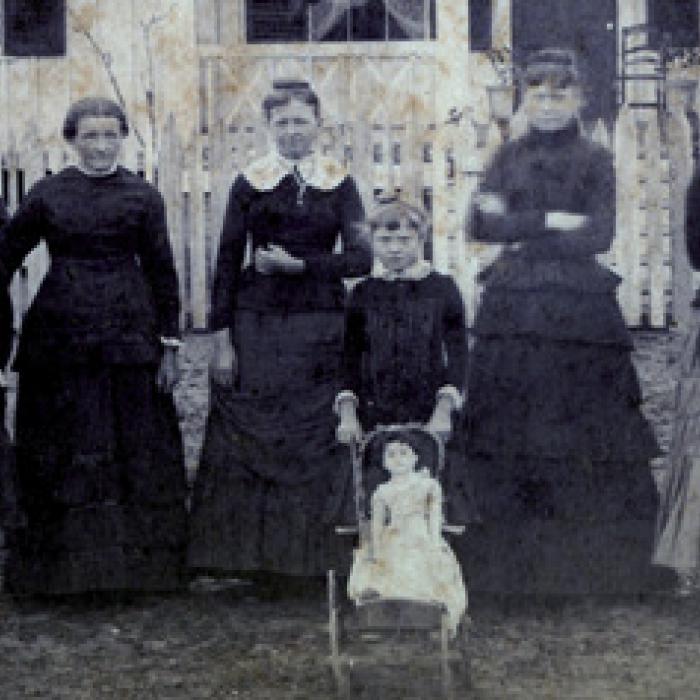
The population here a more than a century ago was much larger than it is today.
“Fayette County was the fourth most populated county in Texas in 1870 and 1880,” said Rox Ann Johnson of the Fayette Heritage Museum and Archives.
In 1900, Fayette County reached its peak population of 36,542, according to the U.S. Census Bureau. German and Czech immigration contributed greatly to the County’s growth back then. Nearly one quarter of the population in 1890 was foreign-born. They mostly came from Germany and the Czech lands in what was then the Autro-Hungarian Empire.
“Fayette County was kind of a starting place for Germans and Czechs,” Johnson said. “From here they went out to other parts of the state.”
“The population of La Grange was never that great,” she added. “Between 1870 and 1880, Flatonia and Schulenburg were developing as towns. The large part of the population were people living on farms.”
You can see a few remnants of the old rural communities while driving around the County. Many years ago Fayette County Judge Ed Janecka spearheaded an effort to place signs at the location of former country schools in the County.
The population hovered around 30,000 from 1910 through the 1940 census. By 1950, it fell to 24,176. The population started moving to urban areas after World War II, just like much of rural America. The 1960 census counted 20,384 residents in Fayette County. For the next two decades it dipped below 20,000.
“It was the rural population that declined,” Johnson said. “Birth rates declined. People were looking for cheaper land. The more educated people were moving to the cities. Houston, San Antonio and Austin were becoming larger. Migration is always about economics.”
Fayette County’s population picked back up in 1990 to 20,095. It rose slightly to 21,804 in 2000. The population took quite a jump in 2010, to 24,554.
“We’re only getting back to where we were,” Johnson said. “People are retiring here now because we’re in this nice central location. That was one of the reasons we go big to begin with – we’re in a great location.”
The population has stayed pretty much flat since 2010. The 2020 Census recorded a slight drop, to 24,435. That may have been partly due to the 2017 Hurricane Harvey flood in La Grange. It appears to be back on the rise. The Census Bureau estimated the County’s population at 25,474 in 2023.
Photos courtesy of Fayette Heritage Museum and Archives
Fayette County Population
1850 3,756 1860 11,604 1870 16,863 1880 27,996 1890 31,481 1900 36,542 1910 29,796 1920 29,965 1930 30,708 1940 29,246 1950 24,176 1960 20,384 1970 17,650 1980 18,832 1990 20,095 2000 21,804 2010 24,554 2020 24,435 2023 Est. 25,474
Source: U.S. Census Bureau