Mosquitos Becoming ‘Health & Safety Issue’
County Officials Working to Get Ditches Flowing Better
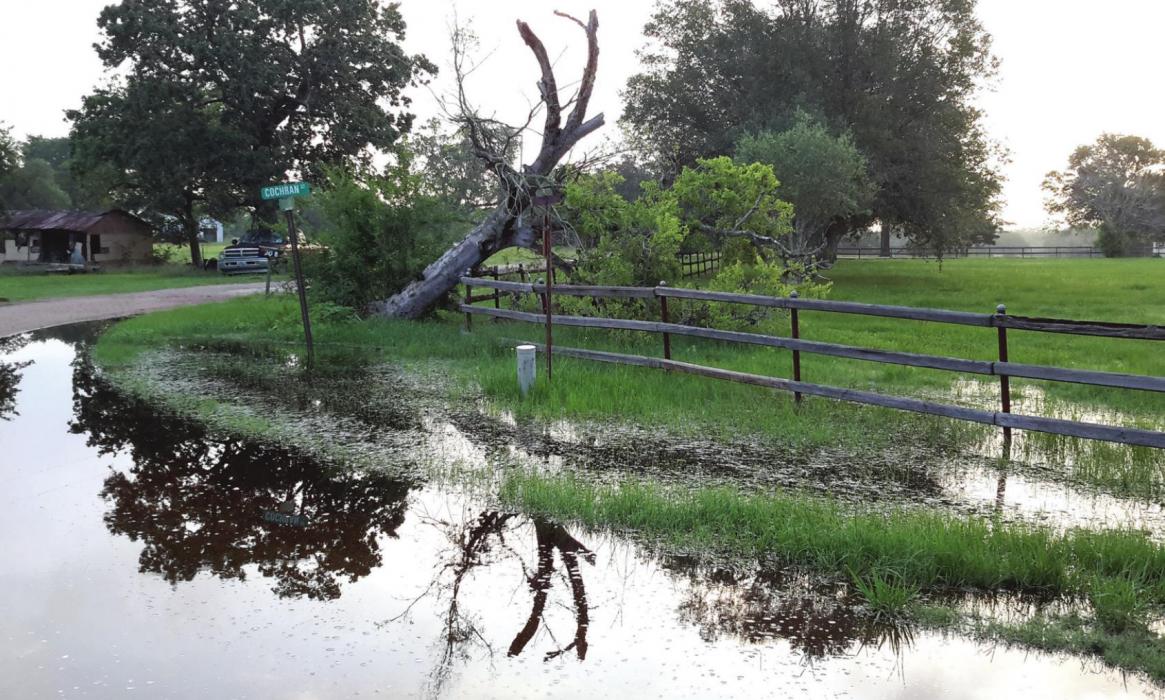
Standing water caused by heavy rainfall over the past few weeks caused the mosquito population to explode across Fayette County. Folks feeling the sting in some unincorporated areas are asking the County for some relief.
“It’s becoming a health and safety issue,” said Muldoon resident Al Forsythe.
For years, Forsythe said, the ditches around Muldoon have not adequately drained water away from homes in the area.
Forsythe said the County needs to study the drainage problem in Muldoon and rebuild the ditches when it dries out. In the meantime, though, he proposed spraying pesticides as a temporary solution.
“When I lived in Houston, the City or the County or somebody would send a truck down the streets to spray when the mosquitos got really bad,” Forsythe said. “Why can’t the County do that here?”
All four County Commissioners told the Record they were working this week to get the ditches flowing better. They doubted whether pesticide spraying would help with the mosquito problem, however.
“We don’t have the equipment for that,” Berckenhoff said. “We don’t have the manpower for that. We’ve got drainage issues everywhere with water right now. It will be addressed. We haven’t started shredding yet because of the weather. There’s nothing I can do about it till it dries up. Its too wet to dig. Its going to be another two weeks before we can start shredding. The ditches will be addressed when we get to that point.”
Berckenhoff said clearing trees and repairing washed out roadways is his main priority right now.
“A lot of people move here from out of the city and say their neighborhood would spray (for mosquitoes) every couple of days,” Berckenhoff said. “But we don’t have the resources. I understand their pain. But that’s part of living in unincorporated areas.”
Pct. 4 Commissioner Drew Brossmann said several areas in his territory are experiencing drainage issues, especially in the Cozy Corner and Mullins Prairie areas. Brossmann said he was advising property owners who plan to install new culverts for their driveways to help with drainage problems. He doubted whether pesticides would do much to help with the mosquito problem, however.
“I don’t think it would be feasible,” said Pct. 4 Commissioner Drew Brossmann. “Just think, in my precinct alone, there are 196 miles of road. We couldn’t spray it all. But if you spray just around places where there’s more housing, it’s not fair to taxpayers in other areas where there aren’t as many houses. Furthermore, Brossmann
Furthermore, Brossmann said spraying pesticides along county roads may not effectively control the pests.
“When, say, the City of Schulenburg sprays in town, it’s a small area,” Brossmann said. “The houses are close to the street. It’s probably doing some good. In the county, though, the houses are so far away from the road. If you go down the county roads spraying, I don’t see the benefit of it.”
Pct. 1 Commissioner Jason McBroom said his road and bridge employees have been digging out blocked culverts by hand using shovels to help the water flow. He said improvements will have to wait until it dries enough to use heavy equipment. McBroom said the extremely flat terrain in parts of his precinct exacerbate the problem.
“There are places in Plum, when you look at a topographical map, in over 1,000 feet it only drops one foot,” McBroom said. “A blade of grass will stop the water from running.”
He also laid blame on Union Pacific Railroad for failing to maintain culverts that pass under the railroad tracks in Plum and Winchester.
“The biggest problem in Winchester is the railroad,” McBroom said. “Its damming up the whole city. Even Plum, the railroad dams up everything. Where the tracks cross Plum Main Street. You can see the culverts underneath the tracks. It’s a four foot culvert and drains the whole town. It needs thousands of yards of material hauled out.”
McBroom said Union Pacific officials have made some temporary repairs to the drainage under the tracks in the past, but much more needs to be done.
Pct. 2 Commissioner Luke Sternadel said his crew has been focusing on drainage.
“We have a lot of downed trees to deal with first,” Sternadel said. “We’re trying to get the drainage opened up and get the standing water down. We’re trying to do our best to drain as much water as possible.
“Pretty much all of the little towns have drainage issues,” Sternadel added. “They’re flat and don’t have proper drainage. They are low and the water backs up in yards. We’re assisting them as much as possible. There’s more residency than the rural areas, so we’re focusing on those areas.”
“In the County, we’ve got to get this grass knocked down so the sun can dry it out,” said County Judge Joe Weber. “I know the commissioners are focusing on that.”
Concerning pesticide spraying, Weber recalled a time when cities sprayed the now-banned chemical DDT to control mosquitoes. He questioned the health effects of newer mosquito control chemicals.
“I have a problem with spraying that stuff all over the place,” he said.
County officials said property owners can help with the mosquito problems by cutting grass and filling in low spots that collect water as soon as the ground dries enough to work. McBroom said he received a request from a property owner to fill a low spot in the person’s yard. He wished to remind the public that the County cannot perform such work on private property.