


Locals Trying to Help Deal With Shortage of Area Mental Health Providers

“It took me downing four or five shots of whiskey at midnight, begging my husband to rid the house of knives, and [secretly] trying to drive myself to the ER to get the help I needed,” she recalled. “I drove with one eye closed to keep from seeing double. I had nobody to talk to.”
The woman, a local resident, was facing the reality of mental illness in Fayette and Colorado counties. She spent the night in the emergency room and, the next day, she was sent to a mental hospital, never having seen a mental health professional.
“The question I pose,” she asked recently, “is who are we to go to in times of emergency? When we seek shelter in an emergency room, we are evaluated by potentially undertrained representatives from an institution that is overwhelmed and underfunded. They grant you a stay in a mental institution.”
Mental health has emerged as one of the most important public health concerns of our time. Meeting the mental health needs of our region requires an adequate mental health workforce. Unfortunately, Colorado and Fayette Counties are considered Health Provider Shortage Areas (HPSA) for primary care and mental health providers, according the Health Resources and Services Administration (HRSA).
Mental health providers include local counselors, licensed therapists, psychiatrists, psychologists, and social workers. Colorado County has only four and Fayette County has only seven mental health providers and they are all “extremely busy,” according to separate 2019 Community Health Needs Assessments conducted by Columbus Community Hospital and St. Mark’ Medical Center. They do not actively advertise. There is simply more work than these few providers can do.
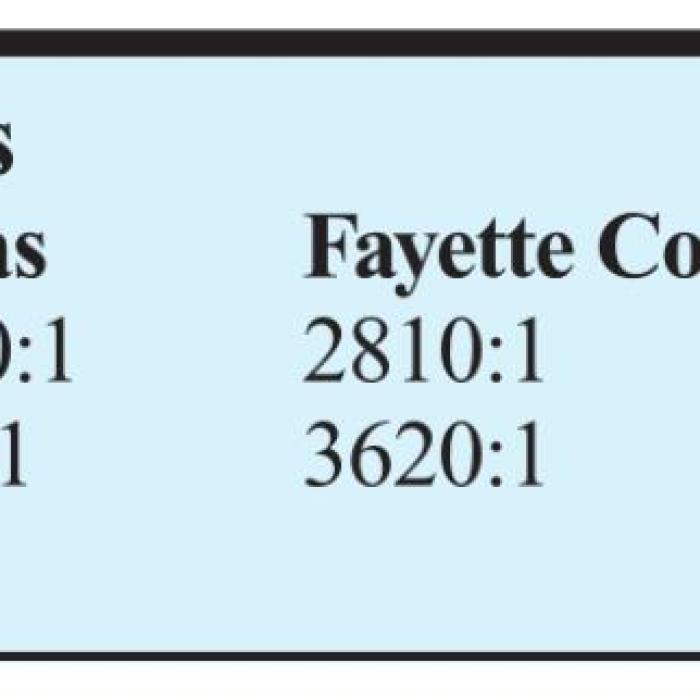
In the state as a whole, there is one mental health provider for every 880 people. In Fayette County, the ratio is one mental health provider for every 3,620 people. In Colorado County, it is one for every 5,370 people.
When it comes to primary care providers, the situation is similar, although the shortage of doctors, nurses and physician assistants is much smaller than the shortfall in mental health providers. This is important because according to the HOGG Foundation for Mental Health: “primary care providers deliver more than half of the mental health treatment in the country. Additionally, approximately 25 percent of people seeking primary care have a mental health condition.”
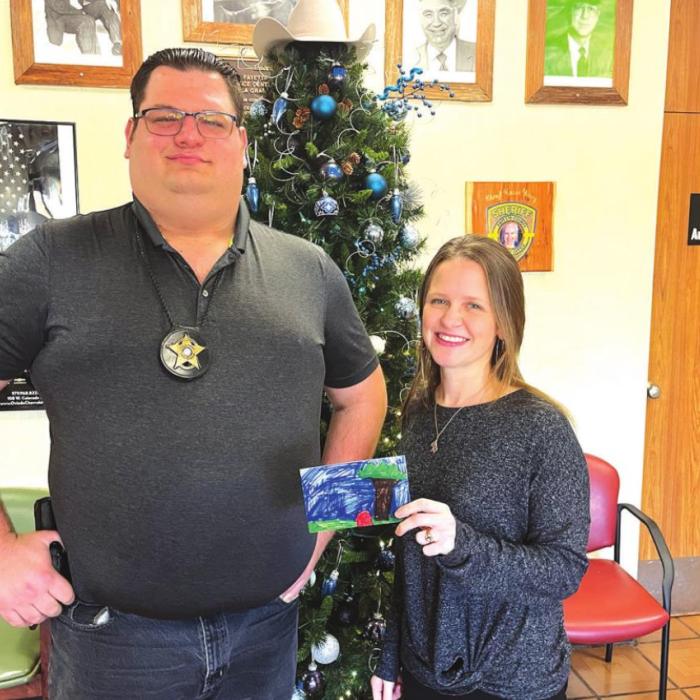
Meanwhile, the number of mental health emergencies is increasing. Jeremy Castleberry, the Fayette County Crisis Intervention Officer, reports that the number of mental health calls has increased 20 percent in the last year.
There are few quick fixes for this chronic shortage of mental health providers. Fayette County’s Castleberry is trying to “multiply his forces” by giving local law enforcement officials more training on crisis intervention. In his “update classes,” officers work on ways to appropriately interact with people suffering a mental health crisis. He offers information on strategies such as de-escalation and active-listening. They also hear from clinicians about specific disorders.
One of the most powerful speakers he invited was an individual who struggles with mental illness. This speaker was able to give the officers a different and very important perspective of crisis situations, Castleberry said. Furthermore, Castleberry plans to work with Fayette County EMS to provide cross training, so that those EMS professionals can also be more equipped and confident in their response to mental health calls.
Mental health workforce challenges are not new to Texas or the nation. “For decades legislators, mental health and substance use stakeholders, providers, consumer groups, and Texas residents have raised serious concerns, and the COVID-19 pandemic only exacerbated existing behavioral healthcare shortages,” the Statewide Behavioral Health Coordinating Council wrote in 2020.
Meanwhile, the gap between the supply of mental health providers and the demand for their services is widening, especially in rural counties.
The lack of action around the workforce shortage is not due to a lack of concern, but because few quick or simple solutions exist. The HOGG Foundation for Mental Health lists various factors that compound the shortage problem including, “in-sufficient reimbursement rates, lack of residency slots and internship sites, an aging mental health workforce, and inadequate mental health training for primary care providers.”
Furthermore, no matter how wonderful we think our rural communities are, recruiting and retaining providers to rural places is especially difficult and only adds to the challenges.
The local mental health workforce shortage is complex and will not be resolved overnight. The training that Castleberry is offering will not completely solve this challenge either, although it remains an important piece of the puzzle.
Meanwhile, there is a new, local effort to create and promote actions that help meet local mental health challenges. It is called The Red Door. It is a newly established program of the Fayette Community Foundation.
The Red Door was inspired by the drawing of a sweet fouryear old girl who lost her uncle to suicide. A Red Door is an individual who or organization that is directly supportive of local individuals who are struggling with mental illness as well their families and friends caring for them. Jeremy Castleberry and the Fayette County Sherriff’s office are Red Doors.
One of the first efforts of the Red Door is to help raise funds for a Mental Health Deputy in Colorado County. A large unique canvas painting of Emmalyn’s, the original artist behind the inspiration for the Red Door, will be auctioned off at the You Matter Beard and Moustache Competition in La Grange on Jan. 22. All of the proceeds from this event benefit the Behavioral Health Council of Greater Colorado Valley and the proposed mental health deputy.
Also, the Red Door is hosting the first annual “Red Door Campaign” this February. The Red Door is asking residents to decorate their front doors in red, to show support for those struggling with mental illness. The Red Door hopes businesses, classrooms, schools, houses, front gates and apartments will be decorated in red by Feb. 12. Vicki Hudec, Red Door Fund Advisor said: “February is a month known for love and kindness. Let us all be Red Doors and stop the stigma in the process.”
For more information on the Red Door visit: www.faycofoundation.com or call (979) 561-6791.