


Hey, There’s a Salad in My River
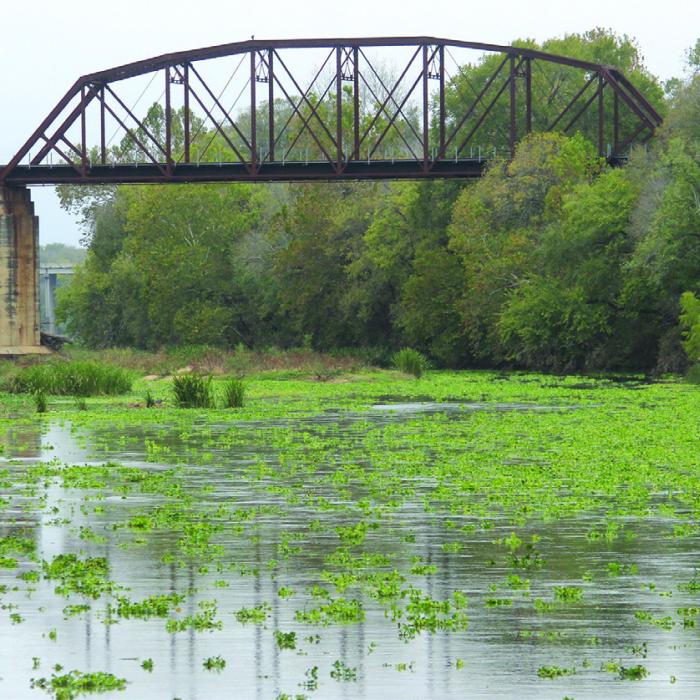
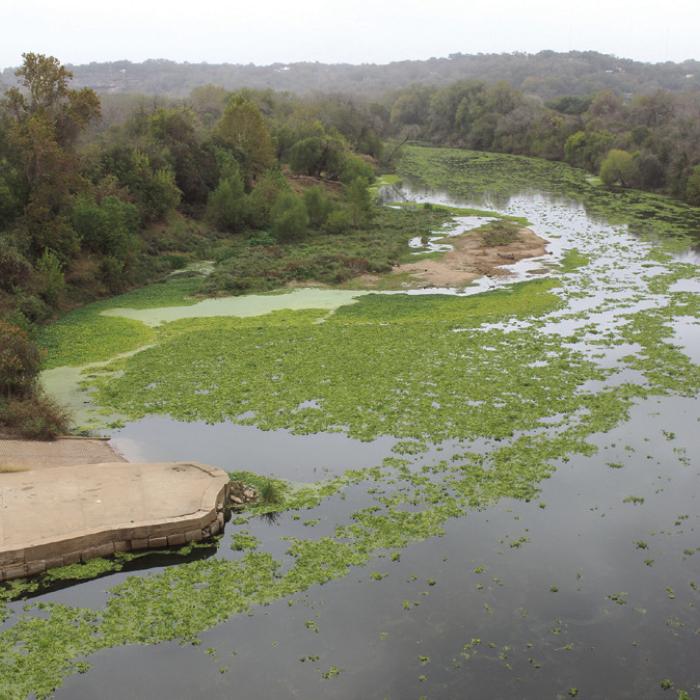
The Colorado River looks quite green lately. Weather and river conditions have been just right lately for a massive bloom of algae and other aquatic vegetation.
“It’s the worst I’ve ever seen it,” said Michael Pechal, who has lived next to the river in La Grange for decades.
Pechal said he bought a jet-drive boat a few years ago, but lately, vegetation in the river has been so thick that he can’t run the boat without clogging up the motor.
“It’s all up and down the river,” said local Game Warden Shaun Bayless. “I’ve worked Fayette and Colorado County, and it seems to get a little better down around Columbus, where it thins out a little bit. It’s definitely out there.”
The situation became a social media meme recently when someone altered the new City of La Grange logo to include patches of brown and green in the river (along with a rooster on top of the bridge – a nod to the old Chicken Ranch bordello).
The Lower Colorado River Authority (LCRA) attributes the increase in vegetation to persistent drought conditions and the lack of recent high flows into the river below Austin.
LCRA said its biologists who monitor water quality along the river report that aquatic vegetation is present in the river from Austin downstream to Bay City, but it is particularly thick upstream of Columbus.
“The Colorado River below Austin has not seen substantial rainfall or had any significant scouring events to dislodge vegetation in many months,” LCRA said in a statement to the Record. “During times of low flow such as we’re seeing now, this section of the Colorado River can be dominated by wastewater effluent released from permitted wastewater facilities upstream.
“Treated wastewater typically has higher nutrient levels than flows generated from rainfall runoff, and these nutrients can create an environment where algae and aquatic plants thrive.”
LCRA noted that wastewater discharges, such as those from the City of Austin, are permitted and regulated by the Texas Commission on Environmental Quality (TCEQ).
Furthermore, LCRA said the recent drought conditions have forced it to cut off irrigation water to the rice farmers downstream from here.
“In some years, water is released from the Highland Lakes in the spring and summer to meet the needs of downstream agricultural customers,” LCRA said. “But under provisions in LCRA’s state-approved Water Management Plan, water from the Highland Lakes has not been available to most downstream agricultural customers since mid-2022 due to drought conditions.
“It’s hard to say when the current situation will change,” LCRA’s statement went on to say. “During the winter months, many of the plants likely will stop growing or die back due to colder water temperatures. Heavy rains also could scour the vegetation and dilute nutrients in the wastewater releases.”
However, LCRA says the rice farmers downstream from here might receive some water from the Highland Lakes for at least the first growing season of 2026.
LCRA says they’ll make a decision about whether to release water to agricultural customers based on conditions on March 1.
“LCRA encourages people to use caution when recreating on or near aquatic vegetation in the river, as the plants can cover rocks and debris that could limit access or cause navigational challenges,” the statement said.
Bayless said the vegetation hasn’t stopped some folks from enjoying the river. He said he saw several boats on the water over the Thanksgiving holiday.
“I think with one good wash and a little rise in the river, a lot of that will be alleviated,” Bayless said.