


The Health Care Road Ahead
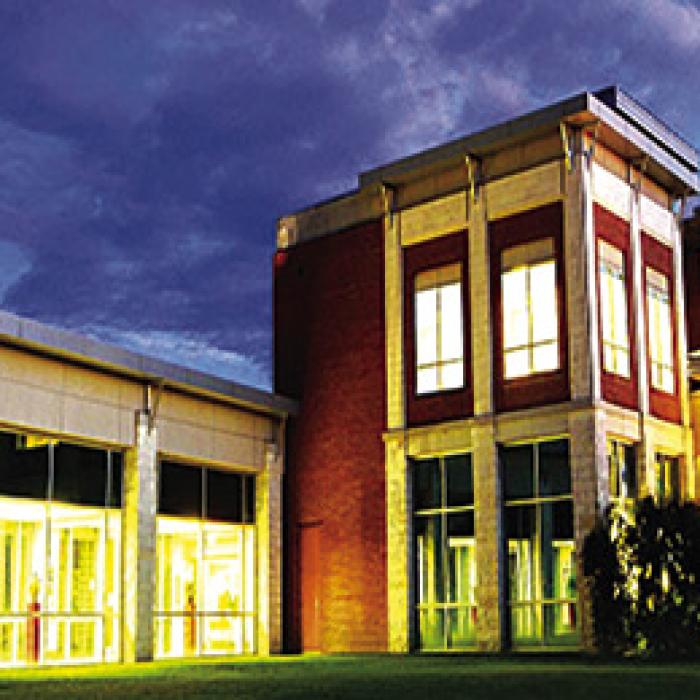
The Record spoke with Fayette County EMS Director Josh Vandever about how this week’s closure of St. Mark’s Medical Center could affect EMS services in Fayette County.
“There are a lot of unknowns,” Vandever said. “There were 10-plus patients a day that were going to St. Mark’s emergency room in their own vehicles. Are they going to keep going to the next hospital in their own vehicle, or are they going to start calling 911? If we see an increase in call volume of 10 calls a day, or even half of that, five calls a day, it’s going to really put some additional stress on our crews. But if those people continue to drive themselves to the next closest hospital, then we’ll probably see very little impact.”
Vandever said his department’s ambulances started to experience an increase in mileage back in January after St. Mark’s transitioned to a rural emergency hospital (REH). St. Mark’s stopped most inpatient services as part of the REH transition. As a result, Fayette County EMS began transporting more patients to other hospitals.
“The main impact we felt since January is the mileage we’re putting on our ambulances, and now we know it’s going to be a permanent impact,” he said. “Therefore, the pace at which we replace ambulances is going to increase.”
Vandever said his department currently has eight ambulances, and the County had been on a schedule to replace one per year. With the increased mileage, Vandever anticipates the replacement pace to increase.
“That’s going to come at a cost to the County,” Vandever said. “We put anywhere from 30,000 to 60,000 miles a year on each ambulance, depending on where it’s at in the County. We’ve seen an increase of about 2,000 miles a week across the fleet. My estimate initially was that we needed to increase our replacement schedule from one ambulance to 1.5 ambulances a year, so basically every other year we buy two ambulances. That’s looking like it will hold true. However, we’re already on the precipice, and we may get to a point where we have to replace two ambulances a year.”
The last ambulance the County ordered cost about $275,000. Vandever said ambulance prices have gone up 30 to 40 percent in the last two years, but he hopes that trend will stabilize.
Vandever said he believes his department can handle the call volume without adding personnel or another ambulance to the rotation.
“I think we can move units around and not necessarily add another ambulance,” he said. “We have to look at the deployment model: Where are our ambulances located? Do we have the best utilization of our services? Those are questions we have to ask.”
Vandever said La Grange and Schulenburg are the busiest areas for Fayette County EMS. But prior to the hospital changes, patients in La Grange had the shortest transport times.
“Now that St. Mark’s is off the table, the district with the highest percentage of call volume – La Grange – is now just as far away from a hospital as all the other districts,” Vandever said. “It’s a very complicated mix that we have to monitor.”
Vandever said he does not expect healthcare outcomes for EMS patients to suffer due to the hospital closure.
“I honestly don’t think we’ll see a negative shift in outcomes as long as people do the right thing when seeking care,” Vandever said. “For example, heart attack – If you’re having chest pain, you need to call 911. You don’t need to drive 30 or 40 minutes to a hospital. You need to call us so we can triage you and get you where you need to go. Same thing with signs of a stroke – don’t just drive somewhere that ultimately can’t treat you for a stroke. Call 911 and let us get you to where you need to be.”
Vandever said he plans to increase his department’s public outreach efforts to inform the community about the services available.
“My biggest thing right now, at least in the circles I’m in, I hear a lot of speculation and finger pointing about the hospital,” he said. “I think the whole community should worry less about the failures of the past and think about the people who just lost their jobs. Emphasize with those people and support those people. Then figure out what we can do better in the future. Dwelling on the past doesn’t help. I hope the community shows empathy for the people who lost jobs and the economic impact to the community. Let’s worry more about what’s next than ‘Who did it?’”