


Get Your Beds Ready for Fall Planting

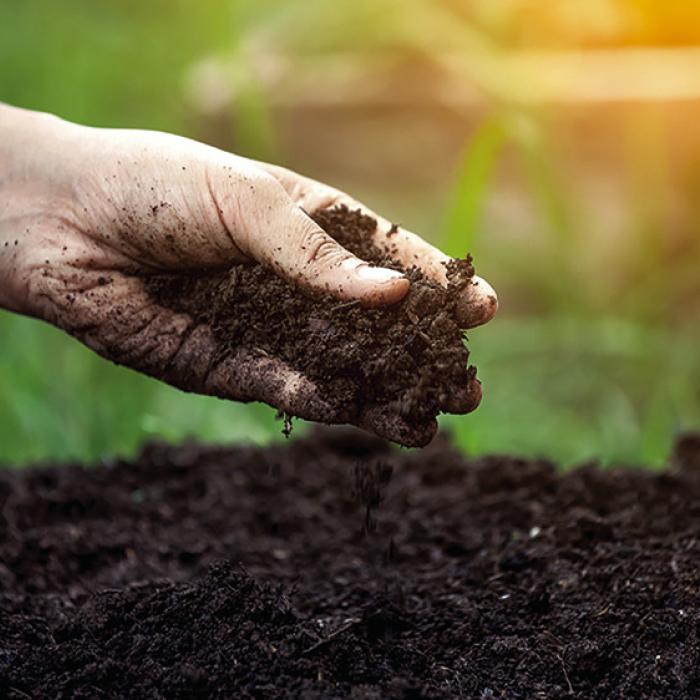
It’ll soon be time to start planting fall vegetables, so I’m getting into bed preparation mode.
I’ve written a lot about bed preparation, but I’d like to focus on one particular aspect of it. So let me summarize the main points before I get to the topic of this column.
I’m not a big proponent of heavy tillage. Tilling the soil breaks up its biological structure. Beneficial macroorganisms like earthworms and microorganisms like mycorrhizal fungus inhabit different layers of the soil. Tilling it all together into a fine dust harms these lifeforms.
If you’re starting with a virgin plot of soil, you’ll need to till it a few times to make the soil workable. But first, remove as much of the grass and weeds as possible. The best way is to solarize the bed – lay down a dark tarp or black plastic for a few weeks. That’ll kill any grass or weeds. Now you can till it. Don’t till the soil into a powder. Just make one or two passes. Then water the bed. Give it a week or two for weeds to sprout. Then till it again. Repeat the process another time. It may take a month or two, but you’ll end up with a lot less weeds in your garden.
Now it’s time to amend the soil.
Some of the most nutrientdense soils found anywhere on the planet come from volcanic areas. The gardens of Hawaii and Iceland are famous because of this. That’s because volcanic sand is made of many diverse minerals from deep within the earth. Other geologic features like glacial deposits and even gravel pits are rich in similar minerals. Average topsoil around here isn’t particularly rich or diverse in rock minerals. For that reason, I like to add some kind of rock mineral amendment to my garden beds. There are several options – lava sand or green sand or name-brand products like Azomite or Remineralizer from Nature’s Way Resources. Find a product you can afford and apply it according to the supplier’s recommendation.
Compost is the most important amendment. How much compost should you apply? For me, the answer is usually as much as I can afford. If you’re using a high-quality finished compost, you really can’t apply too much. For a new garden bed, aim for three to four inches across the bed. There’s no need to till it in. Worms and other critters will do the work for you over time.
I often apply molasses with liquid fertilizer to the soil around my plants during the growing season. But for a new garden bed, I like to add dry molasses to the soil. You can buy dry molasses in 50 lb. sacks from most feed stores. It’s actually made of bran sprayed with liquid molasses and then allowed to dry. Do not let it get wet in the sack. The sack will turn into a brick. Ask me how I know. Apply it at a rate of 20 lbs. per 1,000 sq. ft. Molasses stimulates beneficial bacteria in the soil. Plus it seems to keep away fire ants.
You can add some dry organic fertilizer to the bed, if you wish. Fertilizer is expensive. So I prefer to side-dress transplants or sprinkle some in the bed when planting seeds.
There are all sorts of beneficial products you could also add to a new bed. I could write a whole column on the importance of mycorrhizal fungus. Microlife makes a product called Mycorrhizal Plus that helps inoculate new beds with this important microbe. I recommend using it, if you can afford it. But if you practice minimum tillage and mulch with wood chips, you’ll probably end up with it in your soil at no extra expense.
Now, finally, I’ve gotten to the topic I alluded to earlier: cornmeal. You can use any or all of the aforementioned suggestions. But this one is the cheapest and easiest. Buy some 50 lbs. sacks of whole ground cornmeal from the feed store (or if you grew a big patch of corn, grind your own). Apply it at a rate of 20-40 lbs. per 1,000 sq. ft.
Cornmeal provides several benefits to the soil. Many years ago, Dr. Joe McFarland and the staff at the Texas A&M Research Station in Stephenville discovered that cornmeal is effective at fighting a specific fungal disease on peanut crops. McFarland and his team learned that cornmeal doesn’t kill the harmful fungus. Rather, it encourages the growth of a cannibalistic fungus that keeps the harmful one in check. According to many organic gardening researchers, cornmeal seems to do the same thing to the fungus that causes “damping off” in seedlings.
Cornmeal also stimulates beneficial bacteria that decompose dead organic matter in the soil. And cornmeal itself quickly turns into compost as it decomposes in the soil.