


Gardening: Twig Girdlers, and Surprise Zucchini & Potatoes
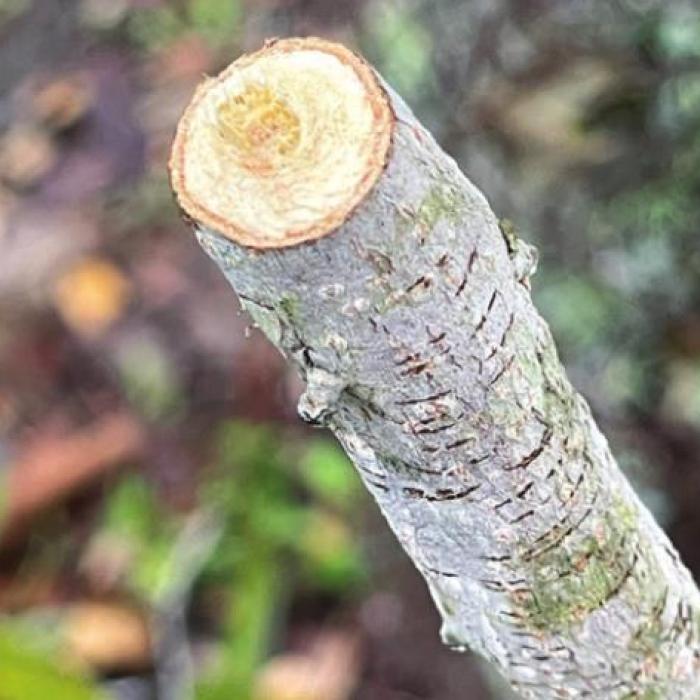

This week a reader sent me a photo of some interesting damage to the limbs of her persimmon trees.
The damage appears as a clean v-shaped cut formed in a circle around twigs and small branches. The cut goes near to but not all the way to the center of the twig, causing them to break and fall off in wind.
The insects that cause this damage are long horned beetles called “twig girdlers.” Most of the ones we see around here are Oncideres cingulata, the pecan twig girdler. According to the “Field Guide to Common Texas Insects” by Texas A&M University, these bugs normally appear as adults from August through October. The females cause the damage we see to trees. They cut the neat groove around the twigs and lay their eggs into the notch after mating.
The eggs hatch after about seven days and the young larvae tunnel under the bark. The spend the next several months growing inside the dead twigs that fall to the ground. They emerge the following summer as adults. Some of the larvae don’t complete development until the next spring, which accounts for the small amount of twig girdler damage we sometimes see in the spring.
Normally, these insects are more of a curiosity than a serious pest. The reader who contacted me reported some pretty severe damage. In that case, I recommend picking up all the limb and leaf litter under the trees and disposing of it. You should either compost or burn the twigs to break the twig girdlers’ life cycle. When the adults are active, you can try spraying the limbs with products containing the organic pesticide spinosad. Spinosad kills many beetle pests, so it may work against twig girdlers. If you are noticing the damage now, spraying will probably not be effective since the adults are already gone for the year.
On another topic, I recently spoke with Mike Serant from MicroLife Organic Products about weeds. Serant was talking about how growing plants organically with proper nutrition makes them more resilient to pest and disease damage. I agreed with him, saying the biggest problem in my garden is competition from weeds.
Serant mentioned a recent study that indicated weeds might not be as big of a deal as most gardeners thing. Sure, they make your garden look ugly. But some weeds don’t directly compete for the same nutrients as many of the vegetable crops we grow. You might think that weeds compete with your plants for water. That’s partly true. However, bare ground might lose more water to evaporation than if it was covered with weeds, which can act as a living mulch by shading the soil.
Of course, this all depends on humidity, wind, how long it has been since rain or watering, and a host of other factors.
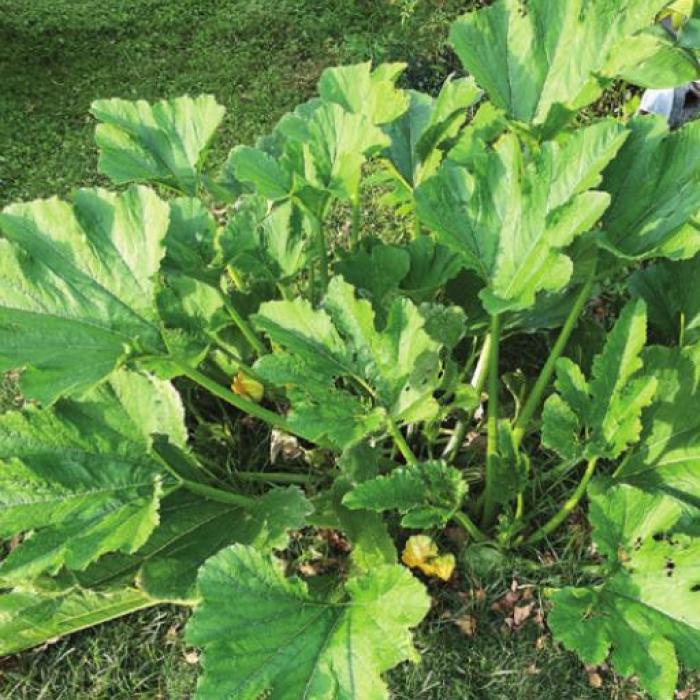
I often dry out seeds I’m saving on my front porch, and some of them end up scattered in the yard. This summer a couple of zucchini popped up in the Bermuda grass just off my porch. I decided to mow around them a few times and they grew into the biggest and most beautiful zucchini plants I have ever grown. They’re surrounded by Bermuda grass. I didn’t give it any care other than mowing around them. I never even fertilized them. I’ve been picking zucchini off them for weeks now. A few feet away from the zucchinis, I noticed a potato plant growing. I have no idea how it got there. Sometimes I peel potatoes on my front porch. I’m guessing my guinea stole a peel that had an eye on it and dropped it over there. This potato plant is growing up through the Bermuda grass right next to a Chinese tallow tree. I’m going to dig it up once we see a frost and see how many potatoes it made.
Have questions or comments? Send them to andy@fayettecountyrecord.com.