


Gardening: On the Subject of Tomatoes & Peppers
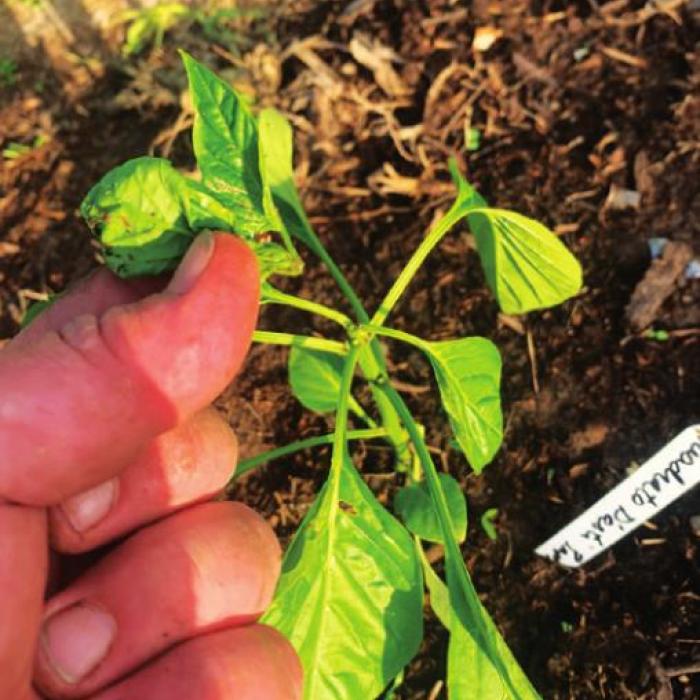
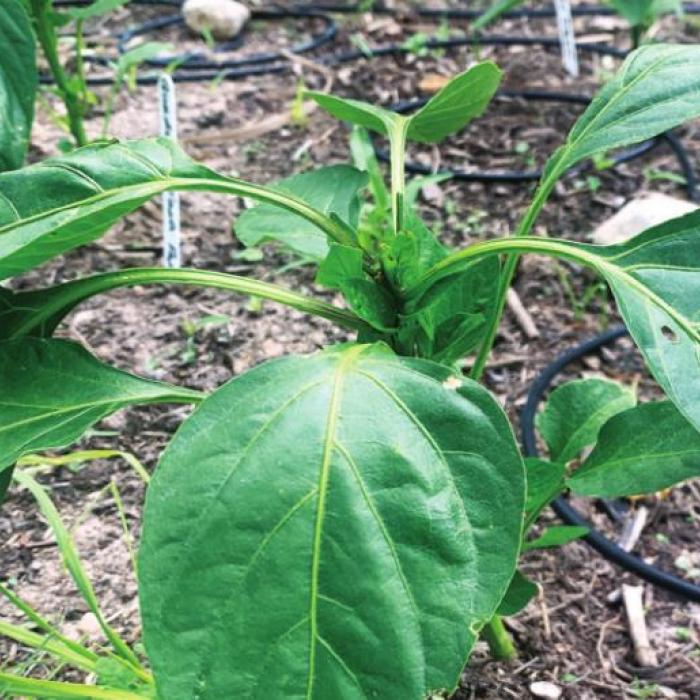

My peppers and tomato plants started to really take off last week, so I decided it was time to prune them. If you grow peppers or indeterminate tomatoes, I recommend pruning to increase production and tidiness of the plants.
Pruning peppers is easy. After the plants grow to six or eight inches high, simply snip the main growing point at the top of the plant. Remove the top two pairs of leaves with a scissor. This encourages the plant to produce more branches, which can grow more fruit. It’s also a good idea to remove the first ten or so flowers that appear. This will delay fruiting and allow the plant to put more energy into its root system. Stronger roots will give you better yields and a longer growing season, especially when conditions get hot and dry. Later, I usually trim out a few branches leaving three or four main stems. I think this last part is especially important for varieties of bell peppers. Too many branches leads to small fruit in my experience.
Pruning tomatoes is a little more complicated. First, you don’t need to prune determinate tomatoes at all. Determinate tomatoes are varieties that set most of their fruit all at one time. They grow bushier and don’t require as much support. Popular determinate varieties include “Amelia,” “Better Bush” and “Celebrity.” Many determinate varieties are hybrids. Don’t prune them.
Most heirloom tomatoes are indeterminate, meaning they will keep growing and setting fruit until killed by the heat or the cold. They typically grow in a vining habit and require large tomato cages or trellis for support. These varieties respond well to pruning. First, I recommend removing any leaf stems that touch the soil, which can introduce disease and insect pressure to the plants. I also remove most of the “suckers.” Suckers are the new branches that grow between the stalk and leaf stems. Allowing them to grow requires energy and nutrients that would otherwise go toward flowering and fruit.
When the plants start growing, I typically allow one sucker to grow into a secondary stem. Some growers prefer plants with just one main stem, so they remove the first sucker. I think I get better production with two main stems. You can experiment and see which method you like best.
Whether you go with one stem or two, you should remove all other suckers that form until the plant gets as tall as you want it to get. When the plant reaches the top of the tomato cage or trellis, I snip off the terminal growth, which keeps the two main stems from growing any taller. By that point, the plant should have started setting fruit. I sometimes allow a few suckers to grow after I snip the terminal growth, depending on the fruit production.
This advice mostly applies to larger-fruited varieties. I don’t think pruning is as important for cherry and grape tomato varieties. I usually plant them at wider spacing and let them sprawl.
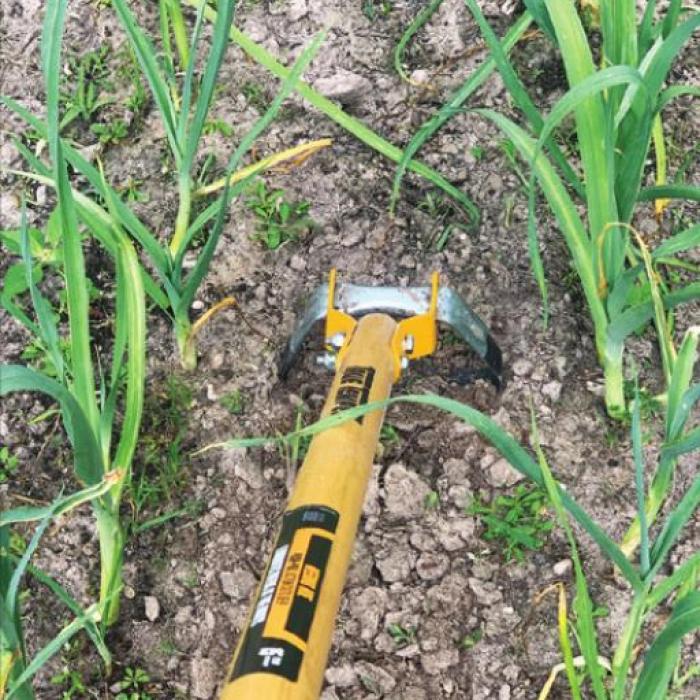
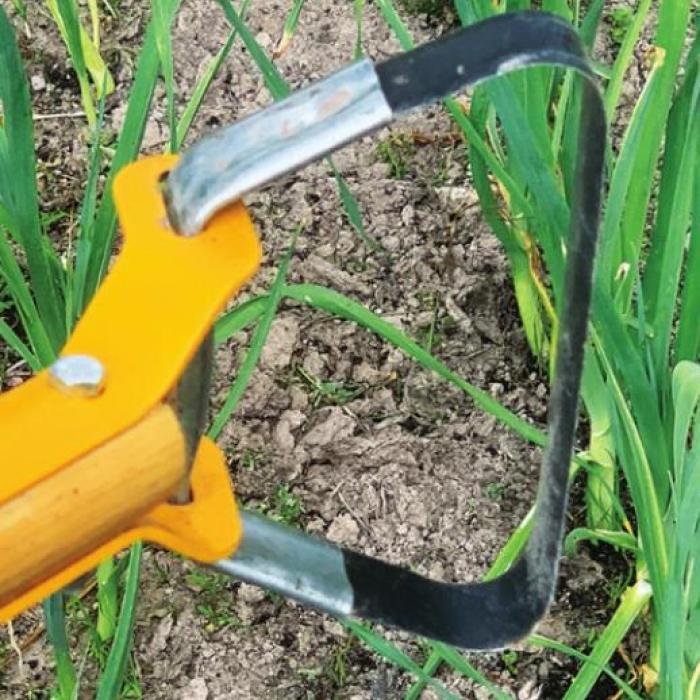
A few weeks ago, I purchased a new garden tool, and I don’t know how I got by before without it. It’s called a push-pull hoe. Some manufacturers call it a stirrup hoe. The end of it looks like a stirrup made of thin steel. Both sides are sharp, allowing the user to push and pull it through the soil. I use it to cultivate between rows. It makes weeding a lot easier. Most garden centers and hardware stores sell some version of this tool. I highly recommend it.
As some of you know, I recently started a part-time business, Andy’s Strange and Unusual Plants. Right now, I have some bell peppers, Armenian cucumbers and a couple varieties of squash and zucchini that I need to sell so I can make room for some new things. The bell peppers are a variety called “Quadrato d’Asti Rosso,” an Italian heirloom that ripens to red. I’m growing the Armenian cucumbers this year for the first time. I hear from other regional growers that they love our heat and humidity and will produce through the summer. The squash varieties I have are “Rugossa Friulana” – a wrinkled yellow crookneck heirloom from Italy, “Costata Romanesco” – the famous ribbed zucchini from Italy with an amazing nutty taste, and “Tatume” – a Mexican heirloom resistant to the squash vine borer pest. I also have a few Thai basil plants and a couple of Hungarian black hot peppers. If anyone wants to place an order, email me at andy@fayettecountyrecord.com and I can arrange pickup at the Fayette County Record Office.