


Gardening: Recipes

Thank you to everyone who came by my plant sale last Friday. It was so much of a success that I am working on some ways to share even more unique vegetable and herb plants through a part-time business that I am launching, Andy’s Rare and Unusual Plants. Look for more about this venture in the coming weeks.
I’ve been receiving quite a few questions regarding the natural ways of improving the soil and controlling weeds and pests that I wrote about in the last two columns.
This Tuesday evening, I gave a presentation about some of these topics to the Schulenburg Young Farmers. I prepared a handout with some recipes for that presentation that may help answer some of your questions. I’m happy to share the information from that handout with everyone here.
Soil Stimulator (base)
2 oz liquid molasses
2 oz apple cider vinegar
Mix with one gallon of water
Drench the soil with this mixture to stimulate microbial activity in the soil. Add 1-2 tbs. of epsom salt per gallon of mix to improve magnesium and sulfur in the soil. This is especially important if your tomatoes suffer from blossom end rot, which is usually due to a magnesium deficiency.
Basic Foliar Fertilizer
1 gal Soil Stimulator
1 oz liquid seaweed
1-2 oz fish emulsion or liquid fish
This mix is best applied in the morning or evening as a foliar spray using a pump-up sprayer. Liquid seaweed is just about the only product that will help with leaf miners. If you have trouble with leaf miners, give this mix a try.
Natural Fire Ant Killer
4 oz liquid molasses
4 oz orange oil
2 gal water
Mix in a two gallon watering can that has an open spout, not a shower head. Walk gently to the mound. Begin pouring a steady stream of the mix down the center of the mound. After you have used about half the mixture, pour in circles from the center of the mound out to the edge. This orange oil in the mix will kill ants and the molasses will help repel them from that spot in the future.
You can also repel fire ants by applying dry molasses at a rate of 10-20 lbs. per 1,000 sq. ft. You can accomplish this by spreading the dry molasses by making two passes with a push-type lawn fertilizer spreader open at its maximum setting. Do it on a dry day, otherwise it will be a mess. I have heard reports of people driving ants off their large acreage by doing this with a big fertilizer rig.
Natural Weed Killer
1 gal of 10 percent vinegar
1 oz orange oil
1 tsp. Dawn dish soap
Mix in a pump-up spray and apply to the foliage of anything weed or grass you want to kill. It will not kill coastal Bermuda, but it will turn the top brown. The coastal will grow back green from the rhizomes. It will kill any broadleaf plants, including vegetables, so be careful when spraying it around the garden. It works great for killing weeds that pop up between pavers or in gravel walkway. Apply on a hot, sunny day for the best results. Straight vinegar will work, but the orange oil and soap makes it even more effective.
Acceptable Insecticides
I try not to use any insecticides in my garden, even the organic ones. Instead, I try to attract beneficial insects by planting flowers such as zinnias. I also practice companion planting to control insects. For example, planting borage around tomatoes will repel tomato worms. But sometimes, insect problems get out of control. Here are a few products I recommend:
BT (Bacillus thuringiensis) - used for controlling caterpillar pests.
Spinosad (Captain Jack’s Dead Big Brew is a good brand) - will control caterpillars in addition to many other pests such as borers, spider mites and thrips.
Neem Oil Concentrate (1 tbs. mixed with 1 gal of water and 1 tsp. dish soap) - a cood contact-killer for many insect pests.
BT won’t kill bees, but the other two will if the bees touch the liquid. Only use these products when the bees are not flying in the garden, such as in the late evening.
Bed Preparation
• Don’t use peat moss (it’s acidic, antimicrobial and unsustainable).
• Don’t use pine bark mulch (pine bark floats away in heavy rains and it inhibits growth of small plants.
• Don’t spray chemical herbicides to kill grass.
• Don’t remove the native soil.
The only way to remove grass is cutting it out or solarizing the bed with a black tarp for a couple of months.
Your native soil is probably good enough to start with unless it’s rock. The following are some ingredients I recommend starting with the most essential:
• 4-6 inches of good quality compost
• 2 lbs. dry organic fertilizer per 100 sq. ft. (I like Medina Growin’ Green 3-2-3)
• 2 lbs. Whole ground cornmeal per 100 sq. ft.
• 10 lbs. Lava sand per 100 sq. ft.
• 4 lbs. Azomite or other rock mineral per 100 sq. ft.
The last two ingredients are not as essential than the first three, depending on your soil. Lava sand will really help those of you with black gumbo soil. Lava sand might not be as important to those with sandy soil.
In the Garden
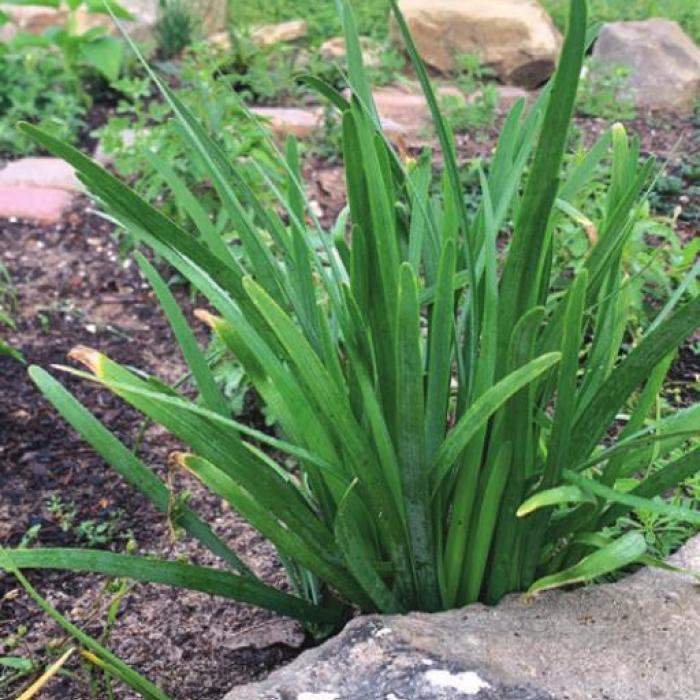
Several years ago I planted some Chinese garlic chives in a raised bed. I hardly ever water them. Over the years, they have grown into a bunch of gnarly clumps. So a few weeks ago, my wive Janessa decided to divide some and replant some new clumps around our landscape. The stuff is growing beautifully this spring. We have been harvesting the flat green leaves regularly to eat in Asian dishes, baked potatoes, nachos and really just about everything. They taste wonderful, lightly garlicky. They look great in the landscape too. I highly recommend this herb. I should have a few for sale in a few weeks.
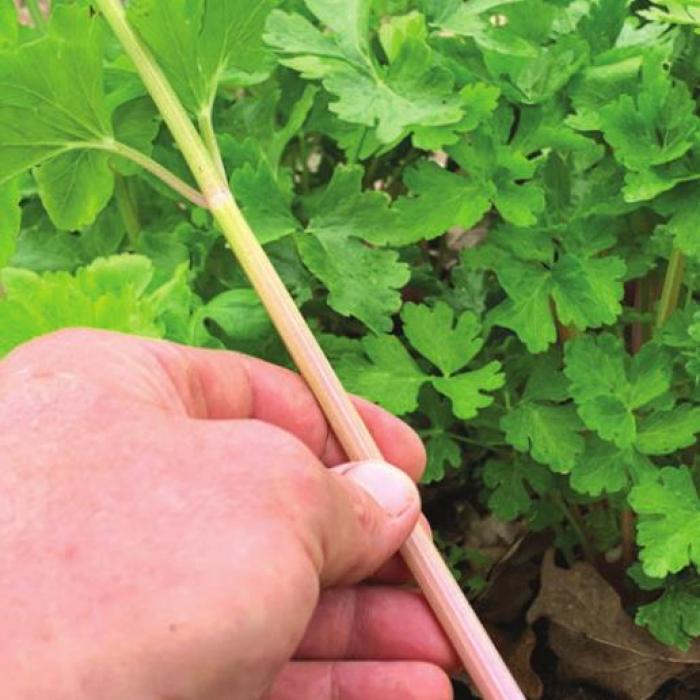
This year I’m growing Chinese pink celery for the first time, and I have fallen in love with it. The plants grow the most incredible bubblegum pink stalks with big, tasty leaves. The stalks and leaves posses a strong celery flavor. This might be the best celery for using in Bloody Marys. The leaves make a great herb to flavor soups.
I don’t know much about this plant’s growing habits. European celery is very hard to grow in Texas because it prefers a cooler climate. The Asian celery varieties are supposed to tolerate heat better. Right now my plants are going gangbusters, but they might play out when it heats up. I’m definitely going to grow this variety again in the fall.