

Friedrich Loth’s Will, In His Own Words
Footprints Of Fayette
Fayette County is one of the most historic counties in Texas. In this weekly feature from the County Historical Commission, a rotating group of writers looks back at local history.
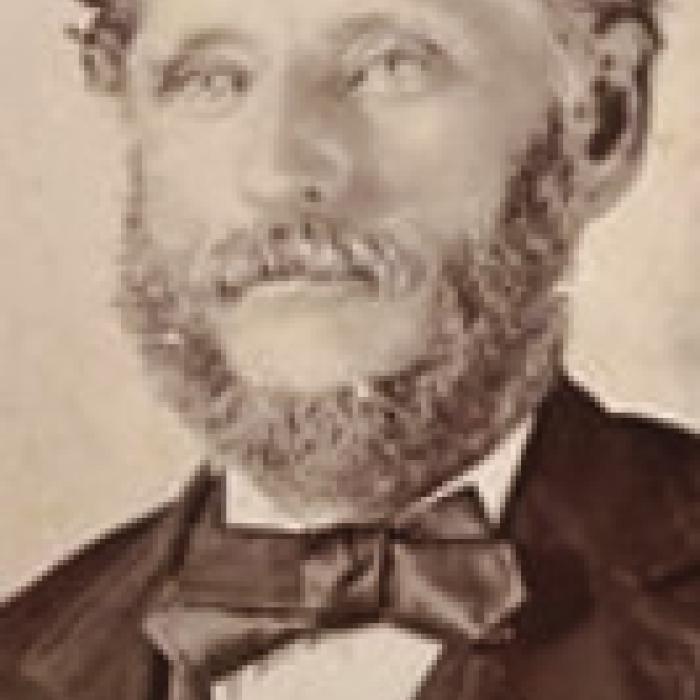
Friedrich Loth could have left his family with a list of names and acres. Instead, he left them a picture of the life he had built.
His will named the children and grandchildren who would inherit his land in Fayette and Karnes counties. But it also described fields, pasture, timber land, fences, buildings, a well, and the small house where he lived. Loth wrote much of it himself in German, the language in which he could best put his wishes on paper.
Loth said he had lived on his Fayette County farm since 1875. By the time he wrote his later instructions, he was thinking about both his family’s future and his own remaining years. He wanted his son Karl (Charles) to receive the improved home farm, with its buildings, fields, pasture, and fences. He provided land for the children of his deceased sons Gustav and Albert. His daughter, Mrs. Rudolph Hoffmann, was to receive an improved farm in Karnes County.
These were substantial gifts. Yet the passages that bring Loth closest to us concern smaller things. While giving Karl the Fayette County farm, he reserved the right to stay in the house where he had been living. He set aside two acres by the house, a place for his horse, a buggy house, and a place to store hay. He specified hay that had been cut, raked, and stored; corn for one horse; and a cord of cut wood brought to the property.
He also kept the right to draw water from the well, let his horse graze in the pasture, and go anywhere on the farm. He named the house, the pasture, and the field separately, as if to make certain that no part of his daily life would be misunderstood.
It is easy to picture the routine behind those provisions: tending a horse, drawing water, crossing a field, returning to a familiar house. Loth was preparing to pass the farm to the next generation, but he wanted to remain at home while he lived. His careful words protected that independence.
Loth paid just as much attention to what might happen among his heirs. Addressing his “beloved children and grandchildren,” he asked them to be content with the division he had made. He warned them against people who might stir up resentment and urged them to respect and love one another. The land mattered greatly to him, but so did the peace of the family who received it. He signed those instructions “Euer Vater und Großvater” – “Your father and grandfather.”
E. A. Arnim who learned German from his parents who settled in Lavaca and, later, Fayette County in the 1850s, appears in the legal record of Loth’s estate. Arnim testified that he had seen Loth sign and declare a will in October 1909. Loth later wrote additional instructions in German. After his death in March 1924, those writings had to be presented to the Fayette County court.
The court heard from John P. Ehlinger and C. H. Steinmann, two men who knew Loth and could also read and write both German and English. They recognized his handwriting and testified that the English translations accurately conveyed his words. They also testified that he was of sound mind. In January 1925, the court admitted the will and its additions to probate.
The proceedings preserved more than a distribution of property. They show neighbors helping the court hear a man’s wishes in the language he had chosen to write them. Arnim’s testimony helped establish the earlier will; the bilingual witnesses helped establish the later German writings.
Perhaps Loth’s greatest accomplishment, in his own eyes, was what he could provide for the children and grandchildren who would follow him. He had made a home from the land and wanted each of them to have a place in what he left behind. He also knew that inheritance could become a source of hurt. That may be why he was so exact about the acres and the well, and so direct about his hope that the family would live in peace.
Loth’s farm was no distant name on a courthouse page. He placed it in the M. Muldoon League, in the part of southern Fayette County where Farek-Loth Road runs today, just east of FM 609. The road name offers a familiar point of reference, although the will alone does not establish the boundaries of his particular tract. A century later, his words let us see the farm as he saw it and hear the father and grandfather who wanted to explain it in his own language.
His family’s connection to the land lasted well beyond his lifetime. The Texas Department of Agriculture’s Family Land Heritage program recognizes farms kept in agricultural production by the same family for at least 100 years. Friedrich’s son Charles and his descendants carried on that tradition at Black Jack Farm, recognized for its first century, from 1897 to 1997. Friedrich’s grandson Arnold Loth and his family tended Pine Springs Farm, founded by Friedrich in 1875 and recognized in the state’s 1982 registry. The land Loth took such care to divide was still being worked by his family generations later. His words let us see the farm as he saw it and hear the father and grandfather who wanted to explain it in his own language.
Sources: Fayette County, Texas, County Court, Probate Minutes, January Term 1925, Estate of Friedrich Loth, pp. 612–616 (page range and volume to be checked against the bound record); https://www.familysearch. org/ark:/61903/3:1:3QS7-99QS3TS. https://www.findagrave.com/ memorial/47442777/j-friedrich-loth J Friedrich Loth buried at Salem Memorial Cemetery Freyburg, Fayette County, Texas Texas Department of Agriculture, Texas Family Land Heritage Registry, vol. 8 (1982), p. 24, “Arnold Loth Pine Springs Farm”; https://texashistory.unt.edu/ ark:/67531/metapth576853/m1/26/.