


Fayette County EMS Director Talks About What He Saw While Helping With Kerr Co. Flooding
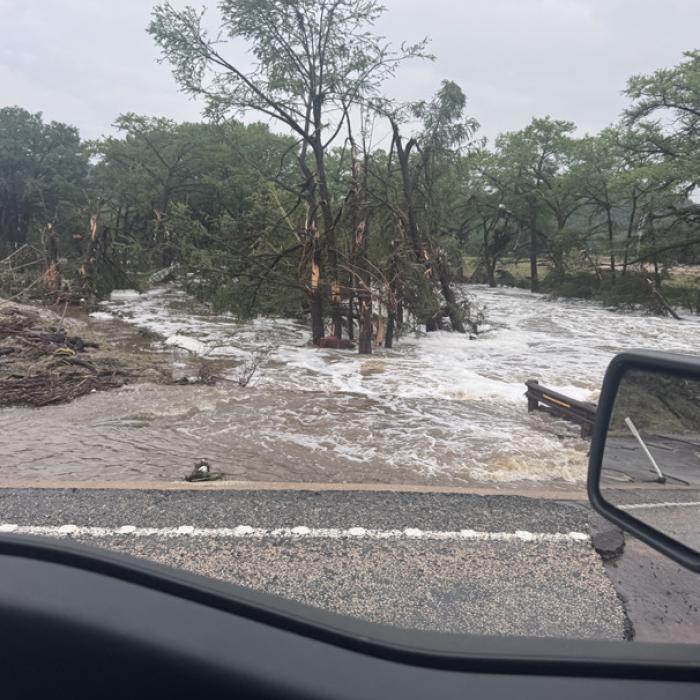
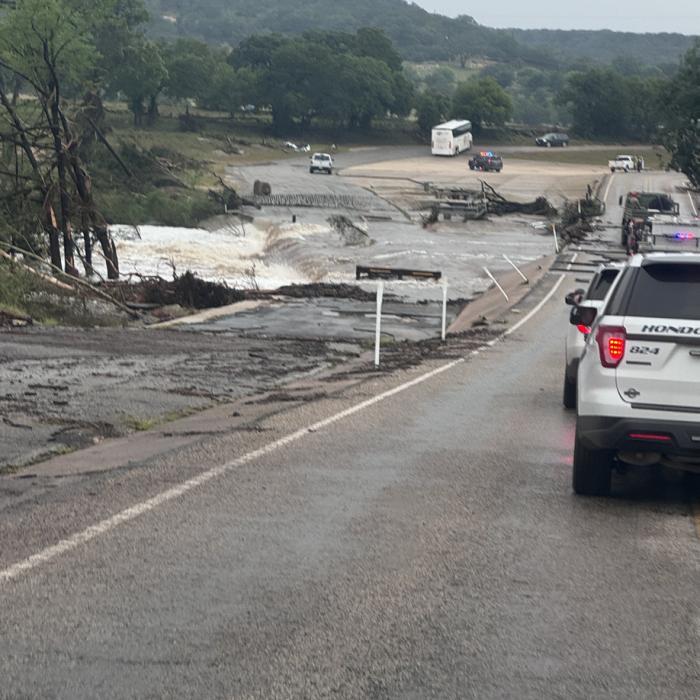
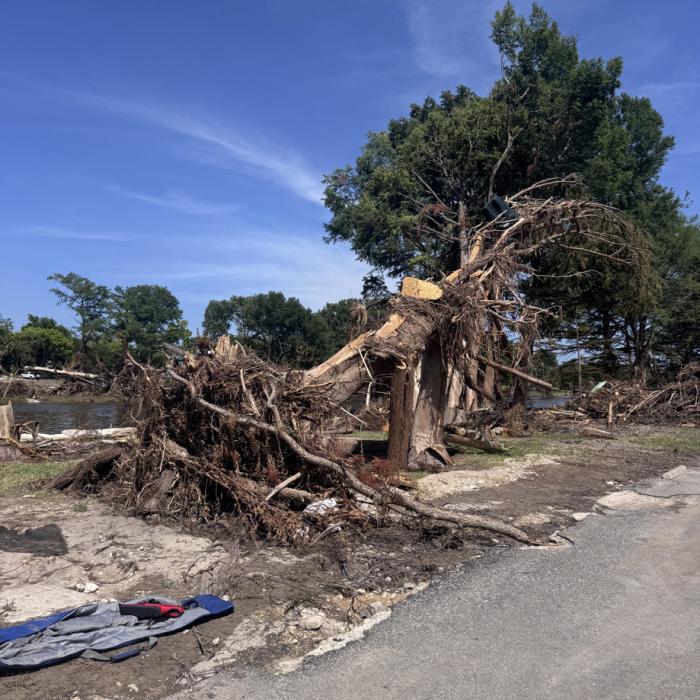
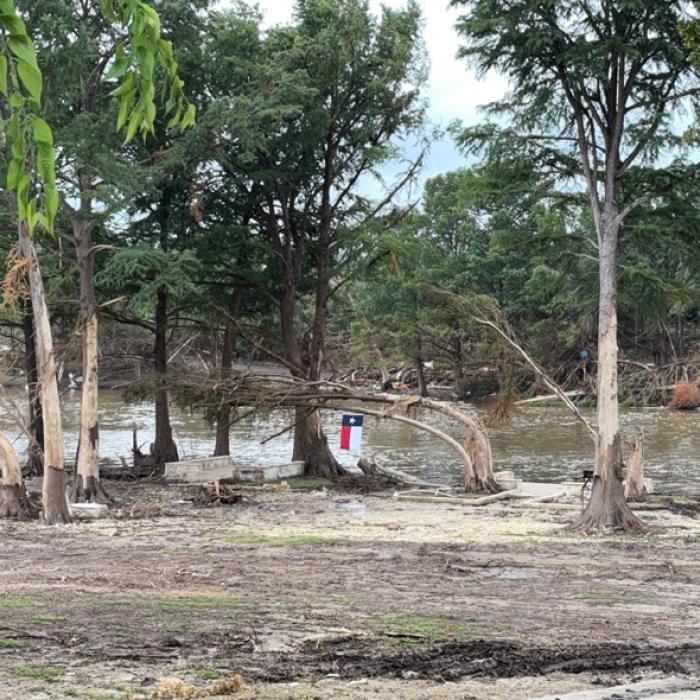
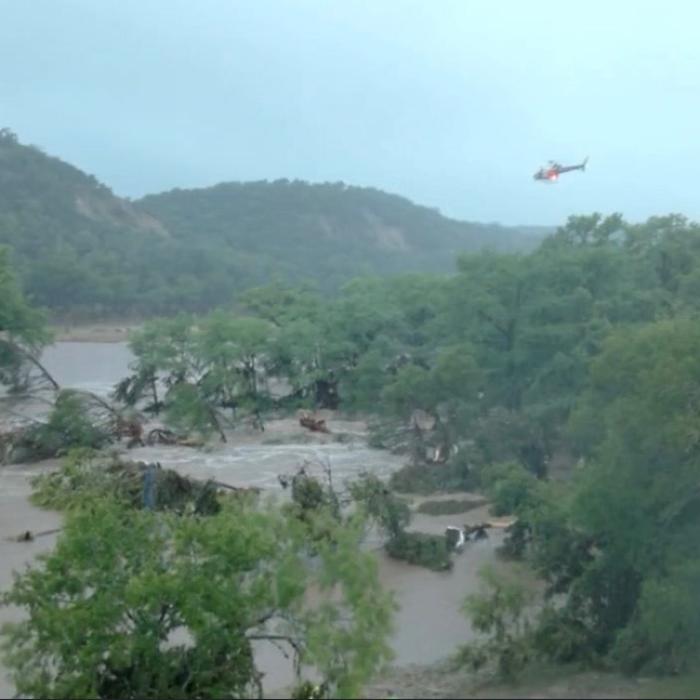
Fayette County EMS Director Josh Vandever returned home last Friday, July 18, after a two-week deployment to assist with the flood response in the Hill Country as part of Texas Emergency Medical Task Force 7.
“I was at the Fourth of July parade in Round Top when I got the notification that resources were needed that morning in the Hill Country,” he said in an interview with the Record on Tuesday. “I responded that we had some resources available, and that I was personally available.”
He and two other Fayette County EMS personnel, Captain Neil Watkins and EMT Sam Brychta, arrived in the Kerrville later that day.
“Th first day was pretty wild, super heart breaking,” Vandever said.
He said the devastation was unlike anything he’d ever seen. The Guadalupe River had gone went from lazy stream to a raging torrent in the middle of the night. Vandever said observers told him the surge of water rose the river level 40 feet in many spots. Where the river squeezes through tight canyons, the wall rose to 80 feet. It swept away house, cars, and anyone standing in its path.
That evening, Vandever was on the ground at Camp Mystic, where 27 young girls perished in the flood.
“Around 6:30-7 p.m., they told us they needed us to take a strike team to Camp Mystic, that the road was passable Vandever said. “So me and another guy and five random ambulances hit the road and went to Camp Mystic. I don’t know what that ride is usually like, but it took forever. Asphalt was washed off top of road, just concrete bridges. When we got to Camp Mystic, we realized there was no way to cross and get in there without burying axles in mud. So we crossed to the entrance with game warden pickups, loaded kids in the bed, and sent them out.”
The next day, first responders moved into the Kerrville Expo Center, which was set up as an emergency operations center. At that time, reports started coming in about flooding in Williamson County and Marble Falls.
“The state coordinating office realized we needed to change the (command) structure for the incident,” he said. “They created a structure in which we had a task force leader over both sets of incidents, deputy task force leader, and the role I played was as operational section chief for both floods. Probably 80 percent of the work was in Kerr and Kendall County, the other 20 percent was those other floods.”
Vandever helped coordinate response to the various calls for assistance coming into the command center. While local first responders were assisting in the search and rescue efforts, normal, every-day EMS work needed to continue. For example, Vandever said patients who had a heart attack or stroke needed transport from regional hospitals to high-level care centers in Austin. Vandever said ambulance crews from around the state pitched in to handle those needs. He was in charge of dispatching those crews.
As recovery efforts dragged on, the local first responders in Kerrville needed a break.
“Kerrville’s system was overwhelmed with 911 calls,” he said. “That Wednesday, Friday, and Sunday, the local EMS did a stand down, the whole department, for a debriefing, to assess their mental health and to make sure they were OK. We put ambulances and fire engines in all their stations so they could take time as a team to talk.”
Vandever said the state response he was part of also provided medical protection for search and rescue crews working in the river. He said search crews were assigned different sections of the river. He assigned task force ambulances to each crew so medics could quickly treat anyone injured while searching. That effort paid off, he said, because one search volunteer suffered a stroke while on assignment. The ambulance crew was able to quickly evacuate that person and get them to a hospital.
After about three or four days, Vandever said, the mission turned to more of a recovery effort.
“I don’t know how much hope was there finding people alive three or four days into it,” he said.
He recalled one incident about three days after the flood in which an official from Texas Department of Emergency Management received a report about a child survivor hanging in a tree.
“The more we looked into it, it seemed like it was a false rumor that started,” he said. “Everyone gets their hopes up, and then it materializes, this is probably not a good outcome.
“Bringing deceased people home with dignity is just as important as saving people,” he said.
On July 11, Vandever was present when President Donald Trump, First Lady Melania Trump, and Governor Greg Abbott visited with everyone at the Emergency Operations Center. Vandever said officers whom he assumed were Secret Service told them the day before about a possible VIP visit. The day of the visit, Vandever said he had a good idea the VIP was the President when officials conducted a major security sweep and told everyone to park in a different area.
“(President Trump) shook everyone of our hands, we shook Melania’s hand,” Vandever said. “He was super somber, super respectful, a whole different view of President Trump that you don’t see on TV. “It was a really cool side of him to see. He made a comment to the effect of, ‘The stuff you all are doing is both terrible and terrific at the same time, but thank you for all the work you’re doing.’” The Record asked Vandever about any lessons he learned in the Hill Country that could be applied to Fayette County. One lesson, he said, is how it’s almost impossible for a small county government to have all the resources it takes to respond to a devastating natural disaster like the July 4 floods. It certainly requires local preparation, but he said local officials also need close coordination with state and federal resources.
“The cost of readiness has to be an equation against the willingness of taxpayers to pay for those resources,” he said.
For example, Vandever said, local taxpayers probably don’t want to see the County purchase an expensive water rescue boat only for it to sit idle during long periods of drought.
“Hurricane Harvey showed us a lot of our hazard areas in Fayette County,” Vandever said. “We’re lucky to have those flood maps. Maybe we need to have conversations about a caution area that goes past the floodplain, collect data, phone numbers on those residents. But people have a mistrust when the government comes knocking and gathering information. The public and government have to come to some mutual trust. Or you have to be responsible for your own safety.
“Also permitting – managing what gets built in floodplain – that’s critical,” he added.
Vandever said the State of Texas, through the Federal government, will reimburse Fayette County for all of the time and equipment spent in the Hill Country during the flood recovery. More important, he said, is the experience of working with a massive coordinated effort.
“You build a network and get experience of how those things work,” he said.
Monday, July 21, was Vandever’s first day back at work in Fayette County.
“I’m getting back into the swing of things, trying to get back to life as normal,” he said. “There were a lot of ups and downs. And a lot of tense conversations when a bunch of Type A personalities get in a room together. But overall, these kinds of events open your eyes to how good people can be.”