


Employee Memories Bring Victor Stanzel Co. Story to Life
A new book joins the Stanzel Model Airplane Museum in paying tribute to two Fayette Co. brothers whose fascination with flight spawned a local business that flourished for 70 years





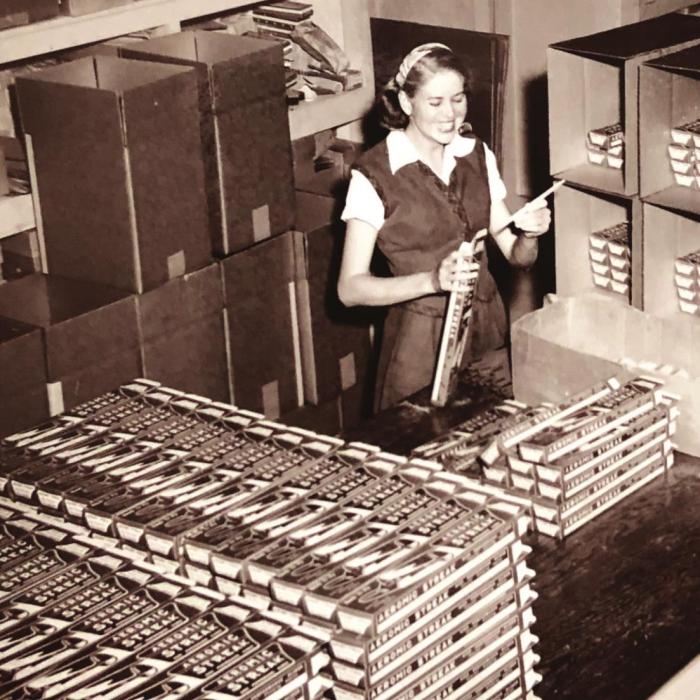
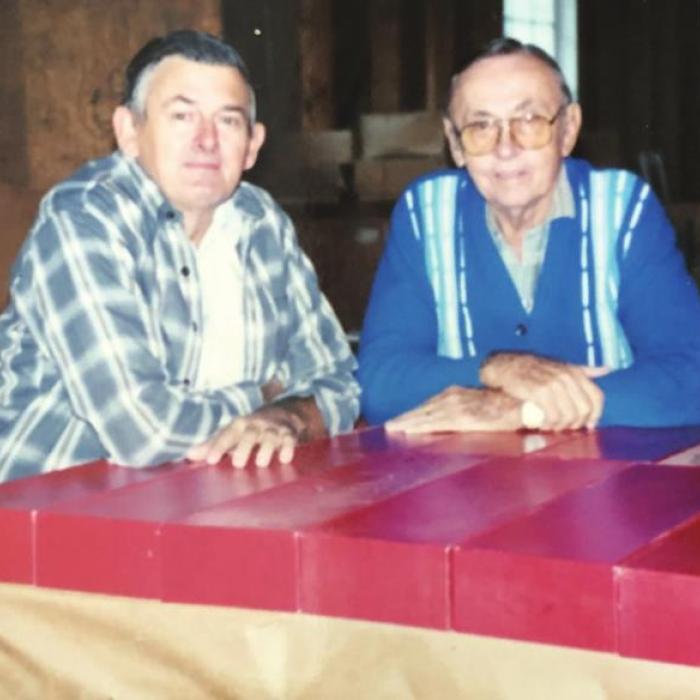

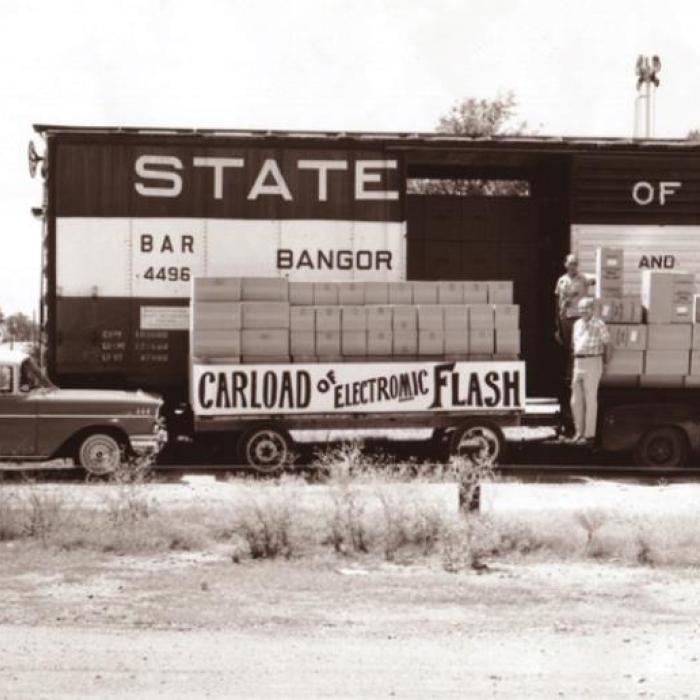
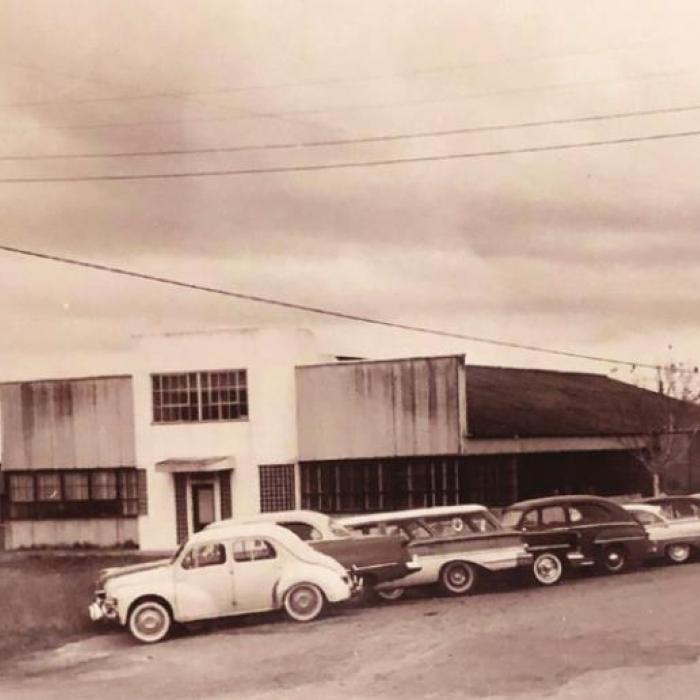
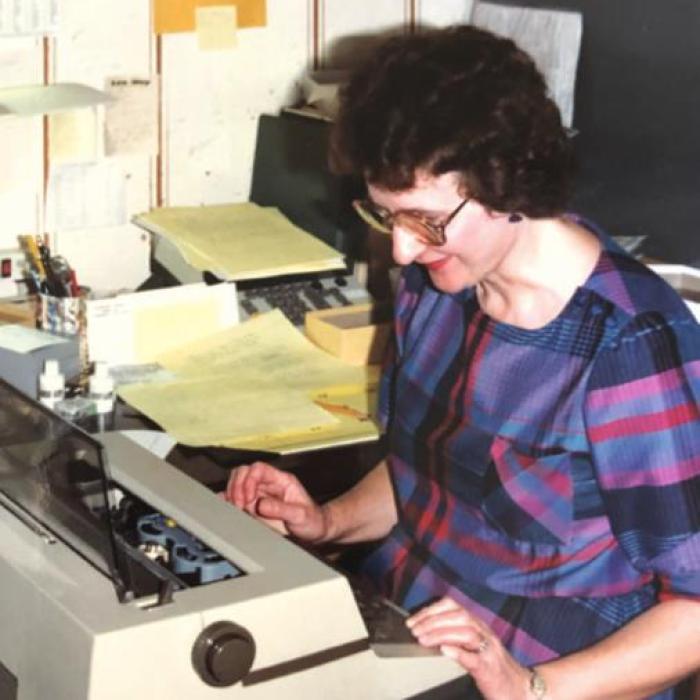
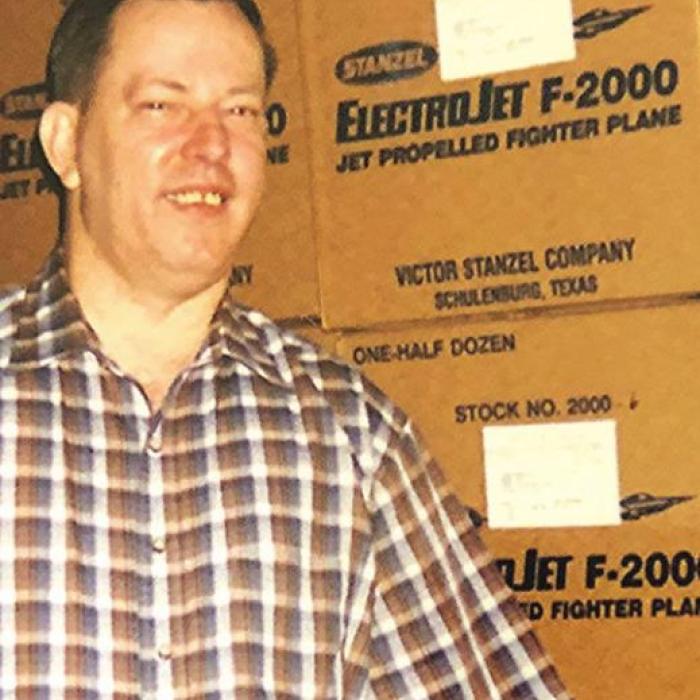
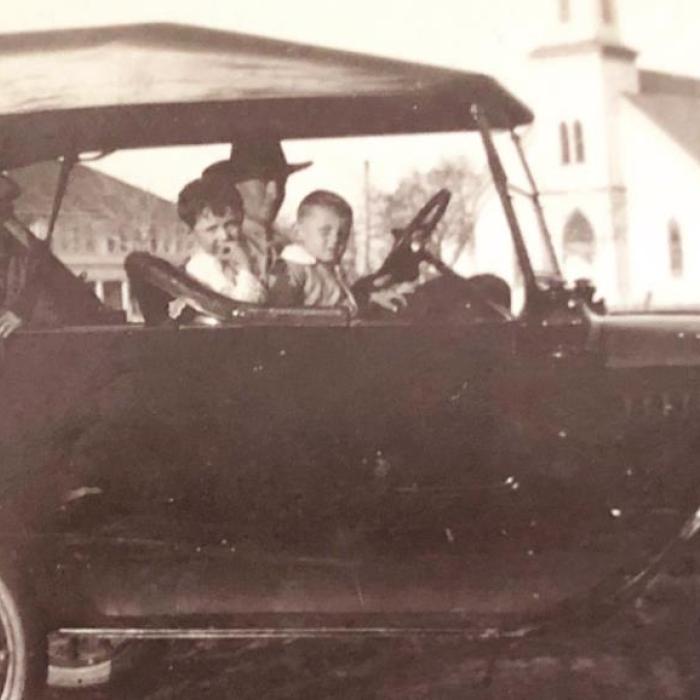
Though quiet and humble bachelors, Schulenburg natives Victor and Joe Stanzel achieved the quintessential 20th century American Dream. The selfeducated, workaholic brothers realized prosperity and success in the model airplane business through a fascinating combination of ambition, talent and hard work. Hundreds of dedicated workers, most assigned to the factory assembly line, helped carve out a niche for Victor Stanzel Co.
A number of the employees’ stories appear in a new book, “Defying Gravity: How Joe & Victor Stanzel’s Dream Took Flight,” that Victor and Joe’s nephew, Ted Stanzel, and I co-authored. “Defying Gravity” is dedicated to the people who helped to make the Victor Stanzel Co. successful. The following excerpts are among the candid, heartfelt stories of what day-to-day life was like in the company’s heyday.
Evelyn Ripper
“My brother, Ervin, and I were some of the first people who went to work at the Stanzel factory after World War II. That was before they even had a time clock. I put together wings and tails. They were made of really thin sheets of balsa wood that had been cut previously in the woodshop. I rolled the paper that had been glued on the wings or tails through the wringer on a wringer washing machine to get the shape right.
“The first year, I was parttime seasonal help, but then went full-time. I was paid 85¢ an hour. Victor and Joe Stanzel were perfectionists, brilliant men. They treated my brother and me wonderful. They were good bosses, very familyoriented. When Ervin went to them and said he wanted to go to barber school, they were supportive, telling him that sounded like a good decision. They didn’t make a fuss about him leaving.
“We worked from 8 to 5 with an hour for lunch when we had to clear out of the building. Victor and Joe faithfully went home for lunch that their mother cooked.”
Dorothy Schmidt
“I was 41 years old when we didn’t make a crop on our farm, so that meant we had no money. I told my husband, Leo, “I am going to town and apply at Stanzels. I don’t care what you say.”
“I went to Stanzels and wrote out an application on August 15, a Holy Day. In September, I heard that Stanzels had called back a group of people who had been working there before. That was nothing but right.
Then came October 7; I was in the cotton patch way back on the hill scraping cotton, finishing up, pulling every little bit off the stalks. It was after school and the children were with me.
“When I saw Leo driving home, I told the kids, “I’m going to walk to the house and see what Daddy is going to be up to.” My guardian angel told me to do that because when I walked into the house, the telephone rang and it was Joe Stanzel.
“Joe said to me, “Dorothy, I was going through some applications and I came across your name. Would you be interested in coming to work?”
“This was a Friday, so I asked him, ‘When?’
“He said, ‘Monday.’ “I told him, ‘Yes, yes! I can be there.’
“When I hung up, I turned to my husband and said, ‘Yeah, I’ve got a job! You can go out to the field and get my cotton sack.’
“I liked working at the factory better than working in the fields. That was slavery, but that was our livelihood as farmers. I was proud that I worked at Stanzels. It was a big employer. There weren’t many jobs for women in Schulenburg.
“I remember one summer when we were 120 people in the factory. We made 1,000 batterypowered planes in one day. Another time, we made 600 trigger jets in a day. That was a lot of planes. We had those 18-wheelers come and pick up the boxes. They went everywhere.”
Lorene Hengst
“I started working at Stanzels when I was in my 30s and was 69 years old when the factory closed, a week before my husband, Milton, and I celebrated our 50th anniversary in 2002.
“Forty-two years in one job and that was the only job I ever wanted! I put two sons through college with the money I earned there. Stanzels was a fascinating and enjoyable place to work.
“I started on the assembly line, gluing paper on balsa wood and shaping the wings by running them through the wringer of an old wringer washing machine. I had one just like it when I got married in 1951. I mixed the glue for the wings, too. You had to do it carefully, but fast and keep the paper on the wing straight.
“If you added up all the wings I made over the years, there must have been at least a million! When I was caught up, I would go over to the other building and help pack airplanes.
“In the first few years, I was making $1.25 an hour. I was seasonal, so I paid into unemployment insurance and filed for it when my work was over. Then I got on full time. We sometimes got overtime when the factory was busy.
“On the assembly line, you were on your feet all the time. Some ladies brought in bar stools from home or we’d sit on wooden boxes to give our feet and legs a rest. There was an antique Coke machine in the building. A Coke cost 5¢ when I started and 25¢ by the time the plant closed.
“Little Joe, that’s what I called Joe Stanzel, stayed in the west corner of the first building. Big Victor, that’s how I still think of Victor Stanzel, was upstairs.
“Most employees were like me. We stuck to our jobs because jobs weren’t that plentiful. In those days, people stayed in jobs because they were glad to have them. A few people tried working at Stanzels, but after one paycheck, they’d be gone. They didn’t like the work. Most of them were from out of town. I can’t think of anyone that Stan zels ever fired.
“All the employees tried to do their best because we didn’t want to let Victor and Joe down. I’ve kept a list of all the people I worked with who have died; there are 113 that I know about. They were my friends.”
Sonny Ryba
“Well, I’m going to tell you this, when I went to work at Stanzels in 1978 it was something. I filled out my application and the younger brother, Joe, talked to me. He asked me what I thought of the place and I told him, ‘It’s huge!’
“He kind of laughed and looked at my application. Then he said, ‘We’re going to hire you. Come in Monday.’
“So Monday came and I went to work. I didn’t know what to expect. I was leery. I thought to myself, ‘I don’t know if I’m able to do this.’ They showed me about punching the clock. Then they took me down to the other building where the pieces of the planes were glued together.
“Frank Krecmer was my boss at the time. He was a very, very good guy. He was patient, a very patient person. He showed me the process at the glue table. I was doing that for some days. Then they were short of help in the shipping department run by Reinhart Stanzel.
“Reinhart Stanzel was the brother to the boys, Victor and Joe. Reinhart said, ‘I want him (meaning me) to work in the shipping department.’ So I went with him to the other building where they were assembling the planes to be shipped.
“I always called him Reinhart out of respect like the women who worked in the office, although most of the employees called him by his nickname, Bull. In the beginning, I had a hard time getting accustomed to Reinhart, so some of the guys who wanted to help me went to Joe Stanzel and told him that Reinhart was kind of strict with me.
“Joe Stanzel came out there and told me, ‘I’m going to take you off and we’ll put someone else out here.’
“Reinhart said, ‘If I can’t have Sonny, I don’t want anyone else.’
“So I stayed. I told Reinhart, ‘Well, I’ll do my best. I’ll see if I can do it.’
“I tried my best and worked at Stanzels for 25 years.”
Manuel Anders
“I quit school at 16 and worked on the farm in Lavaca County south of Schulenburg where I was raised. My oldest sister, Virgie, had a job at Stanzels in the busy seasons before she was married, so when my twin brother, Daniel, and I turned 18, we went and put in our applications. For three years, we worked the busy seasons from September till Christmas when we got laid off.
“Little Joe came to me then and said, ‘I want to hire you full time.’ I started at $1.20 an hour. I was on the assembly line for the next five years. Then I worked on the hydraulic molding machines to give other guys a break. The four hydraulic molding machines made the various plastic parts for the model airplanes.
“Finally, Little Joe moved me to the machines full-time for the next 33 years. I was promoted to plastic injection molding department supervisor. We had 40 different molds that made 40 different parts for different Stanzel toys.
“Stanzels bought the oldest hydraulic molding machine, the 100-ton HPM, in 1946, before I started working in the factory. It was kind of noisy and we called it the clunker. The next one, the Reed, was a 175-ton machine purchased around 1958 that could handle little bigger molds because it had more injector power. Then they bought another Reed in about 1965, this one a 125-ton and the last one added was a 150-ton Van Doren in 1975. Bigger machines were required to make still bigger molds like battery cases.
“Raw plastic came in 50-pound bags of little-bitty pellets that were a natural white in color. Depending on what we were molding, I had to add so many pounds of color in the mixer. The colors were red, black, green, grey, pink, two shades of blue and two shades of yellow. I had to keep the value right. If I didn’t, the molded pieces would just fall apart like crushed crackers. We recycled everything that was left over by grinding it up and using it again.
“Little Joe also taught me how to fix molds and use the lathes and milling machine. After a while, I was able to fix or replace many metal parts that wore out to keep the machines running.
“Little Joe would take Victor’s blueprint for a new toy and build it out of wood until he got it just right – all the tiny bearings and little wheels, everything. Then he sent the toy he had handmade to Houston and got a mold made. That’s amazing, isn’t it? Little Joe did all of this himself.
“We couldn’t start production until a mold was 100% accurate. Once the plastic parts came out of the molds, they went to the assembly line where the toys were put together and then shipped to customers.
“Little Joe taught me everything I knew about those machines. Most of it is still in my head. It wasn’t written down anywhere. Little Joe was a good teacher and over the years I got close to him. I admired him. It still hurts that he is gone.”
Helen Koncaba
“Both Victor and Joe were very sweet and kind. I never heard them say a bad word, not ever. They didn’t cuss and carry on. They were both very gentle, devoted to each other. Victor and Joe never married. They were married to their airplanes.
“My job was to type up the labels to send out with the customers’ orders. They’d order a propeller, battery case, whatever. (I saved the stamps from all over the country and my grandson, Kodi, used them for an Eagle Scout project.) I helped type stencils for orders and proofread. Victor and Joe would write out their letters in longhand and I would type them. They had very nice handwriting. I answered the phone, too. If the call was for Victor or Joe, I’d have to go and find them.
“I never thought about going anywhere else to work. I liked my job and it was close to home. When my girls started school, Stanzels was halfway between their school and our home. They would walk to my work so I could watch them cross the highway to go home. Sometimes they would come in and sit on Victor’s couch for a while. Victor would always greet the kids with a smile and have something to tell them. Years later, my grandchildren followed the same routine.
“Victor and Joe dressed very casually. They wore khaki pants and a casual shirt every day. I would say that Victor might have been slightly more outgoing than Joe, but they both were quiet.
“It was very hard on Victor when Joe got sick and died of a brain tumor (in September 1990). Victor was lost until their nephew, Ted, came back. In 1993 when my twin grandchildren, Kodi and Kori, were baptized, we had a meal afterward at the house and Victor came. Families were important to him.
“After the factory closed, I stayed on until 2006, helping Ted to wind up the business and compile the history.”
Although Victor Stanzel Co. is now a chapter in Fayette County history, its legacy is reflected in the Stanzel Family Foundation’s mission to enhance the quality of life in the area. It envisions “an engaged inclusive community that promotes and inspires philanthropy and love of humanity through recognition and celebration of people who are living the definition through their generosity, sharing and kindness.”
Victor and Joe would be proud of this legacy. It was forged over time through their brilliance the hard work and commitment of employees like Evelyn, Dorothy, Lorene, Sonny, Manuel and Helen.
Treat yourself and the kids to a visit to the fascinating Stanzel Model Aircraft Museum in Schulenburg soon. To check the hours, call (979) 743-6559 or go to http://www.stanzelmuseum.org. The brand new 127-page full-color publication “Defying Gravity, How Victor and Joe Stanzel’s Dream Took Flight” published by the Stanzel Family Foundation is available in the gift shop.
If you’d like to read more stories written by Elaine, visit www.elainethomaswriter.com/blog/ and sign up to receive new posts twice a month. You can also call Elaine at 979-263-5031.