


The Courage of Lee Mueller’s Convictions
At age 84, Lee Mueller of Rutersville revisits some turning points in his life
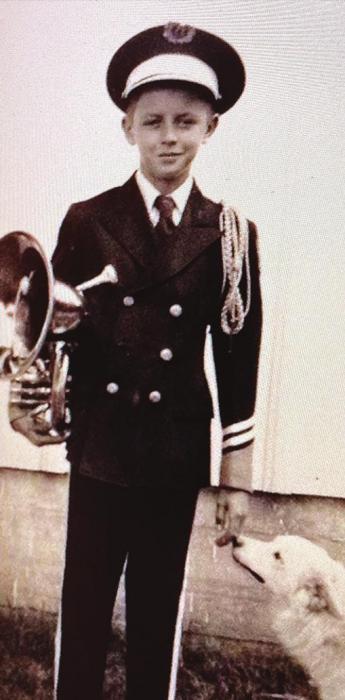






Preacher was an unusual nickname for a child, but Lee Mueller wasn’t your average 1940s youngster. His moniker was less a term of endearment than confirmation that his dogged determination and unshakeable beliefs sometimes perplexed his family and friends.
“Even though we went to church infrequently, I always wanted to be a minister,” Lee recalls.
Lee and his sister, Betty, grew up in a modest three-room house on the Rutersville, Texas, farm of their grandparents, Gerhard Henry (GH) and Johanna Ruether Mueller. The late 1930s and the war years were tough economic times, especially for farmers who didn’t own land like Lee and Betty’s parents. Lee Mueller Sr. and Lola Ida Naumann Mueller struggled long and hard.
“My dad had a fourth-grade education,” Lee recalls. “My mother graduated from the eighth grade.”
Lee counts himself fortunate to have attended first through 12th grades in La Grange. The rural Harms School located close to their farm had closed before he started his formal education.
One of Lee’s first role models was Max Citzler, a neighbor who did the books at Farmers Lumber Company across from La Grange School. Every morning, Mr. Citzler drove miles around the neighborhood to pick up children. His car held five passengers and the year that Lee started school, the other riders were: Marion Mueller Frerichs, Genelda Citzler Stahmer, and Leroy and Lucille Mueller, who were not related to Lee. The parents took turns picking up the children in the afternoon.
“Mr. Citzler was a kind, gentle person who provided this service. He didn’t ask for nor expect to be paid,” Lee recalls.
Lee, who excelled in school, speaks fondly of teachers who offered encouragement and took a special interest in him.
In the sixth grade, Lee joined the high school band because it was short of musicians. The school supplied the baritone, an instrument almost larger than he was at the time. He switched to a bass horn in the 11th grade and played with the band through his senior year, 1955. To this day, he appreciates music.
While in school, Lee worked part-time candling eggs and doing other odd jobs at Elton Schulz Grocery on Hwy. 159 near Rutersville. When the store closed at night, rain or shine, he either walked home on gravel roads in the pitch dark or hitchhiked back to his parents’ place.
Turning Point One
When Lee turned 17 and announced he planned to attend college, his father objected. Mr. Mueller informed Lee that he was expected to stay and work on the farm until he turned 21.
“I stood up to him. I told my father he’d have to tie me to a tree every day, because every time he turned his back I would run away. One way or another, I was going.”
After that confrontation, Lee’s dad accepted his son’s determination to seek a different way of life. Mr. Mueller didn’t like it, but he accepted it.
On Aug. 23, 1957, Mr. Mueller died of a heart attack while helping to rework a water well on a farm near Walhalla. At the time, Lee was working long hours at a steel mill and attending Texas Lutheran College, now Texas Lutheran University in Seguin full time. Betty was employed by the Farm Bureau in La Grange. At the funeral, the sizable congregation at the church was filled with many of Lee and Betty’s high school friends.
Lee graduated in less than three years with a BA in history and math, the first member of his family to earn a degree. His next stop on his self-charted roadmap to a better life was Trinity Evangelical Divinity School at Capital University in Columbus, Ohio. His new wife, Barbara Jean Frenzel of Round Top, stood at Lee’s side. She earned her undergraduate degree at Capital University while he attended the seminary.
After graduating in 1962, Lee received his first call, Lindenau Lutheran Church, near Cuero, Texas. It was such a quiet, laid-back community that to stay challenged Lee began taking law classes through correspondence, although he never took the Texas Bar Exam.
In 1965, Lee was called to serve First Lutheran Church in Pasadena, Texas, that had a thriving congregation of 650 members. Two years later, he earned a fellowship at the Urban Training Center at the University of Chicago. This opportunity to enrich his theology and deepen his commitment to ministry appealed to Lee.
Turning Point Two
As a part of the program, Lee and the other pastoral participants grew out their hair and beards. They were preparing for a total immersion exercise: living on skid row for four days. With $7 in their pockets, Lee and his fellow students were turned out on the streets to experience firsthand the ugly underbelly of poverty and hopelessness.
In order to get a free bed for one night at a homeless shelter, he agreed to attend the mandatory two-hour religious service, as well as sit through a session of personal counseling. He and all the other down-on-their-luck bums were told that if they’d just shave, find a job and be saved they’d prosper in life.
Rather than deepening his faith, Lee’s encounter provoked the opposite effect.
“It occurred to me that the pompous preaching that I’d heard was what I did every Sunday. How could I live with myself? I couldn’t. That experience changed my life.”
Lee resigned the ministry in the summer of 1968 with Barbara’s full support.
In Waco, Texas, the home of American Amicable Life Insurance Co., he turned his energy to selling life insurance. He was so successful that he was invited to address a national company meeting. That invitation was far, far away from his hardscrabble youth on a Rutersville farm, as well as the pulpit of a Lutheran church.
Lee was eager to operate his own company and work for himself. Perhaps he inherited his entrepreneurial spirit from his great-grandfather, Dietrich Mueller, who had emigrated from Germany in 1867. Great-grandfather Dietrich landed at Galveston and settled in Fayette County, but hauled baled cotton back across the Atlantic Ocean to sell to his German countrymen. On his return trip, Great-grandfather Dietrich carried German goods to sell in Fayette County.
Turning Point Three
Lee and Barbara moved home to La Grange in 1968. After Lee took out a $22,000 loan in 1971, which constituted an enormous sum of money at the time, he purchased an existing local mutual aid insurance company. Then he learned a painful lesson. The opportunity had looked so tempting that he hadn’t hired an actuary to examine the books until after the deal was signed, sealed and delivered.
When the expert shared his findings, Lee was horrified. He discovered the business was woefully underfunded. Premiums had been set too low and, because most policyholders were in the same age bracket, claims were likely to occur over a very short time period.
“I never took 10 out of that company. I didn’t want to let down the policyholders who had placed their trust in it,” he recalls. Lee eventually restructured the business and sold it when it was on solid financial ground.
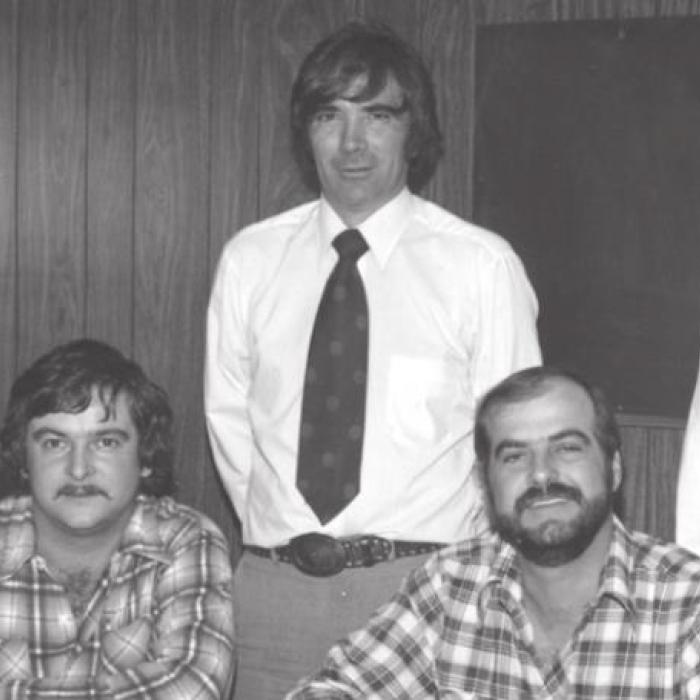
During that era, Lee formed the finest and longest partnership of his life with La Grange businessman Richard Cernosek, who was some years older than he was. They shared common values and an entrepreneurial spirit. Richard, who had already made inroads in a variety of successful business ventures, served as Lee’s mentor. He also had an office in Richard’s building at 145 West Travis Street in La Grange. Through his business and volunteering with progressive business and civic organizations in La Grange, he became very well known. Lee even ran for Fayette County judge once, although he lost the close race to Fritz Lobpries.
Because he couldn’t resist a challenge, Lee stepped up when it became evident that the gap between the number of patients who needed care and what local aging physicians could provide was widening. Lee and a colleague went to Kansas City to interview the top 1975 graduate of the Kansas City University of Medicine Bioscience College of Osteopathic Medicine Medical School. Dr. Bill Nolan accepted the job and moved to La Grange to establish a new practice. A highly regarded physician, Dr. Nolan still practices here.
Turning Point Four
In the early 1970s, most businessmen, politicians and the law in La Grange still turned a blind eye on the brothel operating openly several miles from town.
The Chicken Ranch became a hot potato when Houston TV “Eye Witness News” investigative reporter Marvin Zindler delivered titillating live reports on the illicit activities. The anonymous tip created intense political pressure in the Texas government and investigation after investigation was launched.
Personally, Lee had always found the existence of the Chicken Ranch distressing.
He was disgusted at incidents such as strange men throwing chicken feed at the feet of young La Grange women performing in the high school band at events like the Houston Livestock Show and Rodeo. The guys would jeer, “Chickie, Chickie, Chickie,” and leer at the female students.
One day while drinking coffee at the Lester Hotel, in which he was part owner, Lee overheard a conversation. It constituted the proverbial straw that broke the camel’s back.
“An out-of-town couple had come in for coffee. When they were paying their bill, the woman asked her husband if he thought the young waitresses in the restaurant also worked at the Chicken Ranch.
“I was revolted. These young high school students were being categorized as prostitutes and we, as a community, weren’t doing a thing about it. Nor did we as a community seem to object to the bad publicity that the Chicken Ranch continued to bring our town.”
Lee was invited to participate in a KVLG/KBUB radio phone-in show to see if other locals shared his feelings. He asked local church pastors to join him, but only one had the courage to do so, although the minister never said a word. Lee has always felt the spiritual leader feared retaliation.
Meanwhile, the moderator fielded calls about the Chicken Ranch from dozens of angry local callers, primarily older women. Lee listened as they poured out their anger and resentment. Although one male powerbroker in the community heartily endorsed its existence and didn’t care who knew it, the other callers agreed it needed to be shut down.
Two days later, Lee got a late night call from a man purporting to be a Texas Secret Service agent. He asked Lee to come downtown to his office right away.
“Were these two agents who they said they were, or was I walking into a trap? Barbara and I realized we were way in over our heads and we were scared to death. Afraid something terrible might happen, Barbara went with me and waited in the car while I met with the agents, who turned out to be legitimate.
“They told me that the state had been monitoring the Chicken Ranch for two years and knew every individual and dollar involved. It had proof that over $2 million had changed hands and that local, state and Louisiana officials and organized crime were involved,” Lee recalls.
A few days later when Lee opened the door on his pickup, he jerked back. A copperhead lay coiled on the floorboard next to the gas pedal. Shaken because it could have been placed there as a warning to stop his meddling, Lee didn’t report the incident to the secret service. He feared retribution too.
Finally, the intense scrutiny that Marvin Zindler had kicked off led to the brothel’s demise. Lee calls the 1982 movie, The Best Little Whorehouse in Texas, the final chapter in the Chicken Ranch’s disreputable mar on the reputation of La Grange.
Turning Point Five
In 1976, Lee mounted the most ambitious effort of his career. He applied to the state for a savings and loan association charter to keep local money at home to provide a greater benefit to the community.
There were myriad details to cover in order to lay the groundwork associated with such an ambitious venture, including galvanizing financial support from the community. During this timeframe, Lee was surprised by a knock on his door from an IRS agent specializing in criminal cases. Lee was under investigation for suspected fraud. Once more, he found himself scared to death, wondering whose toes he had trod on this time.
“We had always done our own taxes because we couldn’t afford a tax attorney. This guy had me convinced that he would find something shady and I’d go to jail. He spent a full year reviewing every bit of our business and personal business, but in the end, he couldn’t find one cotton-pickin’ thing wrong.
“Well, he did change the depreciation schedule on one tractor. That was it.”
Lee had another unwelcome surprise when two representatives of an Austin savings and loan association walked into his office. The ringleader bluntly offered him a percentage of every local loan it signed. All Lee had to do was withdraw his request for a charter.
Lee sent the bigwigs packing and didn’t encounter them again until the day of the charter hearing in Austin.
After undergoing a firm trouncing at the hands of the competition’s brilliant attorney, it looked like Lee and the Fayette County contingent who packed the room would go home empty handed. Then Lee asked that the savings and loan officer who had offered the bribe take the stand. The executive’s convenient lack of memory regarding his conversation with Lee swiftly turned the tide of the proceedings.
Lee was awarded his charter for Fayette Savings & Loan, which was insured by the FSLIC.
Personal pivots
After 21 years of marriage, Barbara gave birth to Laura Leigh, the light of their lives. Lee and Barbara threw themselves into parenthood, enjoying every aspect of raising a bright, delightful daughter. They never missed an opportunity to support Laura at school or at play and they traveled extensively as a family.
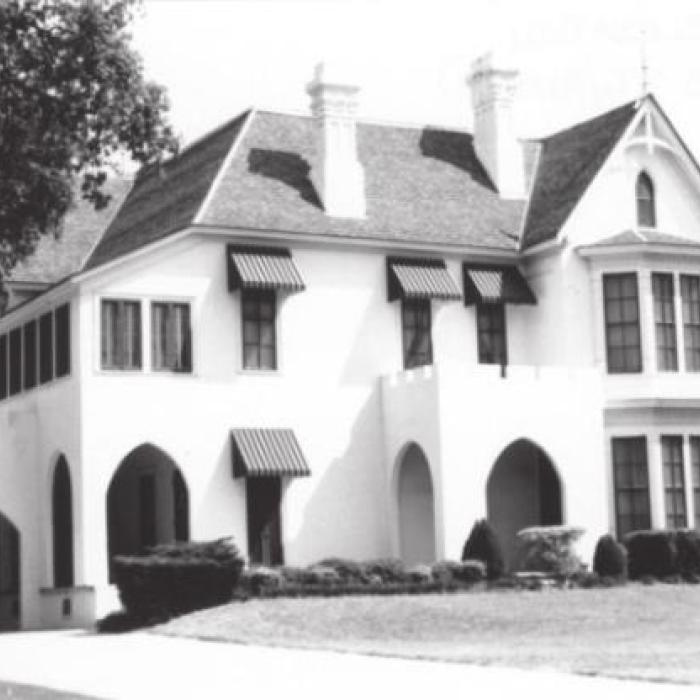
Meanwhile, the Muellers continued to restore the Bradshaw-Killough House in La Grange, a city landmark they had purchased in 1981. Because of the painstaking detail the Muellers went to, the house qualified for a Texas Historical Commission historic marker in 1991.
While Lee focused on business ventures that included raw land purchases and getting involved in civic affairs, Barbara had continued her education over the years. She earned a Master’s degree in elementary education from the University of Houston and in counseling from what was formerly Southwest Texas State College.
While Barbara was a deeply loved, highly regarded teacher, she first and foremost was a devoted wife and mother. Barbara was also a dedicated genealogist. It was devastating to her, Lee and Laura, as well as their family and friends, when her agonizing 12-year battle with Alzheimer’s began.
Barbara and Lee sold the Bradshaw-Killough House and several of his local businesses, but held onto much of the real estate he had accumulated. They moved to North Carolina to be closer to their daughter, who is a trial attorney in Concord, and their grandson. After Barbara’s death in May 2012, Lee moved back to La Grange.
In 2008, he had been able to purchase his grandfather’s land from the Houstonian who had owned it since his grandmother’s death in 1963. Lee shares a new home on the property with his second wife, Karen Roitsch Norman Mueller, and a herd of black Angus cattle.
Karen, who also is a graduate of La Grange High School, and Lee share a special bond. Both their spouses died of Alzheimer’s, a disease that neither would wish upon their worst enemy. The couple met while serving on the board of regents of Texas Lutheran University.
“We have tried to do for others as well as for ourselves,” says Lee. “I know I haven’t made everyone happy, but I’ve done what I thought was best”
If youd like to read more stories written by Elaine, visit www.elainethomaswritercom/blog/ and sign up to receive new posts twice a month. You can also call Elaine at 979-263-5031.