


County Officials Conduct Solar Electrical Disruption Exercise
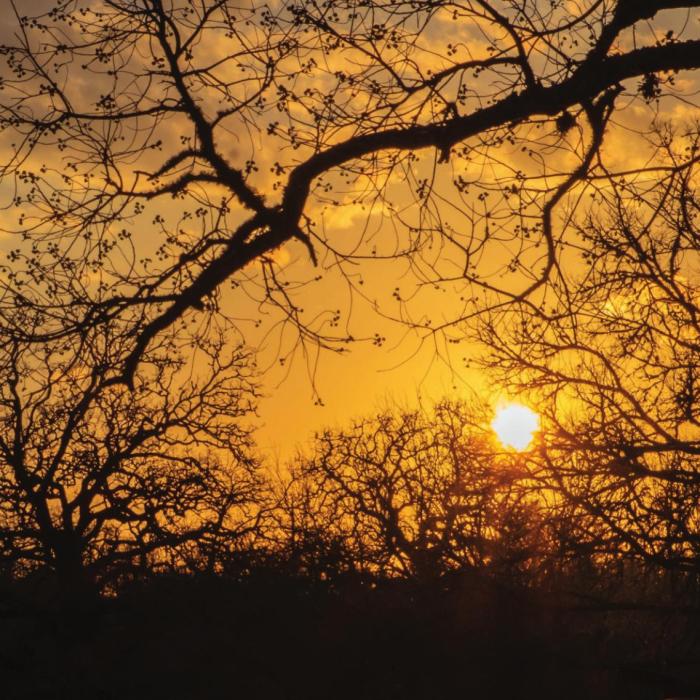
Is Fayette County prepared for a solar flare large enough to shut down the nation’s electrical grid? That was the point of an exercise that the Fayette County Emergency Management Office conducted earlier this month.
These massive solar flares, known as coronal mass ejections (CME), could damage or destroy electrical systems on a planetary scale.
It happened once before at the dawn of the electrical age: the Carrington Event of Sept. 1-2, 1859. Telegraph equipment across North America and Europe sparked and caught fire. Auroras were seen as far south as Mexico and the Caribbean. Besides the disruption to longdistance communication, the event did not disturb daily life for most people.
Today, with a world connected by electrical and communication systems, the effects could be devastating. Greg LeBlanc, an intern from Texas A&M University who works in the Fayette County Emergency Management Office, came up with the idea to simulate the effects of such an event in Fayette County.
“I tasked him with putting an exercise together, something interesting and not a household fire, because we see those all the time,” said Fayette County Emergency Management Chief Craig Moreau. “I wanted to do something that stretched our imagination, to make us flex our emergency management plan. He said, ‘Hey, I want to do a coronal mass ejection,’ and I was like, ‘What?’”
As it turns out, the world might be past due for such an event. Moreau said a group of engineers in 2017 estimated the risk of a Carrington-level event at 10 percent over the next decade.
“And that was five years ago,” Moreau said.
Is Fayette County prepared? Moreau’s office teamed up with local power and communications companies, emergency response officials and Dr. Bill Murtagh of the National Weather Service’s Space Weather Prediction Center.
“We asked ourselves, how vulnerable are we to a coronal mass ejection in Texas?” Moreau said. “The answer is not near as much as the northern part of the hemisphere. For us, it would probably be days or weeks.
That’s because the tilt of the earth on its axis exposes the northern part of the northern hemisphere to solar weather events like a CME. Moreau said effects could be devastating in the north of the United States.
“For the northern parts of the country, it could be weeks or decades,” he said.
Even if electrical systems in Texas escape major damage, internet and phone communications would likely be disrupted. A CME would damage communications and GPS satellites. Moreau said rural communities would need to find low-tech solutions to this high-tech problem.
“It’s kind of like the freeze we experienced in February,” he said. “We had a freeze that was almost as bad in the 1940s but people were not nearly as affected by it because they had wood burning stoves at home.”
One of the biggest problems associate with a CME-type event, he said, involves communications.
“What are we going to do if we have major disruptions in communications because everyone is on the phone trying to connect with their loved ones,” he asked. “Then you have mass panic, police responding to rumors. Our electric grid would be stressed from trying to give electricity to other parts of the country. It’s a very realistic and identifiable problem.”
Moreau said the exercise taught him that amateur ham radio operators would be essential in such a disaster. A CME would likely disrupt normal radio communications. But he said ham radios actually operate more efficiently in such an environment.
In addition, Moreau said the exercise helped him develop a plan for coordinating with volunteer organizations and other key stakeholders in the community.
“You look at 9/11 and how it affected the whole country,” Moreau said. “It was just a few skyscrapers in New York and the Pentagon, and it changed the nation. Something like this would be far widespread. We would have a very difficult time for years.
“It was an eye opener,” he added. “But we have more resources and better volunteers in this community than anywhere else. We just have to tell them what we expect out of them, and they’ll rise to the challenge. I have no question about that.”