


The Christmas Greenhouse Goes Up
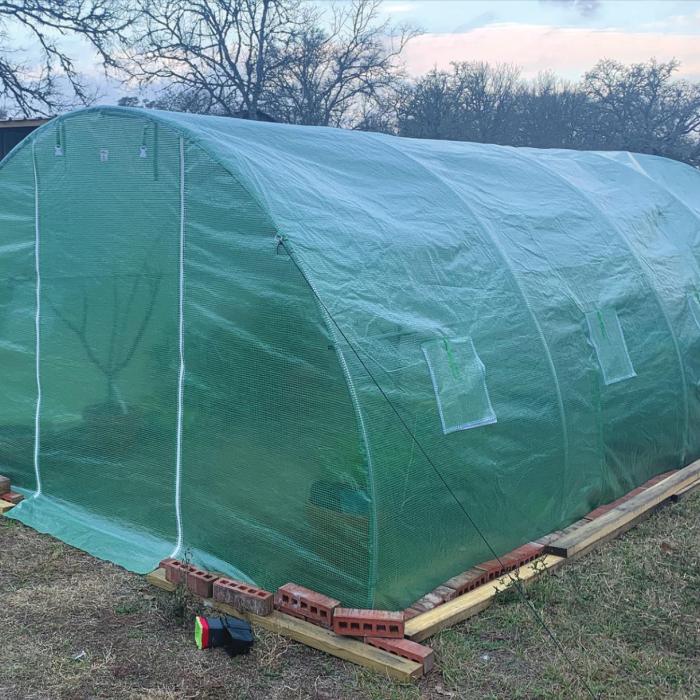

My boys and I got that junk pile loaded up and the new greenhouse set up last weekend.
If you read my last column, you may recall that my parents bought me a hobby greenhouse for Christmas. Here are some of my first impressions:
The Good
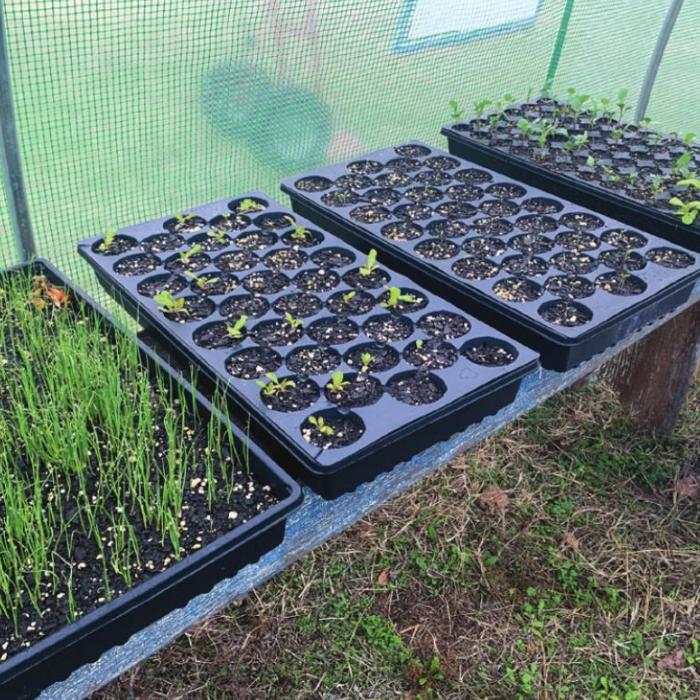
The day we set it up, I started some tomato and pepper seed. I’m no expert about the nursery business. I’ve grown a few tomatoes and peppers from seed on the porch. In the past, I’ve always grown transplants I bought from the nursery. But this year I’m going to try growing more things from seed.
Everything I read about tomatoes and peppers says you should start the seeds about six to eight weeks before the average last frost date, which is March 17 for La Grange. That date is March 5 for Schulenburg. I live south of La Grange. I could be a little early on these plants. However, I plan to plant another dozen or so plugs of different varieties every week or so for the next few weeks. That should give me plenty of options when it comes time to transplant out in the garden in the spring.
Shopping for plants at the nursery is great because you get a quick reward. If I planted those tomato and pepper seeds directly in the garden, I would have to wait until March and then another 70-100 days before they start producing fruit. But nurseries typically only carry a few varieties of each vegetable. They carry the varieties that grow well here and that most people like. You can find hundreds of unique and rare varieties in seed catalogs. Baker Creek, Johnny’s Selected Seeds and Southern Exposure Seed are some of my favorites. I like to always try new things. That’s why I’m so excited about using this greenhouse.
The Bad
This kit sold by VidaXL is not a professional greenhouse by any means. It measures about 10 by 20 feet. The frame is made out of what appears to be ½ and ¾ inch light gauge tubing. The vinyl cover attaches to the frame with ties.
The kit included a pretty light rope and stake setup for anchoring the structure to the ground. It’s more suitable for a camping tent than this greenhouse. I need to upgrade it with beefier stakes and rope.
The Ugly
As I’m writing this column on Wednesday afternoon, just before the press deadline, a 20 mile an hour wind is blowing outside. When I went home for lunch, the building was managing the prevailing wind, but it was leaning a little in strong gusts.
I tightened everything up, but I hope it doesn’t fly away before I get off work. Obviously, this particular greenhouse kit needs something more to anchor it to the ground. I’m thinking about fabricating some U-shaped anchors that will secure the framework to the ground.
Looking Ahead
This greenhouse does not have a lot of headroom. I can stand up and work comfortably inside, but there isn’t much room to hang baskets or other accessories to the roof framing.
I’m already thinking about building a sturdy foundation, maybe two feet high. I could bolt the framework to this foundation, which should provide some much-needed stability in strong wind. That would also give me more options for venting along the bottom with the benefit of more vertical space.
The greenhouse comes with four 12x12 inch vent windows along both long sides. I can control the inside temperature adequately with these vents, but I fear it may not be enough during our blistering summers.
I ordered a heating mat designed for seed germination. Seed trays sit on top and a thermostat plugged into the soil keeps the waterproof mat at an optimum temperature for germination.
However, I probably need to install some form of air heating for the really cold nights. I’ll probably first try a deer stand heater.
In the Garden
I planted another round of beets on New Year’s Eve. I think now is a great time to plant beets along with its cousin spinach. I planted four varieties, directly seeded into the garden: Bull’s Blood, Chioggia, Detroit Red and Golden. Bull’s Blood makes a smaller but juicer beet with striking red foliage. Chioggia are interesting red and white beets that look like a bull’s eye with you slice them. Detroit Red is a famous, reliable variety grown just about everywhere. Golden makes a yellow-fleshed beet that doesn’t stain your fingers, face or clothing.
Beet seeds are actually a cluster of several beets. When you plant them, you will notice three or four, sometimes more, little seedlings emerging from the same spot. To make large beets, you can thin out all but the healthiest seedling after they form a few true leaves. Snip out the ones you want to thin with a pair of scissors so you don’t disturb the roots of the beet you want to keep.
You grow a larger harvest of smaller beets by simply leaving the seedlings alone. Allow them to grow into clumps of three or four smaller beets. Some people say this is better for canning, because slices of really big beets don’t fit well into jars.
I noticed that the Golden beets seem to germinate faster than the others. That might mean they will be ready to harvest earlier, too.