


Battling the Dreaded Squash Vine Borer
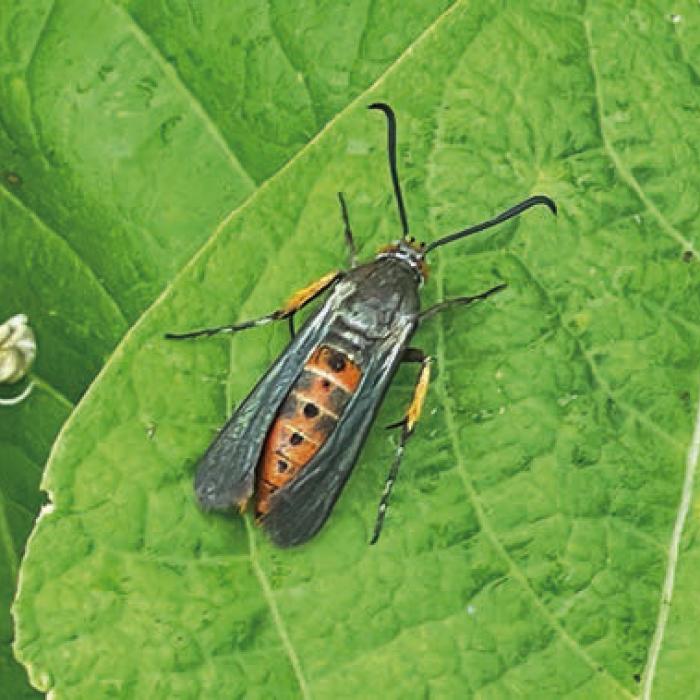

If you grow squash around here, you’re probably familiar with the squash vine borer.
This pest starts out as an egg laid on squash stems by the adult moth, which looks sort of like a red wasp. The larvae hatch from the egg and bore into the hollow stems of squash plants. It feeds on plant tissue from the inside of the stem. Spraying pesticides doesn’t really work, because the larvae live inside of the plant and never come into contact with the spray.
You’ll notice the plant withering as though it is not getting enough water. Most of the time the plant completely dies. By then, the mature larvae burrow into the soil to pupate. The pupae overwinter in the soul and emerge as adult moths in the spring. The lifecycle then repeats itself.
In my experience, you cannot avoid the squash vine borer if you grow squash in the spring. However, I have found a few ways to mitigate the problem.
The easiest solution is to not grow squash in the spring. You can grow squash in the fall instead. You’ll have to plant during the hottest part of the summer, August or September, in order to get a decent crop before the first frost arrives. But that presents its own problems. You’ll have to water and maybe even shade the young plants as they get established in the blazing heat. At that time of the year, the vine borer should be in its pupae stage and will present no harm to squash plants.
Or you can plant vine borer- resistant varieties. The best one I have found is called “Tatume.” Tatume is native to Mexico. It thrives in our climate. This variety produces a round, green squash that tastes like zucchini in its immature form. Pick them at baseballto- softball size for the best flavor. It will grow into a small, oblong pumpkin if left to ripen on the vine. It doesn’t have the best flavor at maturity, in my opinion. There are better “winter” squash types out there. But it’s an excellent summer squash.
Alternatively, you can simply outgrow the vine borer. Plant lots of squash, and plant them in succession. This takes space and time, so it might not be the best option for some gardeners. The adult vine borer only lives for a few days. So if you plant a few successions over the course of a month or two in the spring, some of your plants will avoid the vine borer entirely.
Some squash varieties like to grow up a trellis. For some reason that I don’t understand, trellised squash seem to avoid the vine borer better than those left to sprawl on the ground. Almost every time I find a squash plant infected with the vine borer, the spot where the larvae bored into the stem is located under the stem where it touches the ground. Perhaps it stays a little cooler in that spot. Or maybe the larvae needs to move around inside the stem, and a vertical stem might hamper their movement. I can only speculate. But if you’re limited on space, trellising squash makes a lot of sense. Your squash will take up less space on the ground, so you can grow other crops. Plus, you might get some relief from the vine borer.
No matter how you grow squash, be sure to rotate your squash patch every season. Don’t grow them in the same spot each year. Since the adults only live for a few days, they probably don’t travel far from the spot where they emerged from the soil. If you plant squash in the same place every year, you’re making it really easy for the pest to find a suitable plant to lay their eggs. So make them work for it.
And properly dispose of any infected plants. Don’t compost them. The larvae will end up pupating in your compost pile. Then when you spread compost in your garden, you’ll be seeding it with future vine borers. So throw the infected plants in a burn pile. Toss them in the garbage. Or carry them far, far away from your garden to rot.
Lastly, I mentioned that spraying pesticides doesn’t really work. But some gardeners report success with injecting the pesticide Bt ( Bacillus thuringiensis) into the stems of infected squash plants. Bt is a naturally-occurring bacteria that kills insects in the order Lepidoptera (moths and butterflies, of which the vine borer is a member). You’ll need a needle to inject it, and I’ve heard it only works if you catch the vine borer early enough. That seems like a lot of work, so I’ve never bothered doing it.
I have plenty of garden space, so I just plant a lot of squash.