


Are We Screwed?
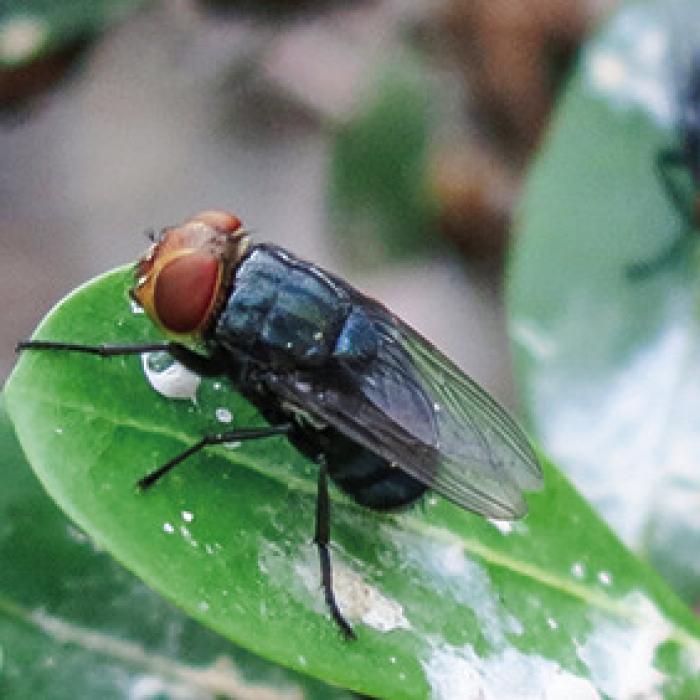
Cattle producers across Texas are keeping a close eye on a pest that hasn’t been seen around here in decades – the New World screwworm (NWS).
It’s a parasitic fly native to the Western Hemisphere that lays eggs in the living tissue of fresh wounds in warm blooded animals. It was a major pest for cattle producers until it was eradicated in U.S. in the 1960s. They can be controlled by the sterile insect technique (SIT), whereby sterile male flies are released into the wild. They breed with females, but the resulting eggs are not viable. Eventually, this reduces the population.
Efforts to control the fly reduced its range to South America, where infestations still occur. But recently, the fly has appeared north of the containment zone located at the Darian Gap in Panama.
The United States Department of Agriculture (USDA) went as far as closing several ports of entry along the U.S.Mexico border to livestock trade on May 11.Among those were the Texas ports in Del Rio and Laredo.
“Generally speaking, NWS is not any more serious now than it has ever been,” said Sonja L. Swiger, Professor and Extension Specialist with the Department of Entomology at Texas A&M AgriLife.
“Since the eradication of NWS from the United States, we have had monitoring and check stations in place to prevent the return of this species,” Swiger said. “All those are still in place. The big difference in recent years is that the flies have moved past the biological barrier and that just allows more opportunity for movement.”
The fly hasn’t appeared in any Texas cattle herds.
“Thus far we have not had any records of NWS larvae being found in any humans or animals,” Swiger said. “There have been incidents of humans and dogs throughout the last decade arriving in the US with infestations but all were treated promptly. No livestock have been reported to have an infestation in many decades.”
Since the port closures in May, USDA sent teams to Mexico to assist that country’s response to the threat.
“Progress has been made in several critical areas since the ports were closed on May 11, including: resolution of challenges with conducting flights in Mexico that has allowed our team to consistently conduct sterile NWS fly dispersal 7 days each week and dispersal of more than 100 million flies each week,” the agency announced in a statement on Monday, June 30. “We also sent five teams of APHIS staff to visit/observe and gain a deeper understanding of Mexico’s NWS response and allow us the opportunity to share our feedback. We have not seen a notable increase in reported NWS cases in Mexico, nor any northward movement of NWS over the past eight weeks.”
As a result, U.S. Secretary of Agriculture Brooke L. Rollins announced on Monday, June 30, that the ports would reopen to livestock trade beginning as early as July 7 in Arizona. The port in Del Rio is scheduled to reopen on Aug. 18. Livestock trade at the Laredo port is slated to restart on Sept. 15.
The USDA said Mexico will begin renovating a sterile fly facility in Metepa this week. It should be complete by July 2026. Earlier last month, Secretary Rollins also announced a $8.5 million investment in a sterile fly dispersal facility at Moore Air Base in Edinburg. It is expected to open in six months.
So what can local producers do to protect their herds? For now, Swiger said the best investment is education.
“Producers need to learn as much as they can about the fly and its behavior and stay aware of its movement,” Swiger said. “No one should bring in animals illegally from infected areas to prevent the movement of the larvae. People that may travel to infected areas, should be aware of their surroundings and wounds and be especially cautious if traveling with dogs.”