


Spring Welcome in Russia – Maslenitsa
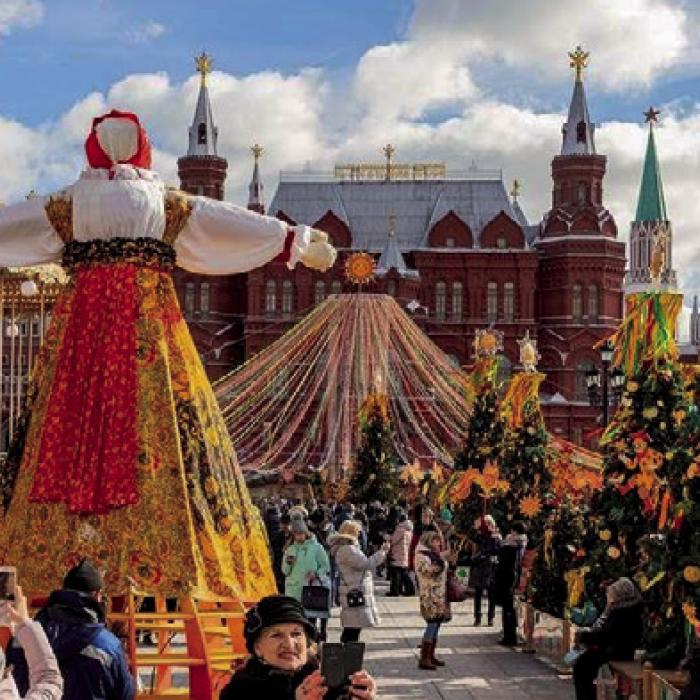

This is the latest in a series of columns from new Fayette County resident Julia Thiessen, who grew up in Russia.
Today I will tell you about one of the oldest Slavic traditions. It is called Maslenitsa or you can also call it pancake week. It has dual ancestry being both pagan and Christian.
This tradition is rooted in pagan times. Winters in Russia can be very severe, but the coming of spring is one of the most important times of the year. Maslenitsa was typically around the spring equinox and the Slavic believed that they needed to honor the sun and to say farewell to winter. This was a festive time when people celebrated. The Slavic made a stuffed doll out of hay and branches, dressed it up and then burned it symbolizing the death of winter. They were also making pancakes known as blinis. These are not classic American pancakes, they are more like French crepes being very thin. This was the symbol of the sun.
After Russia became Christian or “when Russia was baptized” the Russian Orthodox church tried, and failed, to stop the tradition which had been in place for centuries. So instead they incorporated it into the Orthodox calendar. Maslenitsa moved from spring equinox to the week before the Great Lent (Great Fast) starts in preparation for Easter according to the Orthodox calendar. The word Maslenitsa comes from the Russian word ‘maslo’ which means butter or oil. Every day of Maslenitsa week according to tradition has a meaning, but my family never really followed these traditions. Only the last day of the week was important to us other than cooking bilinis for the entire week. The last day of the week in Russia is Sunday. During Maslenitsa week it is called Forgiveness Sunday. For our family and friends, it is the day when you apologize for everything you’ve done wrong during the year.
As I mentioned earlier, blinis in Russia are more like crepes. There is even a special pan for them that helps with flipping them over. You do not have to have one, but it does make the cooking process a little easier. For Maslenitsa, my family normally cooks a lot of bilinis. In contrast with American pancakes that are traditionally eaten with something sweet such as syrup, Russian blinis can be filled (rolled) with pretty much everything: cooked meat, salted red fish, caviar, cooked mushrooms, cottage cheese, sour cream, jams, condensed milk or only with butter and then rolled resembling a wrap.
Moscow typically has a big festival to celebrate Maslenitsa. Different locations in the city will have entertainment: dancing, music, outdoor games, and many of them will be serving blinis.
There are many recipes but here is a simple one for you to try: Ingredients:
• 3 eggs;
• 1 cup of flour;
• 1 cup of milk;
• 1 cup of boiling water;
• 1 tbsp of sugar;
• 1/3 tsp of salt;
• Vegetable oil for cooking.
Steps: 1) Mix eggs with salt and sugar, add a cup of milk; 2) Sift flour into the mix and then add boiling water; 3) Mix it all together and let it sit for 10-20 minutes; 4) The batter must be liquid; 5) Warm up your pan, it must be hot; 6) Put a little oil in the pan and you will need to repeat this a couple times while you are cooking; 7) With a ladle put some batter in the pan. Spread the batter to cover the bottom of the pan so that you have a thin covering; 8) Do not worry, very rarely is the first blini good, with Russians having a saying ‘The first blini always becomes a lump’; 9) When you see little dots in your blini, it is time to flip it on the other side. You need to carefully separate it from the pan with a spatula to flip it; 10) Let it sit for couple seconds, to golden it up on the other side a little bit; 11) Place the blini on a plate, pour another ladle of batter in the pan. While it is cooking and ready to be flipped, you can put a little butter on the bilini that is on the plate. I prefer to do it this way to let the butter seep in.; 12) Keep making the bilinis until you are out of batter.
13) Enjoy! Blinis take time to cook but if you make them right, they can be enjoyed throughout the day.