


Gardening: Consider Adding Nematodes
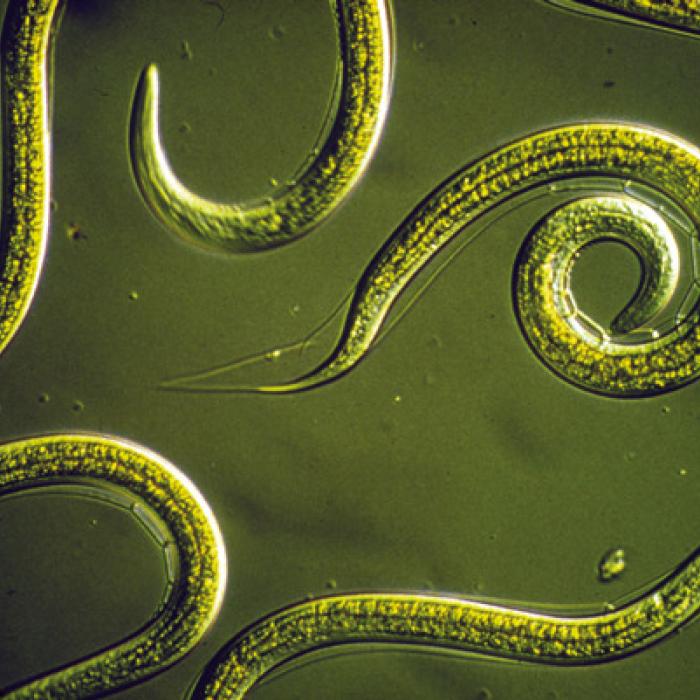

For a lot of folks, the word “nematode” conjures images of sickly plants with knotty roots. Indeed, some of these tiny worm-like parasites cause plant disease. But others are very beneficial.
Nematodes are the most prolific forms of life on earth. According to a study by BYU professor Byron Adams, there are 57 billion nematodes for every single human living on earth right now.
The naturalist E.O. Wilson once wrote, “Consider the nematode roundworm, the most abundant of all animals. Four out of five animals on Earth are nematode worms – if all solid materials except nematode worms were to be eliminated, you could still see the ghostly outline of most of it in nematode worms.”
Beneficial nematodes control many soil-borne insect pests such as grubworms, fleas, ticks, termites, fire ants, roaches and many others. They attack these pests when they are in their larval or pupae stage. Nematodes enter their bodies as a parasite. They reproduce inside until the bug dies, and then the nematodes burst out of the dead insect and go on to find another host.
Several companies produce beneficial nematode products that can be applied to lawns, gardens and landscapes.
Some companies sell them as a sponge that’s inoculated with nematodes. You soak the sponge in a bucket of water and thoroughly squeeze it to release the microscopic nematodes into the water. You then apply the water to your lawn or garden using a watering can or pump up sprayer. Other companies sell them as a gel, liquid or powder that you mix with water and apply the same way.
Whichever way you find them for sale, they should be refrigerated (but not frozen). I would be wary of any nematode product that’s sold at room temperature.
The best way to buy them, I think, is from reputable businesses that deal in beneficial insects, such as ARBICO Organics ( www.arbico-organics. com).
Different species of nematodes attack different types of pests. You can target certain pests by using the appropriate strains of nematodes. It can be very complex. Fortunately, Arbico Organics sells a “Triple Threat” product that contains the three major strains: H. bacteriaphora, S. carpocapsae, and S. feltiae. They should control all the pests I mentioned above.
Nematodes have a somewhat short shelf life. So use them as soon as possible after they arrive. If you have to store them, do so in the refrigerator.
Late winter and early spring are the best times to apply nematodes so they can get to work on pests that are in their larval or pupae stage. It’s also recommended to apply them twice about seven to 14 days apart for the best results.