


You Need to ‘Hill’ Your Potatoes
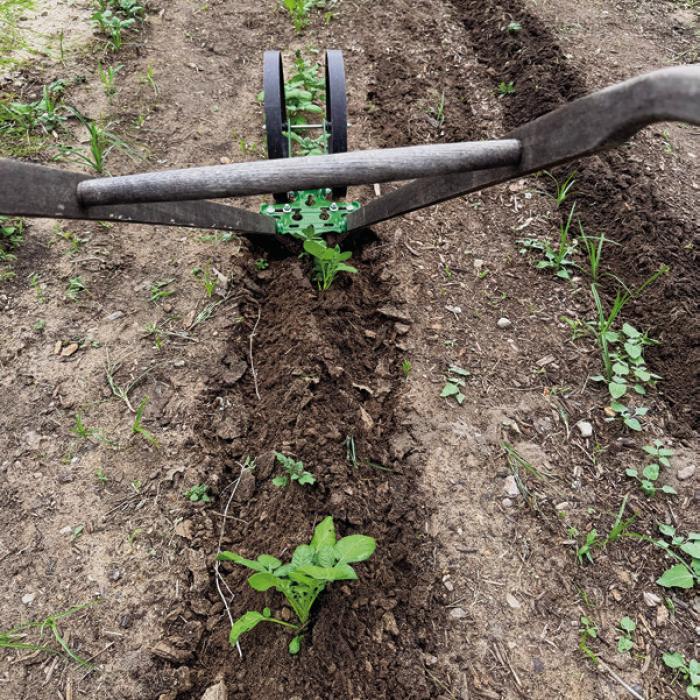

My potatoes really started growing this week. So on Tuesday, I decided to “hill” them.
Hilling potato plants involves mounding soil around the base of the plants. It provides several benefits. Most importantly, it increases yield. Like their botanical cousins, tomatoes, potatoes posses the ability to grow adventitious roots. These are roots that grow from the stems of the plant.
When planting tomato transplants, it’s a good idea to bury them deeply with only the top leaves peeking out of the soil. This allows the transplants to grow a deep root system that can withstand drought and access nutrients deep in the ground.
With potatoes, we don’t grow them from transplants but rather “seed” potatoes – pieces of the tuber with eyes that eventually grow into a plant. I planted my seed potatoes in a furrow about three or four inches deep and then covered them with soil. Now the plants have grown about two or three inches above the soil.
I could have just left them alone. They’d make a few potatoes. But by “hilling” them, the plants will grow additional roots higher on the stalk. And from those roots, the plant will not only access more nutrients and water, but more importantly it can grow even more potatoes.
Hilling provides other benefits as well. My potato patch has gotten a little weedy since I planted them. The hilling process disturbs the soil, scraping away and burying many of those weeds. It also creates sort of a trench between the rows of potatoes. I always fill the trench with a layer of tree leaves or some other light mulch to suppress further weed growth. The leaves eventually break down into compost and help build the soil.
Some people plant potatoes in mounds rather than long rows. The same principal applies. Pile up even more soil on the mounds for bigger yields and healthier plants.
There are several ways to hill potatoes. If you have enough compost, its a great idea to use it instead of plain soil. Your plants will benefit from the extra nutrients. But I’m growing four 30-foot rows of potatoes this spring. That would take a lot of compost that I don’t have or feel like buying.
The cheapest way is to use the surrounding soil. A plain garden hoe can be used to scrape soil along the row or around the mound, depending on how you planted them. But a few years ago I bought a wheel hoe from Hoss Tools. You can get all sorts of attachments for it and one of them is a two-piece plow set that can be oriented in two directions. The first is a standard plow with a point in the front that can dig a trench or furrow about three or four inches deep. Or you can flip the set around and place them in the hilling position. This is what I used to hill my potatoes.
Hilling isn’t just for potatoes. Corn also benefits from it. So do beans and peas. Hilling also benefits leeks. It keeps more of the leek white instead of green by reducing the amount of sunlight reaching the stalk.