


Why Hearses Once Responded to Ambulance Calls
The era in which Fayette County funeral homes answered requests for ambulance service ended only 50 years ago
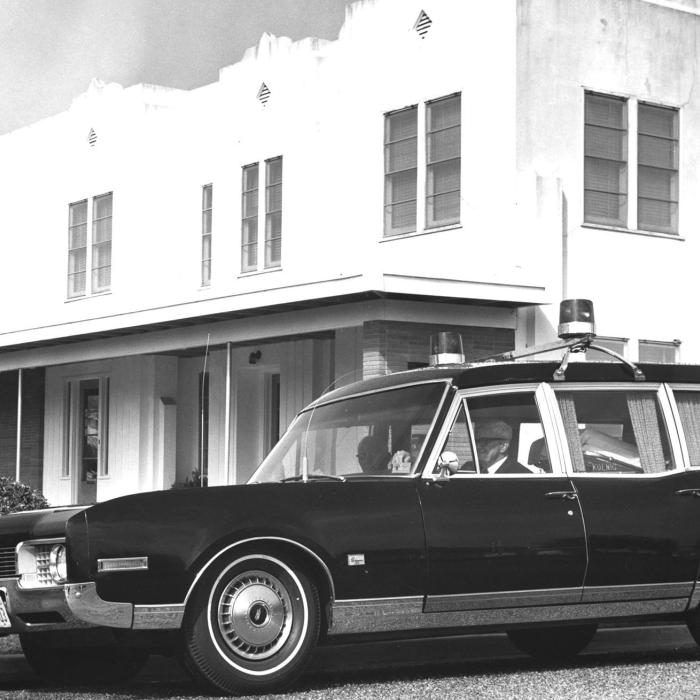
Local funeral homes never set out to provide transportation for those injured in accidents or residents needing rides to and from the hospital. They began providing this service because they had the only fully enclosed vehicles capable of transporting people in a prone position at one time.
“Back in those days,” G.A. Koenig of Koenig Funeral Home in La Grange explained in an article in The Fayette County Record dated Dec. 8, 1972, “the local funeral home operated as a family affair. The owner, his brothers and his sons all lived on the premises and were available 24 hours a day for ambulance service.”
Koenig Funeral Home didn’t charge for the service until 1937 when it began accessing a $3 per trip fee. In the 1940s, the charge increased to $5. At that time, men whose salaries were $100 per month or less were driving hearses costing less than $2,000.
Healthcare was delivered a little differently back then, too. In the 1940s, patients with appendectomies often stayed in the hospital for about 10 days. After giving birth, women customarily remained hospitalized for a week or more, while major surgery cases usually remained in the hospital two or more weeks.
Doctors began to realize patients could be transported to their residences for final recuperation after spending just a few days in the hospital. That meant that by the late 1940s, funeral homes were answering many more ambulance service calls.
The trend toward shorter hospital stays continued in the 1950s. By then, a typical appendectomy patient was out of bed in a day or two. At the same time, rapidly advancing medical techniques required that people needing treatment be quickly transported to the hospital.
“The victim of a heart attack or stroke had a better chance of survival if they were rushed to the hospital under oxygen where a doctor had medicines and equipment to provide immediate treatment. As a result, our ambulance service was responding to more emergency house calls than to accident scenes or routine transfers home,” Mr. Koenig explained.