


‘Where is All This Money Going to Come From?’
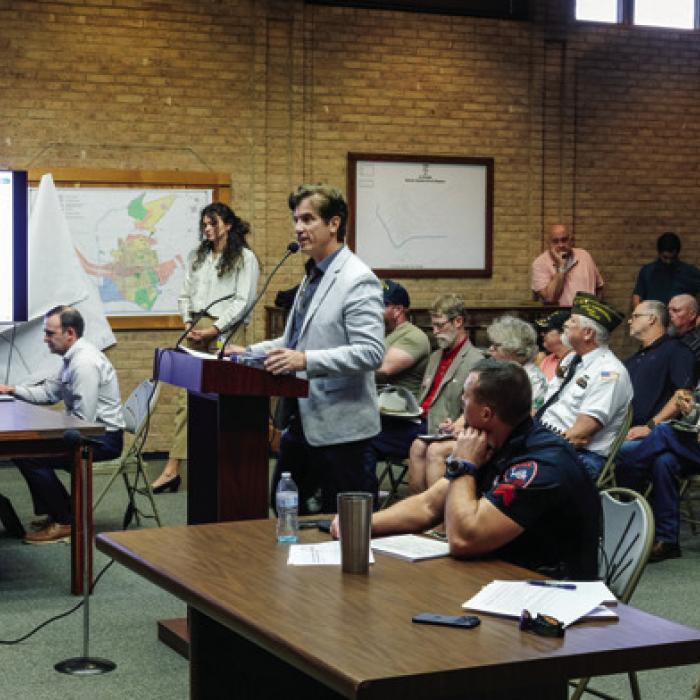
In a meeting that lasted nearly three and a half hours several citizens and Council members Monday raised concerns about the rate at which the City has been spending money lately, especially on consultants, studies, and grant matching funds.
Kicking off a meeting the City of La Grange and the groups that use the Fayette County Fairgrounds agreed to embark on a master plan for the Fairgrounds.
The two biggest entities at the Fairgrounds – the Texas Czech Heritage and Cultural Center and the Fayette County Fair Association – agreed to each pay $5,000 towards the cost of a study into future growth at the Fairgrounds. The City will pay the remaining $40,000 for the study.
Next the Council heard an update from the firm Parkhill, which the City hired to conduct an assessment and improvement plan for City Hall, the police station and Randolph Recreation Center. Consultants Chris Casey and Jared Higgins identified serious mold problems at the police station and accessibility issues at City Hall and the Randolph Center. The recommended roof replacements, HVAC system improvements, electrical upgrades and a host of other improvements. They also suggested expanding the gym at the Randolph Center to house a full-sized basketball court. The Parkhill consultants said they will next come up with a variety of options for the City to tackle the improvements, along with financial estimates.
After that, La Grange Main Street Manager Caleb Parks presented a proposal for a new City of La Grange tourism website. He recommended the firm Helms Workshop of Austin, which submitted a bid for $56,365 to design and launch the website. Parks said ongoing costs could amount to about $1,000 annually. Council approved it without opposition.
Council then authorized staff to issue requests for proposals and requests for qualifications for engineering and design services for the 2026 Downtown Revitalization Program, which is a rural community development block grant administered by the Texas Department of Agriculture. Parks presented the proposal. If awarded, he said the grant funds could be used to pay for sidewalk and lighting improvements in downtown. The maximum grant award is $1 million with up to a 20 percent match.
Councilman Ken Taylor expressed concern that the City may need to take on debt to pay for all of the projects that City Hall has proposed.
“I don’t want to be a stick in the mud, but looking at the budget right now, we are at $2.5 million left in our bond obligation, which we pay almost a half million dollars a year,” Taylor said. “We’ve approved $848,000 in our (capital improvement) budget this year. And then you start going down the list: the parks, recreation, open space and trails plan; City Hall; police department; Randolph Rec Center; service center; the La Grange Plaza; the western annexation; community theater; the first phase of the storm sewer – that’s $5.5 million coming from our tax dollars. The second phase, which we’re going to talk about in a little bit – $8.3 million. And then the fairgrounds future expansion, now downtown revitalization and Main Street program.
“I understand all these things need to be done,” Taylor continued. “But I don’t see the big picture – where all the money is going to come from to fund these things. Even this one may not be spending money today, but we’re setting ourselves up to go down the road … I’m really having a hard time figuring out how big the pot is going to be and where that pot is coming from, and how we’re going to get there.”
“We can continue those conversation,” said City Manager Jack Thompson.
“Yes, we need to, before I’m going to vote ‘yes’ on another thing,” Taylor said.
Councilwoman Kim Newton suggested that the Downtown Revitalization Program could help the City pay for improvements to the neglected concrete planter box that the Texas Department of Transportation installed as a pedestrian barrier along Travis St. south of the Courthouse.
“Should we just say, no, we’re never going to put any money towards it and it’s just going to be a concrete box?” Newton asked. “That’s one option. Or are we going to pay 100% of any improvements that happen? Or are we going to say, hey, maybe we could put 20% in, but we might get 80% of it paid for by this grant money?”
“The real question you’ve got to ask, and the people need to shake their head ‘yes,’ are you willing for a bond issue down the road to pay for all this?” Taylor asked. “That’s where we’re heading, in my opinion, because you start adding this up, and there’s no way we can pay for all these ‘wish’ items out of any fund that we have.”
“So we’ll just have a concrete box,” Newton said.
“How do we get the money?” Taylor asked.
Parks said the City is not obligated to spend any funds at this time. He said the City could decline the grant if the Council so wished. Council ultimately approved the item by a vote of 5-2. Council members Taylor and Patsy Zbranek voted against the motion. Councilman Derek Smith was absent from the meeting.
All this was only part of Monday’s meeting. We’ll get into more in Tuesday’s Record.