


Weber Reflects as His Time as County Judge Dwindles Down to Final Days
A Life of Service
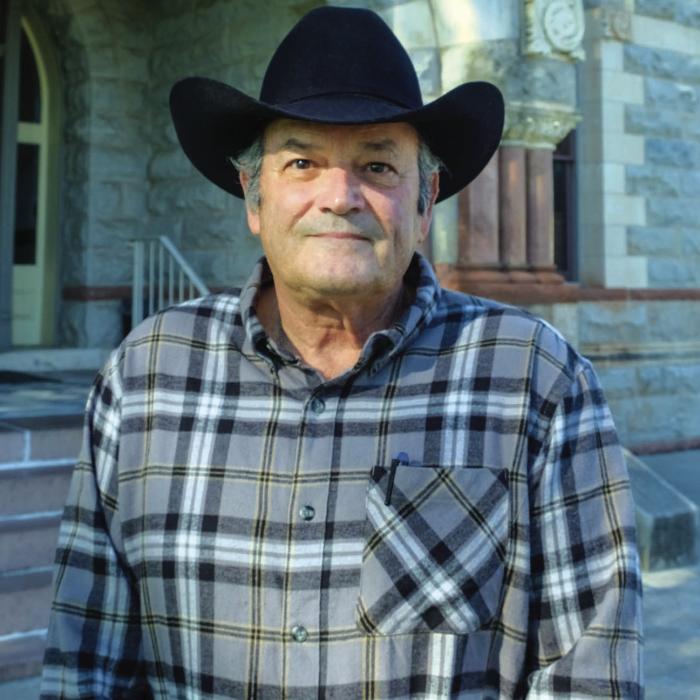

County Judge Joe Weber will step down at the end of this year after one term in office. His four years in office were marked by immense residential growth in rural areas of the county, rising property values and the COVID- 19 pandemic.
“I hope my legacy is that I tried to meet the needs of the people and not impose a bunch of regulations and restrictions on them,” Weber said. “I wanted to encourage people to be good citizens and work hard. I hope they think I was transparent and that we tried to spend their money wisely. I worked very hard to be a part of the community and the county, not just as a judge, but as a citizen as well. I want to be remembered as a public servant and not a politician.”
Weber moved to Fayette County in 2010, but he was no stranger to the area. He was born in Weimar and spent the first few years of his life in Schulenburg.
“My uncles (John Fredericks and J.V. Money) were doctors in Schulenburg,” Weber said. “My mother worked in the clinic after (World War II). My father flew in the war and went to A&M on the G.I. Bill. We came back and hung around Schulenburg as a young child until my dad graduated fromA&M.Then we ended up in Abilene.”
Weber spent his formative years in Abilene. A Roman Catholic, Weber once considered a career in the priesthood, but he ended up going to college at Texas A&M University where he was a member of the Corps of Cadets.
“I always came back to the County in the summers and on holidays because it was a great place to be,” he said. “Every weekend I could, I came back to Schulenburg. Johnny Maroul from Schulenburg was a senior in the Corps at A&M when I was a freshman. He took good care of me and brought me back every weekend. Even in the military, as a young officer, I came back to Schulenburg on the holidays. I still have relatives in Flatonia and Schulenburg.
“I think it was very helpful when I moved into the County in 2010,” Weber said. “When you come into a County like this, it’s always helpful if you know somebody and somebody knows you, particularly if you have relatives. It was helpful in establishing a relationship with the County.”
Weber graduated from Texas A&M in 1972 and accepted a commission in the United States Marine Corps. That turned into a 36-year career. He retired from the Marine Corps in 2008 as a three-star general. His service took him around the world to Japan, Southeast Asia, South America, Europe and a tour as a commander in Iraq during the Global War on Terror.
“We moved 22 times in 36 years,” Weber said. “We lived almost five years as a family in Japan. It was an experience. I got to see a lot of countries that were in my responsibility as a general officer. Two things stick out. One, we always took our children with us. We moved our kids three times in high school. We just decided we wanted to keep the family together. But the beauty of that is the experience those kids had living in different cultures and other countries. What they saw was amazing.
“The impact it had on me, and the entire family, was how great America really is,” he added. “When you get into some of these other countries such as Bangladesh and India and some of these poorer countries, you see how blessed we are and how much we have. You realize the United States of America is truly an exceptional country, even with all our faults. When you’ve been around the world and see how other people live, you realize how very fortunate we are to be in this country.”
Aggieland & TxDot
Weber’s Marine Corps retirement ceremony happened at the same place where his career began – Texas A&M University. He went on to serve almost six years as Vice President of Student Affairs at A&M.
Weber’s old pal from his Corps of Cadet days – Rick Perry – was Governor of Texas at the time. Perry was looking for new leadership at the Texas Department of Transportation, and he enlisted Weber as the agency’s executive director.
“The Governor called me one day and asked if I would be interested in applying for that position,” Weber said. “He felt they needed a little different type of leadership within TxDOT. Traditionally, TxDOT had been led by an engineer. There were a lot of engineers at TxDOT. He felt they needed different leadership and I said I’d give it a shot. When the Governor calls and asks you to serve, you tend to say yes.”
Weber held that post for almost two years from 2014 to 2015, the year Greg Abbott became Governor.
“A new administration came in,” Weber said. “The Governor, as he should, wants to bring his folks into his administration. So I felt that I needed to allow him to do that.”
Weber retired briefly from public service in 2015 and spent most of his time at his farm in Round Top. Fayette County Judge Ed Janecka was just winding up his nearly three decades in office at the time.
“Several people approached me and said Judge Ed was retiring,” Weber said. “I talked to Brenda, my wife, about it, and she said ‘Go ahead if you want to do it.’ I felt it was an opportunity to not only serve but to meet a lot of people in the County, to expose myself to a lot of the people, groups, organizations and businesses, and get to know them, because this is probably going to be my final resting place. I thought it was an opportunity to get to know the County and become a part of it.”
Weber said he approached the position as a full-time job. Weber said he knew the job would involve judicial responsibilities. The County Judge presides over criminal misdemeanor and juvenile cases, along with probate court, in addition to the role as chief executive of the County government.
“I had been exposed to a lot of that with the Uniform Code of Military Justice in the military judicial system,” he said. “It’s somewhat different than the civilian (courts). But the fact of the business is that I was familiar with courts and court martials and the administration of justice in the military. I felt comfortable with it and felt I could learn the system.
“The other aspects of being county judge, budgeting and things like that, I certainly had experience with that in the military, with millions of dollars in budgets,” he added. “The other thing is working with people and staff. Like I said, I moved 22 times in 36 years. I went from one command to the other, new staff and new people that I had to work with. I felt comfortable with that. I didn’t view it as a difficult transition. It really wasn’t that much different than anything I experienced in the past. It was a comfortable transition for me.”
Weber said he was surprised by the support he got from the staff and citizens of the County. Many people in the County knew about Weber from his long career in the military and state government, and his friendship with Rick Perry and John Sharp, another old Corps of Cadets pal who serves as Chancellor at Texas A&M.
An Unknown
Candidate
But when Weber ran for Fayette County Judge in 2018, few people outside of Round Top or Schulenburg ever met him.
“A lot of people didn’t really know me,” he said. “But the support and respect I got coming into the office, I very much appreciated it. I didn’t know. I thought I’d have to work really hard to gain their respect and support. I did and I tried, but a lot of it was already there when I came in. I was very appreciative for that.”
Weber didn’t take long to make his mark on County government. Fayette County leaders have discussed a jail expansion for years. The topic came up shortly before Weber took office, when a parcel of land next to the Dan R. Beck Justice Center went on the market for sale. The County went so far as to consider a contract to purchase the two acre tract for $240,000. Weber came out strongly against the contract, which was negotiated by his predecessor, former County Judge Ed Janecka.
“The contract was something like a quarter million dollars for two acres,” Weber said. “It was something like $100,000 more than the appraised value.
“One of my things, when I came in here, was ‘Let’s watch the money. Let’s not get too much in debt,’” Weber added. “We’re still a rural county. We don’t have a lot of factories and industries. So we stopped that (purchase). Some people were upset with it. Some people agreed with it. But it was one of the first things I did.”
Weber said he encouraged the four County Commissioners to take a bigger role in directing the affairs of the County as a way of increasing government transparency for the citizens.
“Transparency was important to me, but that could only happen if I got the County Commissioners more involved, for them to feel like they can openly and publicly express themselves,” he said. Weber’s term in office coincided with one of the busiest times ever for home construction in the unincorporated areas of the County.That development didn’t come with much if any increase in population, at least according to the 2020 census. Weber said the most recent census numbers might have been low due to poor census participation during the COVID-19 pandemic. Regardless, more homes in the County mean more septic systems, more traffic on county roads, more tax revenue for the County, and a host of other impacts, both good and bad.
Managed Growth
“We have had growth and one of the things I ran on was trying to manage that growth,” Weber said. “I think we’ve done that. Part of managing growth is trying to stay out of debt and watching property taxes, come up with a sensible budget and establish priorities.
“We always said the security, health and welfare of the citizens are the priority,” he added.
Under Weber’s leadership, the County added a new grant specialist position in the County government to handle the increasingly complex task of applying for and administering federal and state grants. The County hired Angela Hahn to fill that role.
“COVID came, and all this grant money was out there, and we were not in a position to manage that,” Weber said. “She’s done a fantastic job and has gotten a lot of resources for the County.”
The COVID Crisis
Weber said the COVID-19 pandemic posed the biggest challenge during his time in office.
“It scared the hell out of us,” Weber said. “We didn’t know what this thing was. I think our emergency management coordinator (Craig Moreau), who had experience as a paramedic and firefighter, jumped in there and did a tremendous job of helping the entire County get through this. He was a great advisor to me and helped us successfully manage it. A great part of that was the cooperation and support of the people in the County who maintained their common sense about the whole thing.
“It was never my intent to impose a lot of regulations and restrictions,” Weber said. “I felt it could be managed by doing some sensible things – by being more aware of our hygiene, where we go and what we do, and how we expose ourselves to others. We lost some people in the County who died of this. People died all over the country. It’s so unfortunate. But I think we also saved a lot of people. Our schools did a great job for the most part of staying open. Our economy was much better here than in a lot of other places, and I think that’s because we weren’t so restrictive. The way we approached it wasn’t in fear, but it was about working together to get through this. We’re not going to let this thing completely shut us down.
“Were some people unhappy about the way it was handled? Yeah, but I think the majority of the people felt like we got through it pretty well,” he added.
Now the Nation faces an economic crisis following massive federal spending during the COVID-19 pandemic and, more recently, the war in Ukraine. Weber said he believes Fayette County’s economy stands to weather the storm better than other communities where so many businesses shut down during the pandemic.
Weber spoke about the challenges of serving as County Judge: “When you’re elected as County Judge, and the campaign is over and the election is over, and all the parties have had their say, you’re the judge,”Weber added. “You’re not the judge for the Republicans or the Democrats, the whites or the blacks, or the gays or the straights. You’re the Judge of all of them. You’re the Judge for everyone in the County. That’s the challenge – you’ve got to figure out how to represent the people in your County. Not only those who elected you, but you have to take care of, provide services for, and be a good listener for everybody that’s in the County. That can be a challenge. That’s the problem today with our elected leaders. Their loyalty is to a party. They’re tied to parties and they forget they’re really there to represent the people who put them there.”
He also pointed to several policy challenges that will face his successor.
“We’re going to have to continue to manage growth,” Weber said. “People are coming in here and buying land, splitting it up. When I say ‘managed growth,’ I don’t mean trying to prevent people from moving in here and establishing businesses and homes. Lately, we’ve been talking about water. Are we prepared to handle growth with our water resources, utilities, medical care and all those other things? We have to keep a close eye on it. We can do some things with our subdivision ordinances. We need to work closely with the cities to make sure we’re putting policies, procedures and ordinances in place to manage and support growth.”
Weber said the County faces future infrastructure problems as well.
“Eventually we’re going to need a new jail,” he said. “We’ve done a pretty good job of adding to infrastructure with a reasonable cost. County departments have needed more room, and we’ve acquired some at a pretty reasonable price without occurring a lot of debt. But there are going to be some election bonds for some pretty big money on things like a justice center and jail. That’s going to have to be looked at.”
Weber surprised many when he declined to run for reelection this year. In the months before filing period, he had told the Record during an informal conversation that he was enjoying the job and was considering whether to run again.
Time to Step Down
“It has to do with my health and my future,” he said. “I was 70 years old when I said that and I’m 72 now. Things change in two years. I’ve got five grandkids and four of them are close. I’d like the flexibility to take off and go to Little League games, dance recitals and all those things.
“Four years is a long time,” Weber said. “I don’t think there’s anything wrong about new people coming in after four years.”
Weber addressed a rumor suggesting he would receive retirement pay from the County. Weber said employees must work at least eight years for the County to be eligible for retirement. He only worked four and will not collect County retirement. Weber said he doesn’t receive State retirement either, because the State requires 10 years of service to be eligible for retirement and he only worked eight.
“The only retirement I got is my military retirement and social security,” Weber said. “I didn’t get in this for the money.”
Advice for Mueller
Weber offered the following advice for Dan Mueller, his successor, who will take office on Jan. 1, 2023: “I would tell Judge Mueller that he has a great staff here at the courthouse. He’s got some great department heads that will support him. He’s going to be the new judge and he’s going to be the CEO of the County. Ultimately, he’s got to lead. I would say to him, ‘Before you make any major decisions, just listen to the staff and they’ll take good care of you.’ My advice to him is that he’s got a lot of good people here, and he knows that. He’s been around the County a long time and he knows a lot of these people. I think he’s going to be a good listener.”
Weber said he plans to remain in Fayette County and stay involved in the community. As for future endeavors, Weber said he and his wife are working with a group to establish a private Catholic junior high school in Brenham.