

A Trip Through Scenery, Culture and History in East Texas
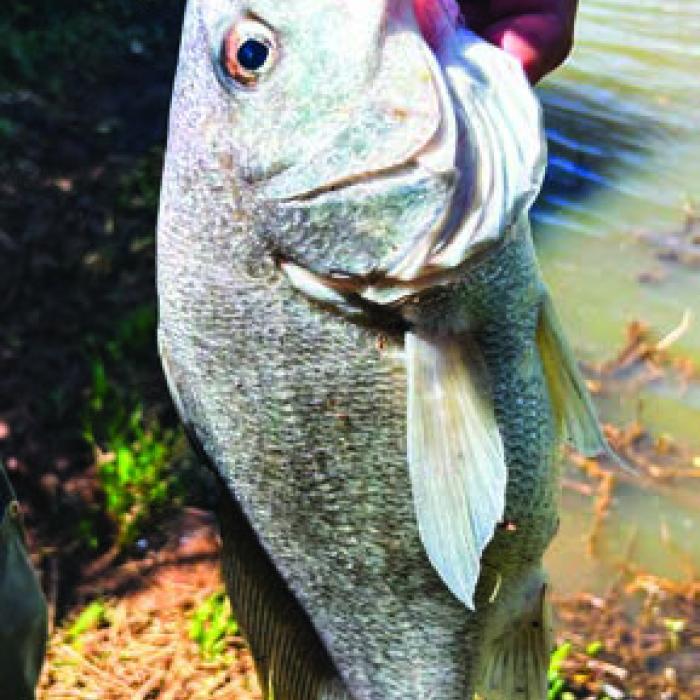

Last weekend my wife and I drove to East Texas to visit my step-son, who lives near Tyler. We fished with him and his bride on Lake Palestine and in the Neches River. We ate some crawfish and a gaspergou that I caught. But mostly, we had a great time just visiting.
Besides all of that, my favorite part was the drive.
I purposefully try not to leave these parts too much, except for the occasional trip to the coast for some saltwater fishing. But I do enjoy a good road trip, especially when there’s a change in scenery.
I won’t bother you with the first half of the drive to Madisonville. There really isn’t a lot to say. We took Highway 21 the whole way. Everything sort of looks the same until you get past Bryan. But by the time you get to Madisonville, a few pine trees start to appear.
We stayed on 21 past the Caddo Mounds and all the way to Alto. We would stop there on our way back. It looked like some crews were burning the understory brush in the Crocket National Forest. There are so many beautiful old homes in towns like Crocket and Rusk. Western civilization reached this part of Texas much earlier than the rest of the State. The Spanish established a mission in Nacogdoches way back in 1716.
Old ramshackle houses tucked in the woods were overgrown with ancient wisteria vines. They were in bloom, by the way, with cascades of purple blossoms spilling over fences and walls. The folks here are evidently a religious people, especially of the Baptist persuasion. On one stretch of road just a few miles long I counted a Southern Baptist Church, a Primitive Baptist Church, an Old Baptist Church and a Missionary Baptist Church.
We took a wrong turn in Alto. I pulled up a map and noticed a little county road that would get us back on path. What a wonderful adventure that was. The road was barely wider than our pickup. The path was cut through steep hills. Sometimes the base of the pine trees were above our roof. We saw dogwoods and pear trees blooming everywhere.
I was surprised at how hilly this section of the state can be. On the stretch of US 69 between Jacksonville and Bullard, the road took us to a clearing in the pines called “Lookout Mountain,” a high spot at over 700 feet of elevation. You can see for miles. With the many valleys formed by little creeks that cut through the red dirt, I can see why the government built so many lakes and reservoirs here.
One day we took a drive around Lake Palestine on some back roads. Oh, how jealous I am of those folks who can grow azaleas. They’re blessed with the right amount of understory shade, acidic soil and ample moisture – none of which we have in Fayette County.
We stopped at the Caddo Mounds site on our way back. A Caddo tribe known as the Hasinai lived here from around 800 AD to sometime in the 13th century. It was one of several villages that were located between the Angelina and Neches rivers at the dawn of European contact. This is the same tribe that gave us the name “Texas,” which means “friends” or “allies” in the Hasinai language.
The Caddo were part of the Mississippian mound building culture that left remnants of their civilization all up and down the Mississippi River valley from Louisiana to the Great Lakes. The Hasinai were the most southwestern of these people. Three mounds survive at this site. The tallest is known as the Burial Mound. The other two mounds are shaped more like raised platforms. Archaeologists believe a temple was built on one and the other was used as a ceremonial platform.
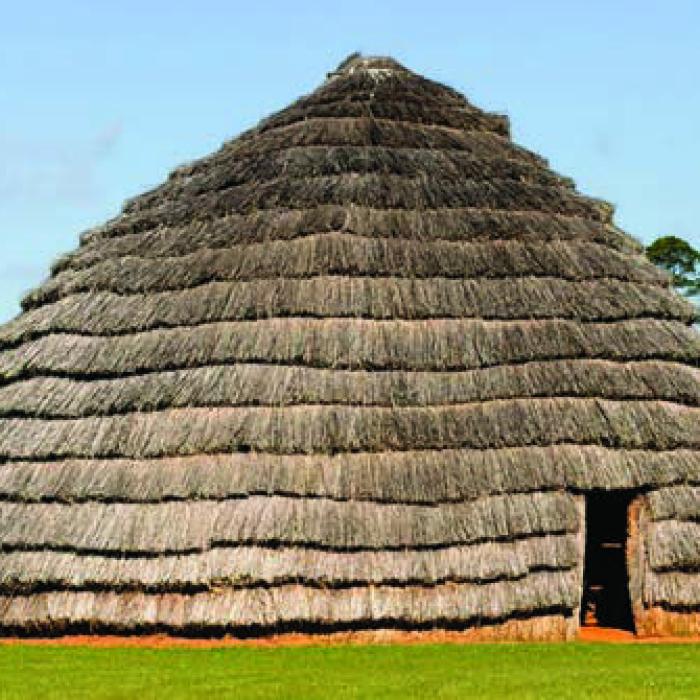
The ancient village and ceremonial center would have covered about 100 acres. The Hasinai were an agricultural people skilled at growing corn and pumpkins. They lived in conical huts thatched with grass. One of these huts has been reconstructed on the site. Janessa wants me to build her one at our place so she can use it as a reading room.
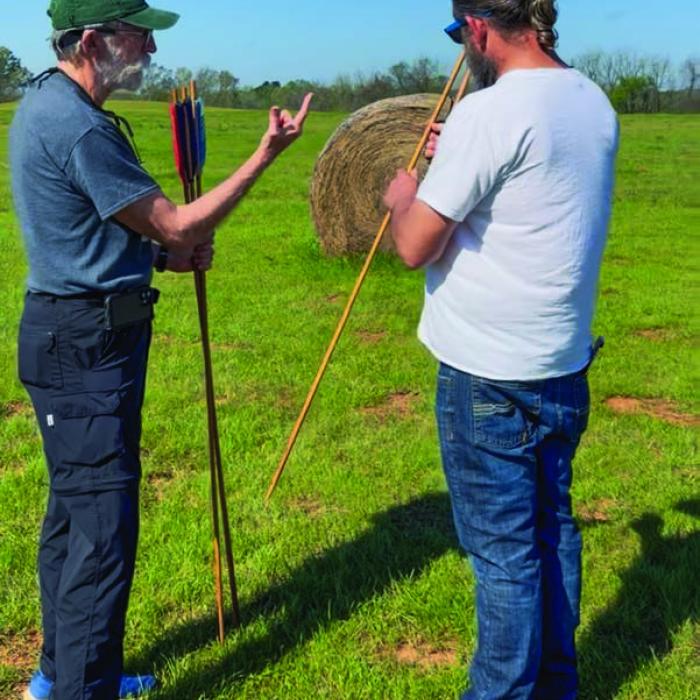
A fellow named John was giving spear-throwing demonstrations on the day we visited. He taught us how to use the “atlatl,” a piece of ancient technology used to launch a spear with much more velocity than a person can throw it. The atlatl is basically a sturdy stick about 18 inches long. It has a little hook made of bone on the end of it that engages a convex pocket carved into the base of the spear.
We threw a few spears at a hay bale target set up in a field. With a little practice, I think I could kill a deer at 50 yards with one.
A few miles down the road lies Mission Tejas, an old Spanish mission established in a Caddo village in 1690. We were in a hurry to get back home, so that stop will have to wait for our next trip out east.