


‘There’s Still a Scar There’
Hurricane Harvey: 5 Years Later
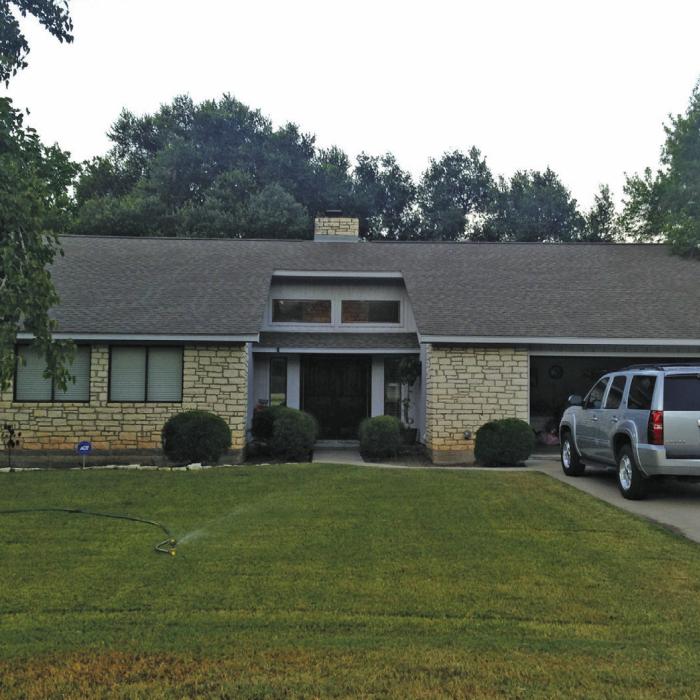
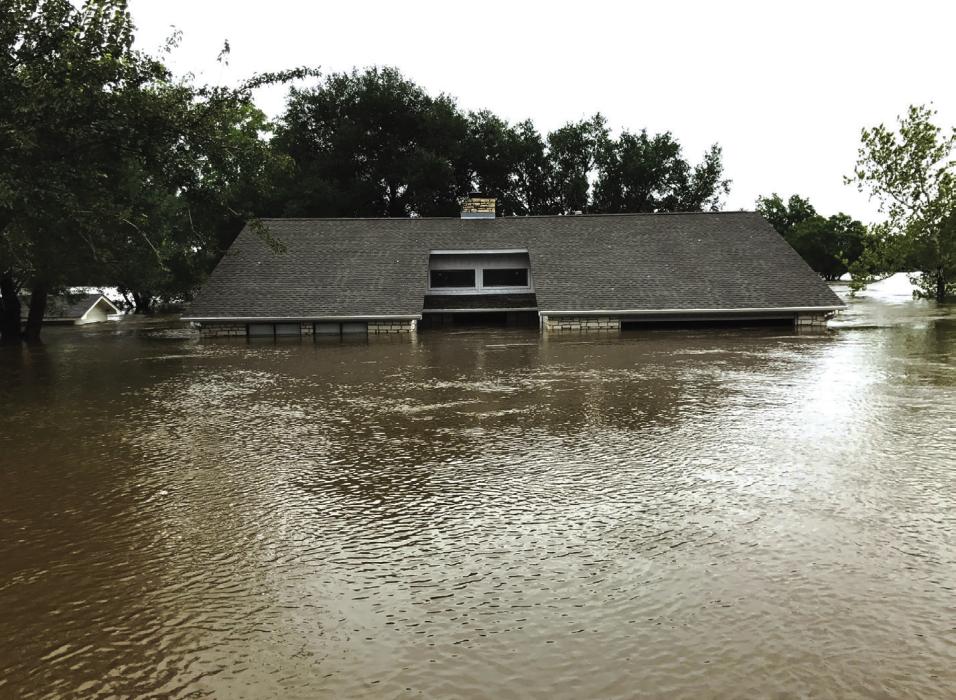
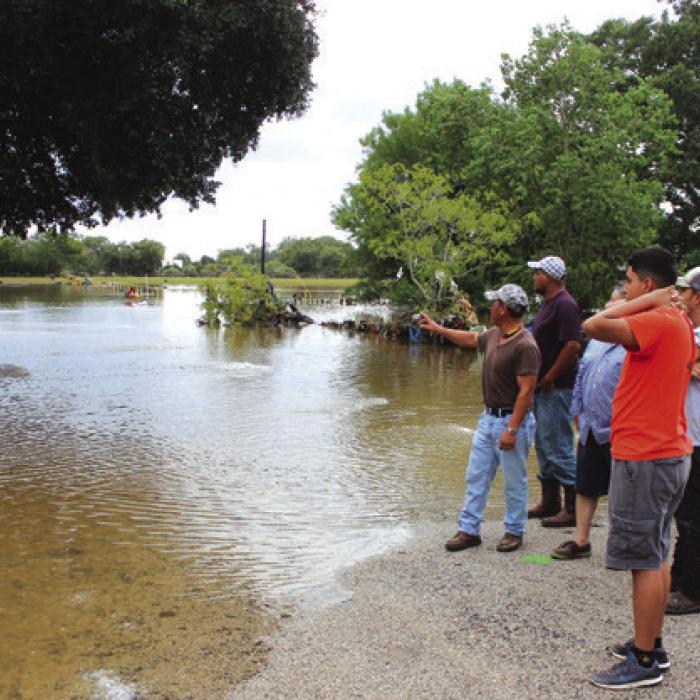
On Aug. 25, 2017, Hurricane Harvey made landfall at Port Aransas. Over the following days, the storm dumped torrential rainfall on Fayette County and much of Central Texas.
Three days after landfall, on Monday, Aug. 28, the Colorado River in La Grange crested at 54.1 feet – the third highest level in recorded history and the highest the City had seen in 100 years. This weekend, by comparison, the river was at 2.59 feet.
This Sunday marked the fifth anniversary of that devastating event. It left La Grange in shambles. The flood left more than 300 people homeless. Many of them never came back. The U.S. Census of 2020 recorded a population of 4,391 in La Grange, 282 less than the Census Bureau’s population estimate of 2016.
For those who remained, their lives changed forever.
“There’s probably a little PTSD,” said John Castaneda, who lost his home and nearly all of his family’s belongings to the flood.
Castaneda recalled evacuating his family from their home in the Colorado Landing mobile home park on the day before the flood, Aug. 27, 2017.
“We had a pickup and an SUV, and we loaded them with anything we could grab. We went through our closets. Our daughter Malaya was just born, so we took all the baby stuff. We tried to move stuff off the floor, anything we could do.”
Castaneda and his wife Sarah had just bought a new adjustable bed for $4,000.
“We tried putting it on cinder blocks, but that didn’t do any good,” he said.
His oldest daughter Bella wanted to bring her pet goldfish, but there wasn’t room. His wife Sarah used to work at the Hampton Inn in La Grange, and they managed to get a room there for a couple of nights. The next day, when the flood came, Castaneda went down to look at the floodwaters. They were up to the peak of his roof. A few days later, after the flood subsided, he was able to go inside.
The new bed was ruined, of course, along with everything else in the house. He found his daughter’s goldfish dead on the floor of the bathroom.
“We were insured, but we were so young when we bought our house,” Castaneda said. “We didn’t have any kids yet, so our coverage was minimal.”
Castaneda described the long hours he spent researching what recovery programs were available and how to apply for them. Insurance covered the mortgage remaining on his manufactured home, and it provided a little money that he put toward a down payment on their new home. But everything that he and his wife worked for during their life together went away in an instant.
“Dealing with disasters is a marathon, it’s not a sprint,” said La Grange City Manager Shawn Raborn during a meeting of the City Council last Monday night. Raborn spoke at the meeting about the City’s recovery since 2017.
“For many of us, it’s out of memory,” Raborn said. “But for those of us associated with the City, it’s real to this day. We’ve rebuilt, but there’s still a scar there.”
He’s not just talking about emotional scars. There’s still literal scars in the form of tornup city streets from the massive utility infrastructure grant projects that the City undertook using Hurricane Harvey-related recovery money.
“The hard work continues in this marathon,” Raborn said. “We have an opportunity to apply for some Harvey-related infrastructure grants in the spring that will make a huge difference in this community and the County.”
The program Raborn referred to is a $26 million community development block grant for disaster mitigation (CDBGMIT) from the U.S. Department of Housing and Urban Development (HUD).
The Capitol Area Council of Governments (CAPCOG) has been tasked with developing a method of distribution for the mitigation funds within Fayette County. CAPCOG held a meeting in La Grange back in May to discuss the kinds of projects the money can be used for. They include:
• Flood control, stormwater and drainage improvements;
• Infrastructure improvements such as water and sewer facilities, streets, generators, debris removal and bridges;
• Natural or green infrastructure, such as projects to restore a riverbank;
• Public safety communications; • Public facilities;
• Buyouts and acquisitions of properties in danger of flooding; • Activities to relocate families outside of floodplains;
• Cost-sharing for FEMA’s Hazard Mitigation Grant Program; and
• Economic development. That’s a lot of new promised money. But Fayette County has yet to see the money it was promised for buyouts in the immediate aftermath of Hurricane Harvey. Five years later, the flooded homes on Country Club Drive remain vacant.
During the summer before Hurricane Harvey, the Fayette County Commissioners Court put in place a rule requiring all new structures in a floodplain to be built at least three feet above the base flood elevation (BFE), sometimes called the “100-year flood level.” Prior to that since 2006, the rule was two feet. Before 2006, there was no county rule regarding the BFE, although mortgage lenders sometimes required homes to be built above the BFE.
In July of 2017, when Commissioners imposed the more stringent rule, they had no idea a historic flood would wreak havoc on the County just a few weeks later. The rule change was aimed at lowering flood insurance costs for homeowners. Commissioners may not have foreseen it, but the rule change prevented many property owners from rebuilding their flooded homes.
Such was the case for Carla Hartley. She and her husband J.P. still own one of the flooded homes on Country Club Drive. She pays taxes on the land. But the County has prohibited them from repairing the home or building on the property. All the while the County has promised to purchase the property as part of its flood buyout plans. The County finally made an offer on the property, which they accepted, but the money has yet to arrive.
“They promised us a few days after the flood that they would buy-out all the homes,” Hartley said. “Back then, they said it would be a year. But here we are, five years later.”
Hartley said she and her husband had cleaned up their home and already made plans with a construction worker to repair their flooded home when they got the news.
“We didn’t know how to take it at that point, because we owned the land,” she said. “We had a lot of questions.
“We had a hope and desire that we could get back in there to do something with the place and not totally have to write it off,” Harley added.
The Hartleys eventually accepted their fate and began to wait for their buyout.Their home was insured for flood damage, and the settlement allowed them to pay off their mortgage. The County buyout program is supposed to pay the property owners an amount equal to their preflood appraised value minus any insurance money and benefits from the Federal Emergency Management Agency (FEMA).
FEMA offered flood survivors cash and other benefits in the immediate aftermath of Hurricane Harvey. Hartley and Castaneda both said the help they received in the immediate aftermath of the storm from FEMA and local organizations was extremely helpful. But both of them said they leaned on family and friends for support.
“I don’t want to say it was easy, but it was easier for us than most others, because we had support,” Castaneda said. “If we didn’t have that support, I don’t know where we would be.” Perhaps among the hundreds of flood survivors who have moved on from La Grange.
Look for more in Friday’s paper about the status of the flood buyout program. We also interviewed Kenny Couch, executive director of Fayette County Habitat for Humanity, who headed up some of the recovery efforts in the immediate aftermath of Harvey. Couch talked about how the Harvey flood exacerbated La Grange’ need for housing, and how the COVID-19 pandemic has complicated recovery efforts. We’ll also take a look at Hope Hill, the neighborhood in La Grange built for the local flood victims.