


Stephen Townsend: Early Round Top Settler
Stephen Townsend was born in Marlboro County, South Carolina, in the year 1800. During the early decades of the nineteenth century, as the young United States continued to expand westward, many families sought new opportunities on the frontier. The Townsend family was among those drawn by the promise of land and prosperity. In the 1820s they relocated to Jefferson County, Florida, which at that time was still a developing frontier region following Florida’s transfer from Spanish control to the United States.
It was in Florida that Stephen met the woman who would become the love of his life, Sabrina Robison. The two were married on February 27, 1827. Sabrina was the sister of Joel Walter Robison, another early and important settler who would later play a role in the history of Fayette County, Texas. Together Stephen and Sabrina built a large family. Sabrina gave birth to eleven children, though life on the frontier was harsh and uncertain. Five of those children tragically passed away before reaching the age of five, a sorrow not uncommon in that era but nevertheless deeply felt by the family.
By the late 1830s, like many other settlers seeking opportunity in the newly emerging Republic of Texas, Stephen and much of his family moved westward again. They eventually settled in the area which is now Columbus, Texas. During this time Stephen was granted a headright of land in San Felipe, a common method used by the Republic of Texas to encourage settlement. Later he purchased additional land along the historic La Bahía Road on the south side of Cummins Creek, near present-day Round Top, Texas.
The Townsend family played a remarkable role in one of the most important events in Texas history—the Battle of San Jacinto in 1836. Nearly twenty of Stephen’s relatives, either by blood or marriage, were present in the Texas army during the campaign. Stephen himself was part of the group led by William P. Smith.
At first Stephen’s group was assigned to remain behind to assist with caring for the wounded and managing supplies. Such duties were critical to the army’s survival and effectiveness, though they often receive less recognition than those who fought directly in battle. Eventually Smith and his soldiers were moved forward to the San Jacinto battlefield where Stephen took part in the historic engagement that secured Texas’ independence from Mexico.
Following his return from San Jacinto, Stephen devoted himself to establishing a stable community in the Round Top area. A man driven by service and responsibility, he became deeply involved in civic life. He was among the early members of the Texas Rangers and served as the first sheriff of Colorado County in 1837.
His role as county sheriff marked the beginning of a long and sometimes contentious relationship between the Townsend family and certain residents of Colorado County. The later Townsend–Stafford feud would become a notable episode in regional history, though that story extends beyond the scope of Stephen’s personal life and final years.
In the early years of settlement, the Round Top area itself was commonly referred to as Townsend Settlement. Stephen and his extended family were so prominent that it would have been difficult for travelers or newcomers to pass through the area without encountering them.
Stephen also operated a stagecoach inn along the La Bahía Road. The inn served as an important stop where travelers could exchange tired horses for fresh ones, rest during their journey, and transfer freight. Given the heavy travel between San Felipe and Bastrop during that era, the inn would have been a busy and important establishment. By settling along this route, Stephen positioned himself in the center of frontier activity. Establishing his home a few miles south of what is now Round Top, on what today is called Florida Chapel Road, he immediately set about building a new life for himself and his growing family.
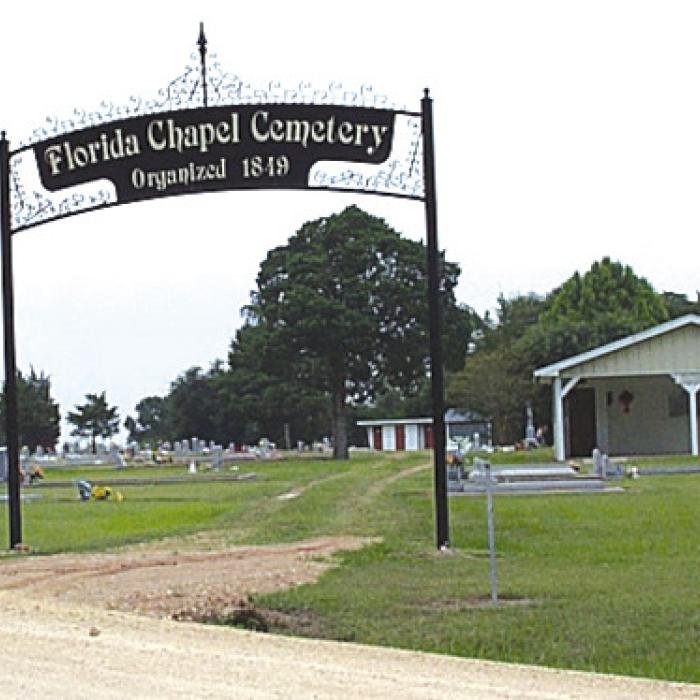
Stephen’s affection for Florida remained strong throughout his life. Evidence of this attachment can be seen in the name he gave one of his daughters, Florida Ann Townsend, as well as the Presbyterian church he founded (Florida Chapel), and the local Masonic lodge also carried the Florida name. Through these choices, he left a lasting reminder of the place where he had first built his life and family. His Masonic influence extends well beyond Florida Lodge, however, and will be discussed in a subsequent article.
Despite everything that Stephen Townsend did for his community, his life was ended tragically and early when he was murdered in broad daylight in Round Top in 1851. Although the exact sequence of events leading up to his killing is unclear, they will be covered in depth in a later article.
Today he lies buried beneath a large oak tree near the small white building of Florida Chapel, a quiet resting place for a man whose life was deeply intertwined with the early history of Texas. His grave is a simple pink granite flat stone with the Texas Ranger symbol as well as a square and compass accompanied by a red iron cross and a small Texas and American flag.
Footprints Of Fayette
Fayette County is one of the most historic counties in Texas. In this weekly feature from the County Historical Commission, a rotating group of writers looks back at local history.