


St. Mark’s Slashing Staff, Services in Effort to Stay Open
By JEFF WICK
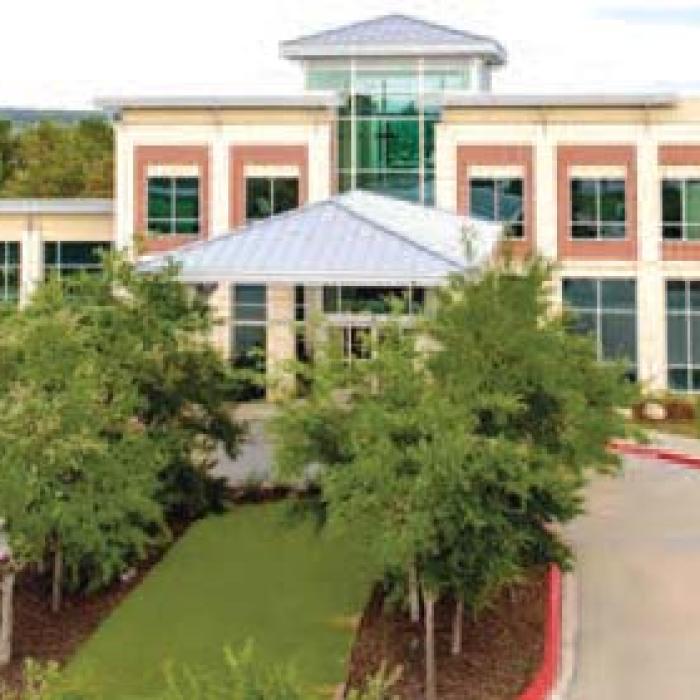
In the darkest day in the 17-year history of the La Grange hospital, almost half of St. Mark’s Medical Center employees were informed Monday that their jobs were being eliminated. In all, 64 of the 144 employees of the hospital are being let go (including 58 full time and six part-time employees) as the hospital transitions from full services to a Rural Emergency Hospital (REH), effective Saturday Feb. 18 in the face of financial difficulties.
Inpatient services, surgical services and orthopedic care are among the services being eliminated, as of this Saturday. “It’s horrible,” said St. Mark’s CEO Mark Kimball. 24/7 emergency services, lab work and X-ray services are among the things St. Mark’s will continue offering. The abrupt change comes after a meeting last Thursday of the board of directors of St. Mark’s where a bleak financial picture was painted.
“The only other option was closing,” said Kimball. “If not for this (change in) designation we would be closing.” The board voted unanimously for the change. This Rural Emergency Hospital designation was just adopted by the federal government Jan. 1, 2023 and just adopted in Texas Jan. 13. Kimball believes St. Mark’s is one of the first hospitals in Texas to pursue the designation. To qualify, hospitals must maintain 24/7 emergency services, but inpatient services may not be offered. Hospitals designated as Rural Emergency Hospitals will receive an increase in reimbursements for relevant services as well as a monthly facility payment. “If our patient volumes increase and financial status improves, one of the benefits of becoming an REH is that St. Mark’s could reopen inpatient and surgical services,” Kimball said.
What’s Staying, What’s Changing Changes at St. Mark’s will include:
St. Mark’s Services Continuing
• Emergency Services - 24/7
• Observation
• Laboratory
• Imaging and X-Ray
• Mammography
• Nuclear Medicine
• Pharmacy
• Physical and Occupational
Therapy
• Respiratory Therapy
• Cardiac Rehabilitation
• Cardiovascular Imaging
Center
• Wound Care
• Sleep Study
Services Closing, effective
Saturday, Feb. 18
• Inpatient Services
• Surgical Services
• Swing Bed (Post-acute
Skilled Rehab Care)
• Orthopedic Clinic
• Ambulatory Care
• Speech Therapy
Patients scheduled for upcoming elective services that require inpatient, or surgical care on Feb. 18 or after, should consult with their physician for options. The VA Clinic and Austin Heart Clinic located in the medical center are not owned by St. Mark’s but have informed St. Mark’s officials that those entities plan to remain. In addition, Dr. Russell Clark, who last month returned to La Grange to begin seeing orthopedic patients again, said he plans to continue doing so locally, though surgeries would now have to be conducted elsewhere.
Financial History
Almost since the doors opened 17 years ago (when it replaced Fayette Memorial Hospital) St. Mark’s has faced financial difficulties amidst the changing face of medical care in America.
A big part of that was the debt incurred with the building of the facility, of which $13.1 million is still owed. For the past three years St. Mark’s has gotten special permission from the Dept. of Housing and Urban Development to just pay interest on that loan. Recently they received permission for a 12-month extension on those interest-only
payments.
The first public sign that the hospital was in financial trouble came in Sept. 2017 when it was announced that the birthing center was being closed to save money.
Back in June 2019, St. Mark’s made an appeal to create a hospital taxing district to generate more revenue. Many criticized the haste with which the proposal was put together and the lack of specifics offered related to exactly how much the tax would be.
That proposal was rejected by county voters with about 80-percent voting against it. Then the pandemic arrived and with it increased usage of the hospital and millions in COVID grants (including $1.9 million in Payroll Protection money in 2020 and another $1.8 million in 2021,
and $4.2 million in CARES Relief funds in June 2020 and a half million from Fayette County’s federal COVID grant money two months ago) – all of which, Kimball said, went to keeping people employed and the doors open, but none of it was able to pay down that debt.
“We’re at a crossroads, we’ve got to find funding to pay our mortgage in the future,” Kimball said.
Kimball said the hospital is actively looking at all manner of new funding options, including from city and county governments and could consider another taxing district try. He said they are also “looking at everything in the world” related to ways to excuse the hospital’s remaining debt.
Management History
As of Jan. 1, 2011, corporate control of St. Mark’s was transferred to Community Hospital Corporation of Plano. CHC performs the oversight of the day to day administration and management of the hospital. CHC is a non-profit corporation, but its executives are employed and paid by for-proft Community Hospital Consulting. CHC says it is able to aid small hospitals financially through its group-purchasing (supplies) and group service (computer tech service, marketing, etc.) abilities. Other CHC hospitals in the area include one in Yoakum, Huntsville and Beaumont. La Grange’s Dudley Piland sits on both the CHC board of directors and is St. Mark’s Board Chair. Here is a statement from him from a Monday press release:
“For the decade that I have served on the St. Mark’s Board, we have struggled to make ends meet, including considering bankruptcy on more than one occasion. Even before the Hospital District proposal was defeated in 2019, our board and leadership team grappled with repaying our $13 million mortgage debt and offering the services that our community desired,” said Piland. “We could have faced closure had it not been for COVID-related funding and an agreement with our mortgage lender to pay interest only — and not the principal — since February 2020.”
“The new REH designation is the first significant change to Federal hospital designations in over 25 years, and shows that our government recognizes the unique challenges that rural hospitals face. Without this new Federal program, St. Mark’s would be forced to close the doors in the first quarter of 2023, an outcome that no one wanted for the staff, their families or our community,” Piland continued.
“St. Mark’s is a blessing to have in our region, and we are committed to finding a way to keep it open in some capacity.” “St. Mark’s is among the first hospitals in Texas to pursue the new REH model which is the next step in securing St. Mark’s financial future. We believe we have a path forward for the next year to allow us to secure funds from Federal, State and local sources to assure the long-term viability of St. Mark’s.”
The full St. Mark’s board of directors includes: Dudley Piland, Chairman Michael Corker, Vice Chairman Tim Knesek, Secretary Dr. K. Henderson D.O., Chief of Staff Wess Blackwell, M.D. Alan Casey Rodney Mersiovsky Ray Walther Mark Clayton, St. David’s Healthcare Craig Sims, Community Hospital Corporation Jason McBroom Dr. Allyson Borgstedte, Physician Director An Industry- Wide Issue St. Mark’s is not alone as a struggling hospital. “Forty-seven percent of hospitals in Texas are in the red, and 50-percent across America are,” Kimball said. Kimball shared these figures: St. Mark’s financial struggles are not unique in Texas, according to research from the Rural Health Research Program in conjunction with Cecil G. Sheps Center for Health Care Research at the University of North Carolina:
• Between January 1, 2010, and February 2, 2023, 143 rural U.S. hospitals closed; Texas accounted for 24 of them, more than any other state (none since 2020)
• The percent of Texas hospitals at serious risk of closure has nearly doubled since 2020, to 9.2%
• Nearly half of Texas hospitals have seen negative operating margins in 2022, meaning hospital revenue is not covering the cost of patient care.
More From
St. Mark’s CEO Here’s more from a Monday evening press release issued by St. Mark’s:
“The availability of this new rural healthcare model came at a critical juncture,” said Mark Kimball, St. Mark’s President and CEO. “While temporary Federal COVID- related funding helped many hospitals, including St. Mark’s, stay afloat during the pandemic, the impact of COVID to health care nationwide was devastating. Costs skyrocketed with no offsetting reimbursement increases from payers such as private insurance, Medicare or Medicaid.”
“Labor, like in most other businesses, is a significant operating cost for St. Mark’s,” continued Kimball. “Current labor costs for staff and contracted labor increased by 31% compared to pre-COVID labor costs. Other costs for supplies and medicine have also been impacted by inflation. Factor in reduced patient volumes and uncompensated care to the equation, and you have an insurmountable situation for St. Mark’s.”
“Our board and leadership team have exhausted every other financial avenue — from cost cutting to partnering with a hospital system or a full-on sale, as well as, seeking funding from our state and local governments to remain open,” Kimball added.
“We are grateful to the Texas legislators, specifically the Health and Human Services Committee and Senator Lois Kolkhorst who Chairs that Committee, who valued rural hospitals enough to pass emergency legislation to help implement this new healthcare model (REH). We are optimistic that with this new REH designation, St. Mark’s can remain a viable, local healthcare facility. That being said, the revenues from the REH depend on how much the community utilizies St. Mark’s for their healthcare needs,” Kimball said.
“Similar to other rural areas, our community frequently utilizes us for emergency and outpatient services, but bypasses us for many inpatient and surgical services,” added Kimball. “Even with this new designation, paying the mortgage will continue to be a challenge and St. Mark’s will need additional financial support from the community to survive.”
“When you live in a small community where people know and look out for each other, decisions that affect your friends and neighbors are very, very hard,” said Kimball. “The Board and our leadership team looked for any way to avoid job and healthcare service losses. Rural Emergency Hospital is the only viable option at this time ... St. Mark’s employees should all be proud of what they have accomplished as a team, as evidenced by recent local and national quality and safety recognitions.”
- Log in or Subscribe to post comments.