

Ralph ‘Fizzie’ Fisher’s Entertaining Life
Armchair Chats
Fayette County’s king of Longhorn, buzzard and armadillo performances still wows crowds large and small
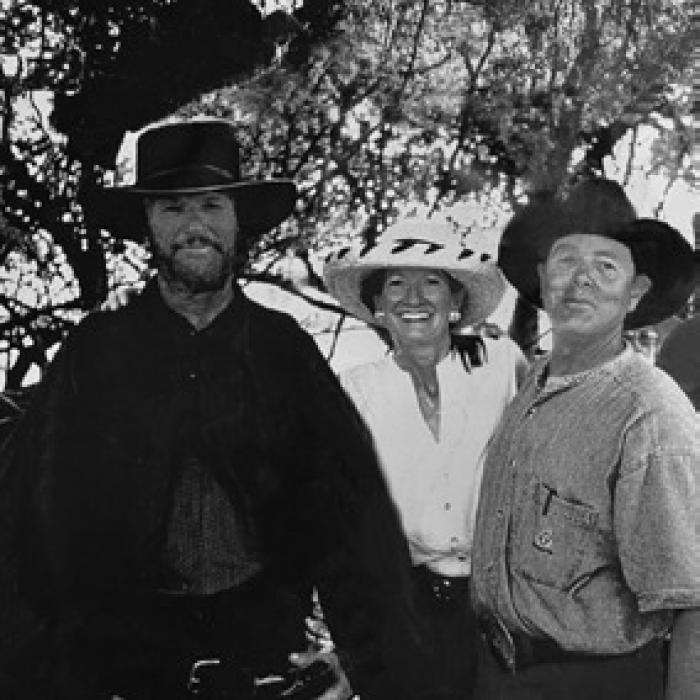
Ralph Fisher was 13 years old when he landed a bit part in the heartwarming 1961 movie “Tomboy and The Champ.” Ben Johnson was the star of the show being shot in Katy, Texas, near Ralph’s hometown of Barker.
The story was about a Texas ranch teenager who won a calf she named The Champ. Despite developing polio, heroine Tommy Jo (played by Candace Moore) persevered to enter her pet steer in the Chicago International Exposition. She was unaware that winners were sent (gasp) to a slaughterhouse.
Ralph played the heroine’s double during the filming of the calf scramble and posed as the 4-H club president, who offered a few words of congratulations to Tommy Jo oncamera. This was Ralph’s first exposure to showbiz, but his interest in rodeos started long before that.
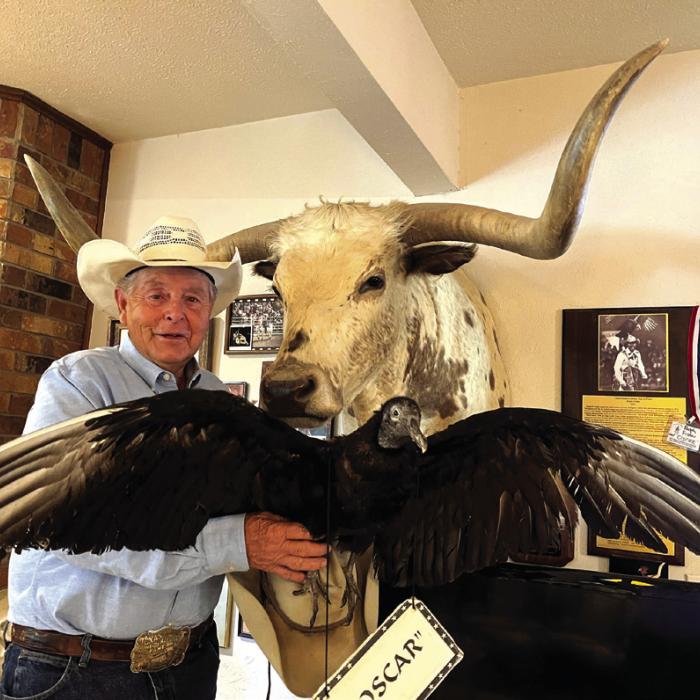
“Growing up on the farm, the neighbor kids and I had adventures on horses in which we knocked each off just playing. It’s a wonder we didn’t kill ourselves. We had lots of pets at home, even a pet buzzard (before they were protected) that my dad named Oscar,” says the soft-spoken, laid-back entertainer, who lives at Swiss Alp with his wife, Sandra Maag Reddell.
Rodeo Was the Rage
Ralph recalls that back in the 1960s, rodeos were big business in rural Texas, as well as in the cities.
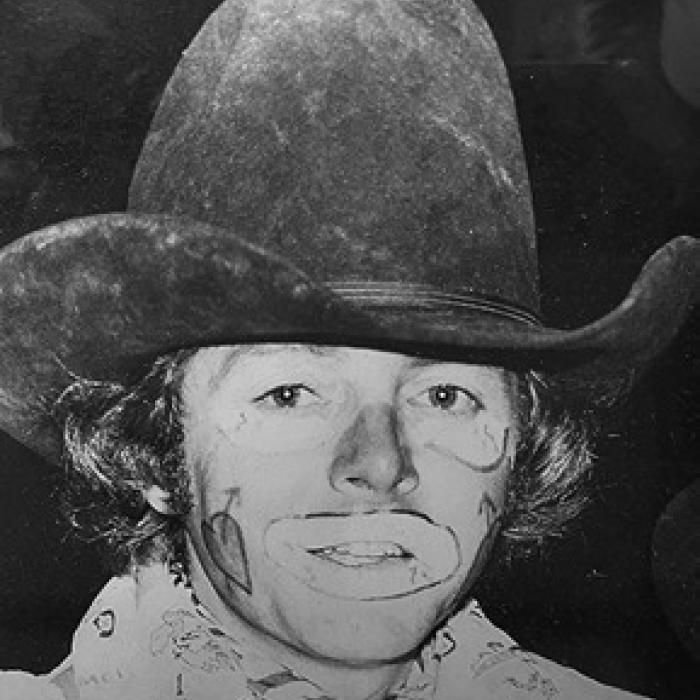
During his first year at Blinn College, Ralph and some other like-minded young men and women formed a rodeo club. Despite having no seed money, the group decided to put on a rodeo. When the necessary tasks to accomplish that goal were divvied up, Ralph was appointed the clown.
“I borrowed some lipstick and rouge from my dorm mother, and we put on a little old rodeo. A gentleman just starting out in the rodeo business, Dutch Albert, liked my action and hired me to work Dutch’s Rodeo, his Sunday afternoon buck-offs. He paid me $10 for each performance,” Ralph recalls.
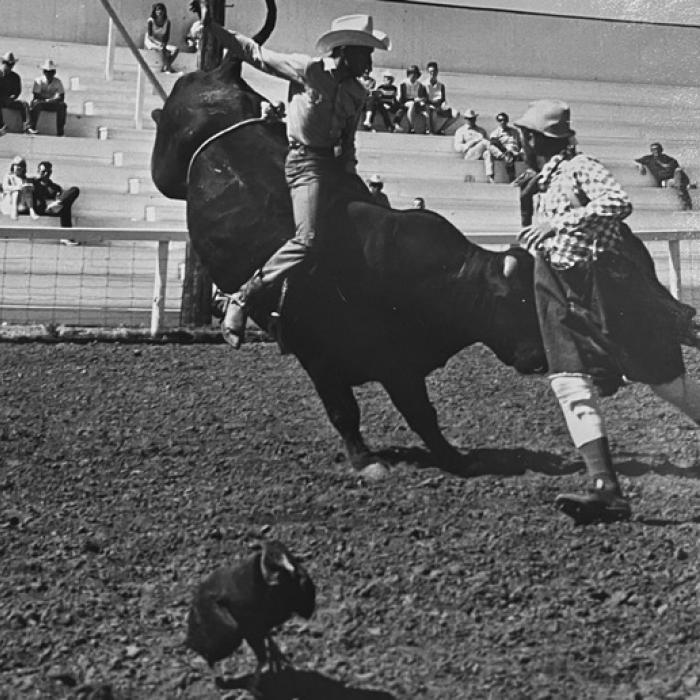
“That’s where I learned to fight bulls. They were mean little bulls, too. One was so mean that when somebody started teasing him in the bucking chute, he bit a hole in the guy’s hat. I don’t know if you have to be really brave or a little bit dumber than most people to fight bulls. There was something about it that made it challenging.”
Ralph was hired to work several other weekly rodeos. Thursday nights he was at the Waller County Rodeo. He spent Friday nights for six or eight summers pleasing crowds at the Cypress Fairbanks Rodeo. On Saturday nights, he was in the arena at the Simonton Rodeo. Out of his total take-home pay of $60 a week, Ralph paid for his gas and other personal expenses.
That was the era of superb showmen like Bo Bland, a troubadour on the rodeo clown and entertainment spectrum, who would race into the arena in his bucking Ford – an old, modified Model T. During his act, the back of the Ford would rear up off the ground and the back end would fall off. Out would fall Bo or whoever was riding in the back seat, and the crowds would howl at the slapstick comedy.
“During that time, I learned how to entertain. I was dealing with local people right across the fence from me. They weren’t way off sitting in the bleachers. I could feel their emotions and sense what they wanted. In addition to the bull action, they responded well to humor, so I developed a bunch of jokes.”
Ralph also started introducing animals into his act, constantly changing it to liven up his public appearances. He was part of the entertainment that brought paying customers to the various rodeos.
On the Road
Ralph taught special education for seven years at a private school in Spring Branch, but he didn’t slow down. Fortunately, Ralph’s supervisor cut him a lot of slack.
“They’d let me go at about noon on a Thursday and I would drive to the damn Texas Panhandle or nearly up there, clown Thursday night, drive back to get in about 5 a.m. and get up and teach another half day. I did a lot of that nighttime back and forth just to keep my job because I loved teaching school,” he recalls.
On one especially memorable trip, Ralph’s dad was riding with him. Their truck hauling a trailer loaded with the white mule that was part of Ralph’s act, slowed down to 30 mph. As the Fishers limped along the interstate, Ralph watched the clock. Would he make it? If he didn’t, he would be bad news. Unreliable entertainers were not worth hiring, and word got around fast.
“When we were nearing that town, I got in the trailer and put on my makeup. We drove into the rodeo grounds just as I heard my name announced over the loudspeaker. I jumped on that mule and rode into the arena as if it were part of my act. That was a crazy experience, a bit of a miracle that I made it.”
Ralph, who was always dreaming up ways to increase his income, rode bulls as well as clowned in the same rodeos for a while.
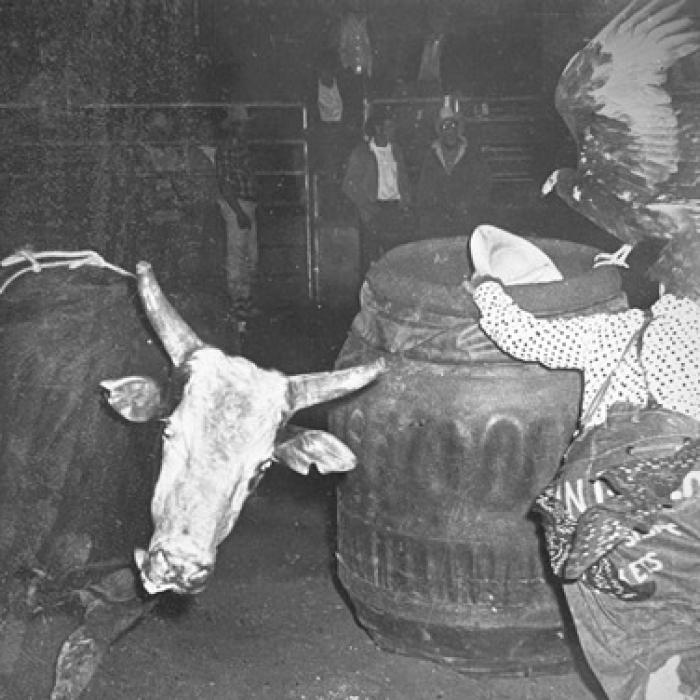
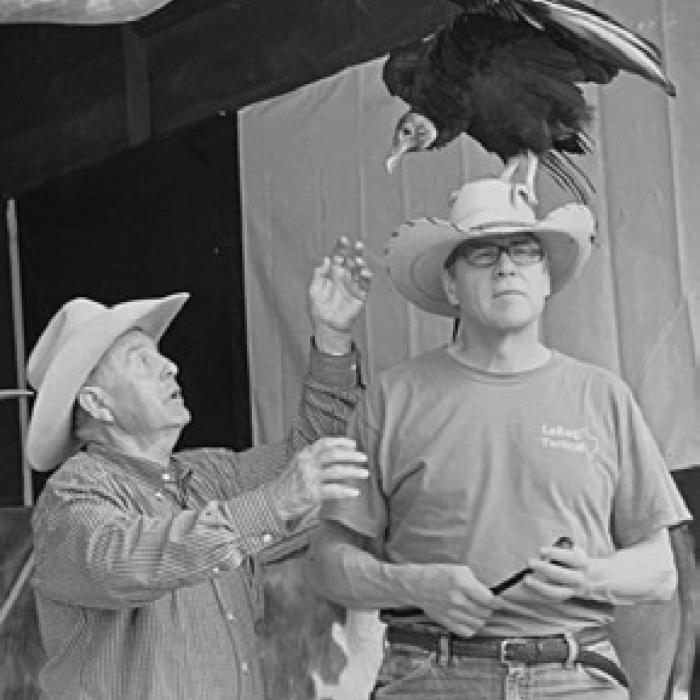
“Then there came a day when I realized I couldn’t bullfight forever. But I knew the public needed and wanted to be entertained, so I started training animals. Early on, I got a couple of baby buzzards. I named them both Oscar, just like the buzzard we’d had at home. You didn’t have to have permits then like you do now.”
Ralph’s first buzzard act featured his homemade atomic incubator, a wooden box with flashing lights, mirrors and a loud siren.
“I’d bounce a rubber egg around the arena to get the crowd’s attention, then drop it in the box and turn the thing on. The lights would flash. The siren would shriek, and when the door opened up, out would step a baby buzzard. The crowd loved it!”
“Now, if you lived in West Texas, you hated buzzards because they ate your baby calves and goats. But then these ranchers would come to a rodeo and see one that was trained, and would listen and come to me and do tricks; they were amazed,” Ralph recalls.
Ralph’s big birds became known across Texas as the “World’s Only Bullfighting Buzzards.”
Touring with ZZ Top
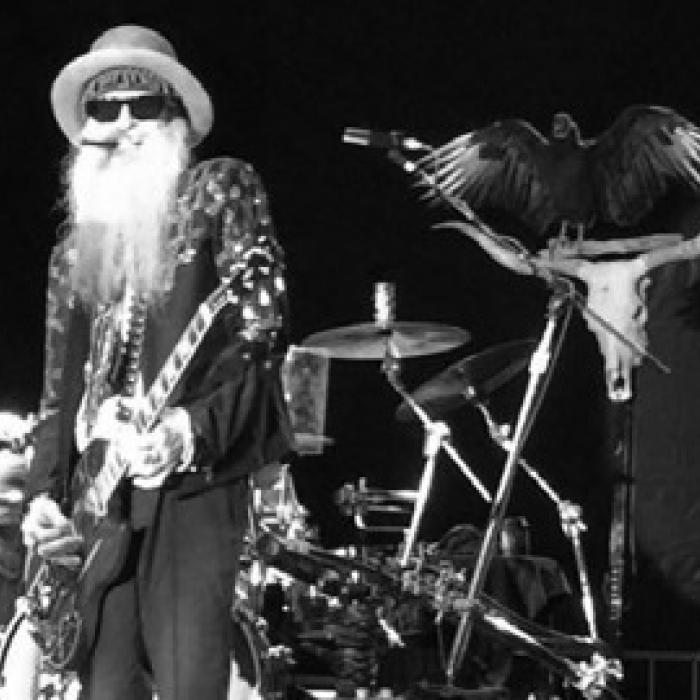
“I was invited to work with a rock and roll band, ZZ Top, back in 1975. The ‘Little Old Band From Texas’ hired me as their animal wrangler. I put a lot of my animals on stage during their concerts. I had a live bison, a Longhorn steer and two buzzards named Oscar, plus rattlesnakes, tarantulas, coyotes and armadillos. I traveled with the band for the better part of three years.
“We went from coast to coast five times, performing about once a week at some of the biggest concerts in the world, 60,000 to 100,000 people. I didn’t get to participate in any of the partying afterward because I had a whole trailer load of animals that needed a place to rest,” Ralph reminisces.
Meanwhile, Ralph still worked what he calls his best rodeos, those of two or threeday duration.
“Every Sunday in October, for example, I’d come back and my older brother, John, would go out to take over my responsibilities with ZZ Top while I went to the Huntsville Prison Rodeo,” he says.
In fact, one of Ralph’s trained buzzards escaped there.
“Almost all the rodeos I worked were at night, but the prison rodeo was held during daylight hours. When one of my buzzards saw blue skies, it sailed out of the arena and perched on top of a three or four-story prison block. Then my buzzard flew to a tree.
“The convicts got a kick out of me calling, “Oscar! Oscar! Oscar!” They took their metal cups and started banging on the walls of their cells, yelling “Oscar! Oscar! Oscar!” At first, my buzzard couldn’t hear me above all that noise, but finally Oscar came down.”
Ralph’s buzzard bullfighting ran its course, too, because bull riders were superstitious about having a live buzzard in the arena when they were competing.
So Ralph decided to build his animal photo and entertainment business, which was already gaining traction. In 1996, when Ralph and Sandra planned to get married, they wanted to move to a more central location because most of his jobs were located in Houston, Austin and San Antonio. At the time, Sandra’s home was in Odessa and Ralph’s was in Katy.
Making Fayette
County Home
“We looked at the map and there it was: La Grange. I hummed a few bars from the ZZ Top song of the same name, and we decided to come out and take a look. We were immediately drawn to the beautiful rolling hills, so we met with a realtor. She found us the Swiss Alp place we’ve called our home ever since.
“Now I can be home every night. It’s so much easier on us and the trailer load of animals we haul. I look after them really well. Those animals continue to be the basis of our income and I’m fond of them,” he says.
Ralph has a way with animals. During their training, he is firm and patient but never unkind. Rather than offer treats, Ralph gently pets his animals’ heads as a reward for following his instructions.
“Don’t just feed an animal to train it. Love it a little bit, you know?” Ralph adds.
One Chance
In a Million
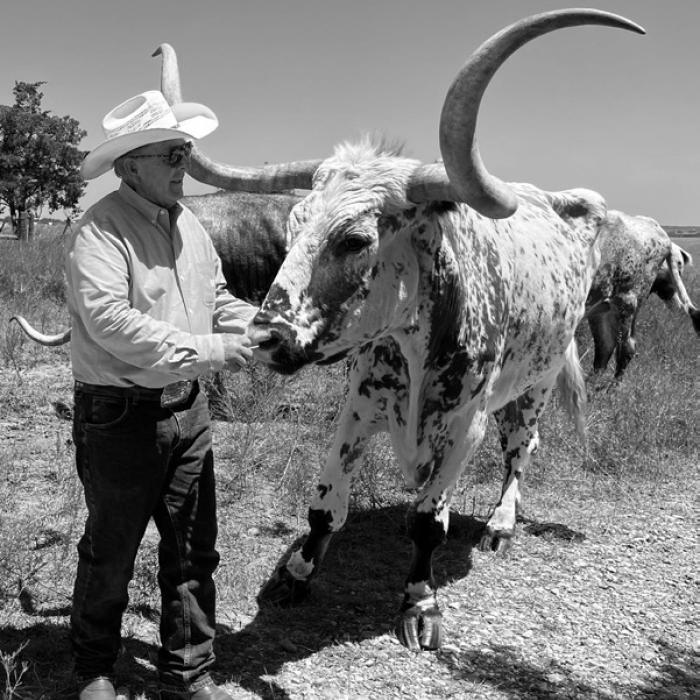
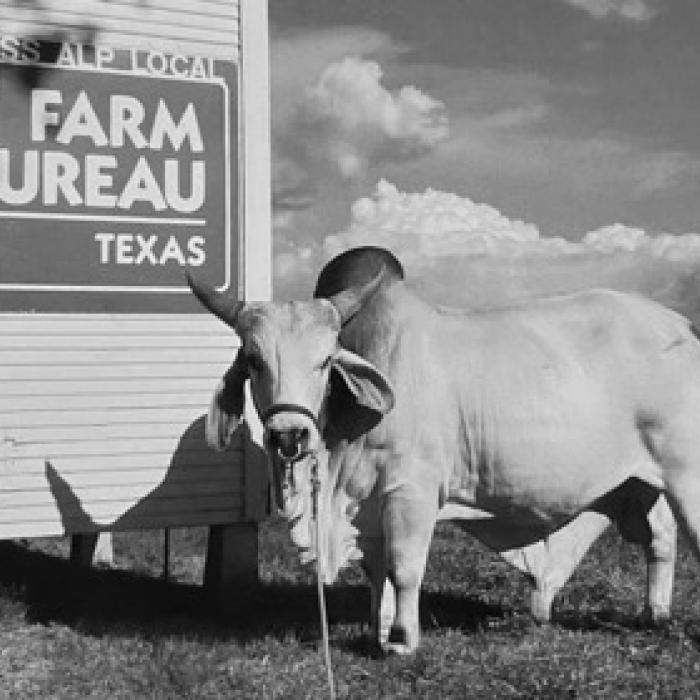
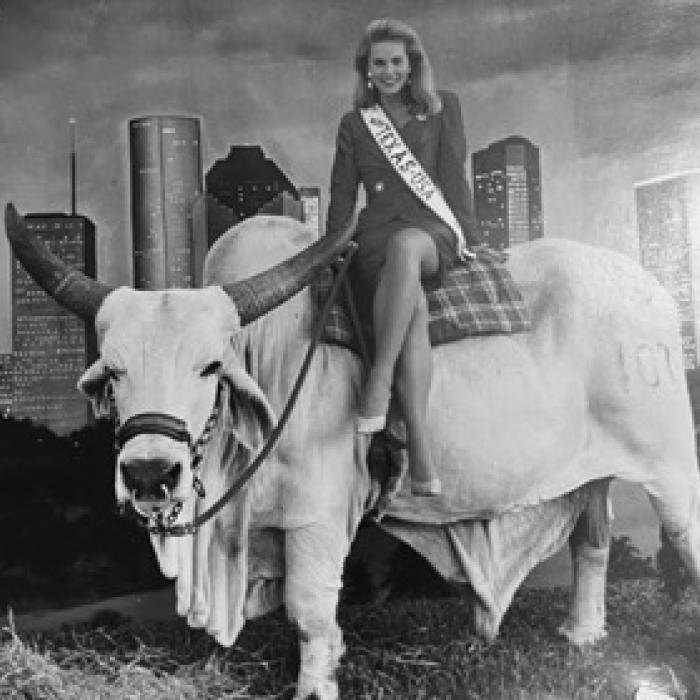
Among the animals and birds that have helped Ralph earn a living is Chance, the most docile, placid Brahman bull imaginable. Chance would go anywhere, allow anyone to admire him and never get excited or testy.
When Chance reached the age of 21, Ralph and Sandra knew the inevitable was right around the corner. Imagine their excitement when they heard Texas A&M University was interested in cloning a bovine.
“When they saw Chance, they went, ‘Whoa, this is what we need. Chance is the oldstyle Brahman that came from India.’ We were onboard, so the scientists from Texas A&M artificially inseminated nine run-of-the-mill auction barn cows. One calf was born full term but with underdeveloped lungs. He was in an ICUlike environment for a short time before we were able to bring him home.
“We called the world’s first cloned bovine Second Chance,” Ralph explains.
The clone’s donor used to lay down in the yard in a depression that seemed to stay moist. When Second Chace came home, he went over and lay down in that same spot. He ate like his donor, Chance, too, lifting his head to savor each mouthful of feed. Second Chance also looked exactly like his donor.
One of the scientists involved in the cloning process impressed upon an ecstatic Ralph and Sandra that Second Chance was a replica with the same phenotype and genotype of Chance. It remained to be seen whether Second Chance would have a wonderful temperament like his donor.
Looks Can
Be Deceiving
“As much as we wanted and expected Second Chance to be like his donor, he wasn’t. He had a totally different attitude. Second Chance didn’t like anybody. We have pictures of his fourth birthday party in our yard with a lot of our kin smiling, standing next to him. When I went to put him up afterward, he hooked me and broke my ribs.”
The worst was yet to come. When a documentary called “If By Chance We Meet Again” was being filmed in the Fisher barn, a cameraman asked Ralph to move Second Chance over a little.
“Second Chance was eating. Of all people, dumb me to do something like that. I pushed his feed trough with my foot and tried to push on his head to back Second Chance up,” Ralph recalls.
Sandra was watching. “One second, Ralph is standing there and gently pushing Second Chance, and suddenly, Ralph is doing a cartwheel in the air,” she says, reliving the terror.
“Second Chance was five years old by then and his horns were about 18 inches long. He tore my jeans all to hell – brand new Wranglers. He caught me in the crotch and ripped my new pair of cotton underwear and my privates. I had to have something like 40 stitches. It was crazy,” Ralph remembers. “It’s not always about how much training you give an animal or how diligent you are. It’s about the attitude they are born with.”
Taking Stock
Ralph says he actively clowned for 42 years. He did 150 performances a year for an entire decade.
“A bullfighter today is completely different from the bullfighter clown years ago. We had to do it all: entertain the people to keep them in the stands and get them back the next night, and we had to take care of the bull riders. I’ll tell you something; I was always smart enough to wear plenty of padding underneath my big baggy pants during my rodeo career.”
After moving full-time into the business of providing the public with memorable photo opportunities, Ralph took his animals to both the 2001 and 2005 presidential balls in Washington, D.C. The Fisher team also met for the David Letterman Show at Rockefeller Center in New York and entertained on the Jay Leno Show, Super Bowl XXXVIII, 2004 MLB All-Star Game and CBS Final Four parties to name just a few. Ralph and his animals have also been featured in seven movies, plus hundreds of other gatherings.
For Ralph, the common denominator of his rodeo years and the animal photo business is entertainment. He still goes out of his way to send customers home smiling.
Elaine welcomes your comments. Visit her online at www.elainethomaswriter.com or call her at 979-263-5031.